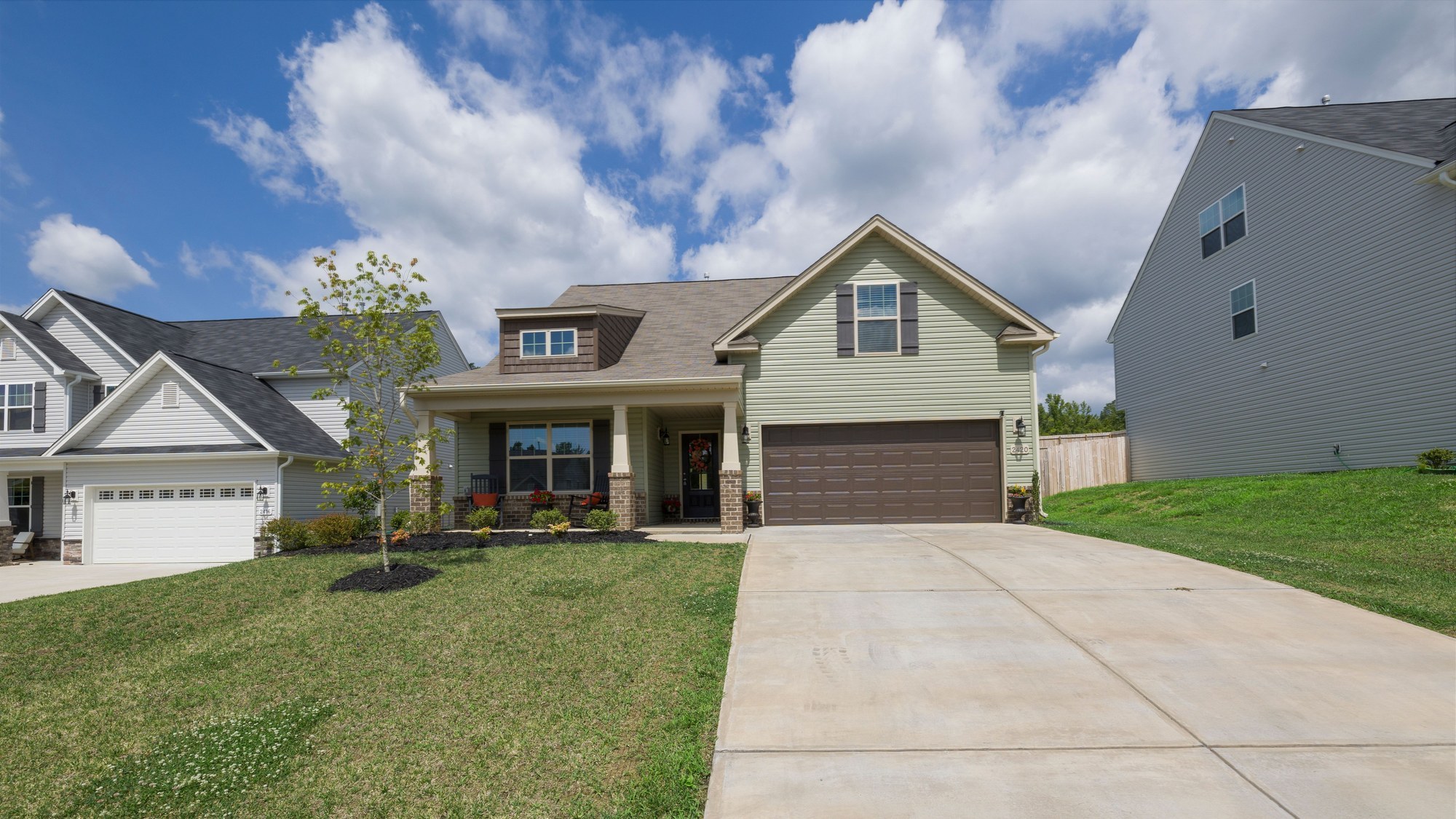
Consider a homeowner who closed on a house in early 2021 with a 30-year fixed rate of 3%. The monthly principal-and-interest payment on a $405,000 loan came to about $1,707. If that same person sold today and financed an identical amount at 6.58%, the new payment would land near $2,583. That is roughly $876 more per month, or about $900 after accounting for a slightly larger loan balance that many move-up buyers would carry. Over 30 years, the added interest cost exceeds $315,000.
That single calculation has frozen the American housing market in place. Sellers who locked in pandemic-era rates won’t list because the cost of replacing their mortgage is too steep. Buyers can’t find homes because those sellers aren’t moving. And a record amount of home equity sits effectively stranded, visible on balance sheets but impractical to access.
How 1.33 million home sales vanished
The Federal Housing Finance Agency quantified the damage in a working paper published in 2024. Researchers found that home sales backed by fixed-rate mortgages fell 57% in the fourth quarter of 2023 compared with what their models predicted under normal rate conditions. Between the second quarter of 2022 and the fourth quarter of 2023, an estimated 1.33 million transactions simply never happened. Those weren’t sales that were postponed. They were erased, because swapping a cheap mortgage for an expensive one made no financial sense.
The study’s data ends in late 2023, and the FHFA has not published an updated estimate. But with mortgage rates remaining elevated through the first half of 2026, housing economists widely expect the cumulative number of missing sales to have grown substantially since then.
The golden handcuffs, by the numbers
The math behind the lock-in effect is straightforward. The Consumer Financial Protection Bureau explains how lenders compute monthly payments from three inputs: loan amount, term, and interest rate. At 3% on a $405,000 loan over 30 years, the principal-and-interest payment runs about $1,707. At 6.58%, it jumps to roughly $2,583. The gap of approximately $876 per month does not include property taxes, homeowners insurance, or private mortgage insurance, all of which have also climbed sharply since 2021.
According to Freddie Mac’s Primary Mortgage Market Survey, the 30-year fixed rate has hovered in the mid-6% range through much of spring 2026. That sits well above the sub-3.5% rates that roughly two-thirds of outstanding mortgage holders locked in during the pandemic-era refinancing boom. The spread between old rates and new ones is the engine of the lock-in effect: even homeowners sitting on six figures of equity face the prospect of trading a manageable monthly payment for one that strains their budget.
Research from the Harvard Joint Center for Housing Studies measured how sensitive mobility is to that spread. Their analysis found that each percentage point lower on a homeowner’s existing mortgage rate, relative to prevailing rates, reduces the likelihood of moving by 42%. Transitions from owning to renting dropped by 33% under the same conditions. With most locked-in borrowers holding rates three or more percentage points below current levels, the suppressive effect on mobility is several times larger than the study’s baseline scenario.
Record equity, limited options
The central paradox of this market is that homeowners have never been wealthier on paper. National home prices rose more than 40% between early 2020 and early 2025, according to the FHFA House Price Index. Millions of owners who bought or refinanced during the low-rate window now hold substantial equity, yet accessing that wealth typically requires selling, which triggers the rate penalty, or borrowing against it through a home equity loan or line of credit at rates that also sit well above their first mortgage.
Loan-level analyses from mortgage data providers, including ICE Mortgage Technology, suggest that roughly 43% of mortgage holders carry both significant tappable equity and a locked-in rate low enough to make selling financially painful. The precise share varies depending on how “significant equity” and “low rate” are defined, but the underlying dynamic is well documented across multiple datasets: rapid price appreciation layered on top of historically cheap debt has created a class of homeowners who are asset-rich but mobility-poor.
Their options are narrow. Selling means accepting a higher rate on the next purchase. Renting out the current home and buying a second property requires qualifying for two mortgage obligations simultaneously. Tapping equity through a home equity line of credit means paying variable rates that, as of May 2026, often exceed 8%. Each path carries a cost that barely existed when first-mortgage rates sat below 4%.
One workaround that gets less attention than it deserves: assumable mortgages. Loans backed by the FHA and VA allow a qualified buyer to take over the seller’s existing rate and remaining balance. In theory, this lets the seller capture their equity without forcing the buyer into a 6%-plus loan. In practice, the process is slow, lender cooperation is inconsistent, and conventional loans, which make up the majority of the market, are not assumable. A handful of startups have launched platforms to match buyers with assumable listings, but volume remains a fraction of overall sales.
What this means for buyers and inventory
The lock-in effect does more than freeze sellers in place. It starves the market of the existing-home listings that have historically made up the bulk of available inventory. When owners don’t sell, the homes that would have entered the market never appear, forcing buyers to compete over a smaller pool of properties and pushing prices higher.
New construction has partially filled the gap. Builders have ramped up production and offered rate buydowns to attract buyers, effectively subsidizing lower monthly payments for the first few years of a loan. But single-family housing starts remain below the pace economists say is needed to close the national shortage. The National Association of Realtors has estimated the deficit at roughly 5.5 million units, though other analyses, including work by Freddie Mac and the nonprofit Up for Growth, have produced different figures depending on methodology. What every estimate agrees on is that the country is not building enough homes to meet demand.
First-time buyers feel the squeeze most acutely. They don’t have a low-rate mortgage to protect, but they also don’t have equity from a prior sale to cushion the blow of elevated prices and borrowing costs. The result is a market that punishes newcomers while rewarding those who happened to buy or refinance at the right moment, a divide that increasingly tracks with age and income.
What would actually unlock the market
The honest answer is that no one knows exactly what rate level would coax locked-in owners off the sidelines in large numbers. The FHFA and Harvard studies both cover periods ending in late 2023, before any sustained shift in Federal Reserve policy. Whether a modest decline in mortgage rates, say from 6.5% to 5.5%, would meaningfully increase turnover is an open and actively debated question among housing economists.
Some argue that the anchoring effect of ultra-low rates is so powerful that only a return to the 4% range would produce a significant inventory release. Others believe that life events, job relocations, divorces, growing families, aging parents, will gradually override financial reluctance, especially as the pandemic-era purchase cohort ages into different housing needs. A homeowner who bought a starter home in 2021 with a baby on the way now has a four-year-old and may be running out of space regardless of what the rate sheet says.
Regional dynamics add another layer. Markets with strong job growth and limited buildable land, like much of the Sun Belt and coastal metros, may see lock-in persist longer because the cost of buying back in is highest where prices have risen most. Areas with softer demand or more new construction could see turnover recover faster as the financial penalty for moving is smaller.
For now, the data point in one direction even if the timeline for resolution remains uncertain. The cheap mortgages of 2020 and 2021 created a structural barrier to housing turnover that has removed well over a million transactions from the market and shows few signs of easing as of mid-2026. Homeowners holding those loans aren’t being irrational by staying put. They are responding to a financial incentive that, at roughly $900 a month, is large enough to override almost every other reason to move.