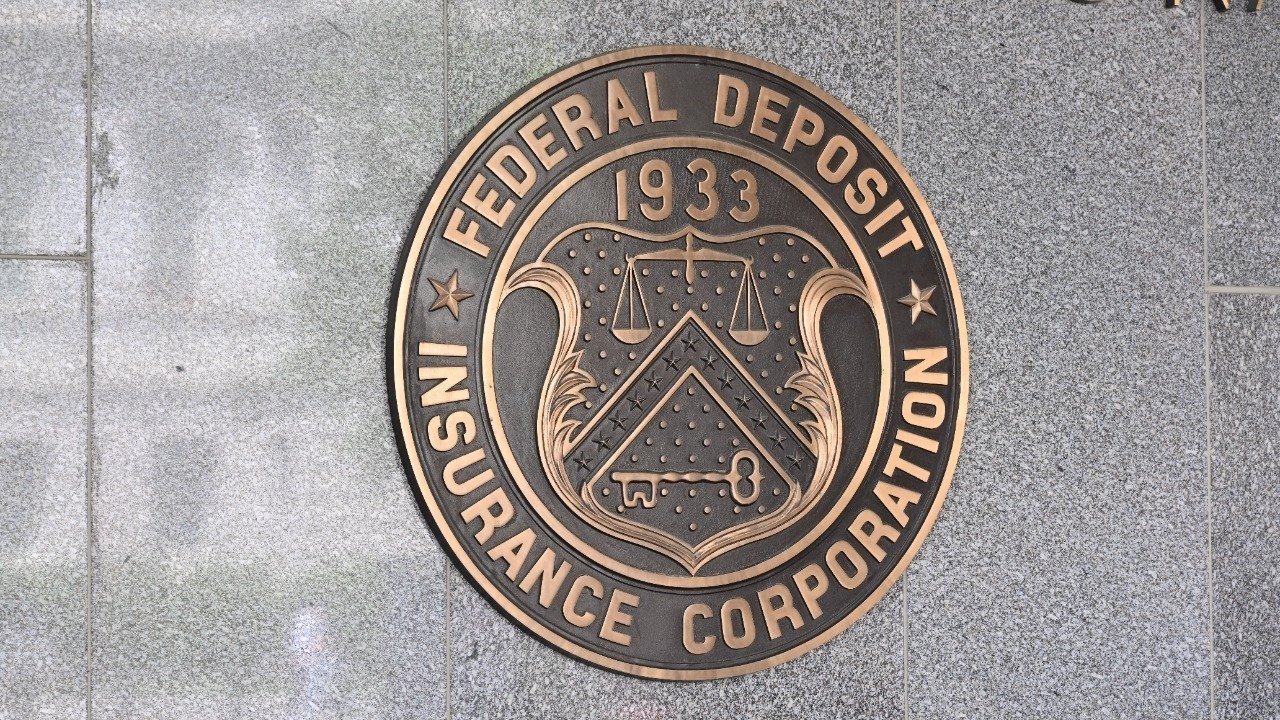
Every American with a bank account relies on a single promise: that the federal government will make them whole if their bank collapses. Since the Federal Deposit Insurance Corporation began operations in 1934, no depositor has lost a single penny of insured funds due to bank failure. That record has held through the Great Depression, the savings-and-loan crisis, the 2008 financial meltdown, and the regional bank failures of 2023, covering more than nine decades and thousands of institutional closures.
Why the FDIC’s 92-year payout record still carries weight
The agency’s track record is not just a historical footnote. It is the bedrock of public confidence in the U.S. banking system. When Silicon Valley Bank and Signature Bank failed in early 2023, depositors across the country questioned whether their money was safe. The FDIC responded by launching a public awareness campaign, noting that more than 99 percent of deposit accounts in the United States fall under the insurance coverage limit and are fully protected. That statistic means the vast majority of individual savers face no risk of loss in a bank failure, at least up to the $250,000 standard maximum.
The agency’s own institutional page states plainly that no depositor has lost a single penny of insured funds since insurance began in 1934. The distinction between the FDIC’s creation in 1933 and the start of deposit insurance in 1934 matters for precision, but the practical result is the same: across every resolution the agency has handled, insured account holders have been made whole. Coverage extends to principal plus accrued interest through the date a bank closes, according to the agency’s consumer guidance on bank failures.
That promise is underpinned by the FDIC’s unique structure as an independent federal agency funded by premiums from insured banks, not by congressional appropriations. As described in its agency overview, the FDIC both supervises certain institutions for safety and soundness and serves as receiver when insured banks fail. This dual role gives the agency visibility into emerging risks and the legal authority to step in quickly when a bank becomes insolvent.
How resolution mechanics protect insured deposits
The promise holds because of specific operational tools the FDIC deploys when a bank fails. The agency’s Resolutions Handbook describes several methods, including purchase-and-assumption transactions, insured deposit transfers, deposit payouts, and bridge bank structures. In a purchase-and-assumption deal, a healthy bank acquires the failed institution’s insured deposits, and customers often access their money the next business day without filing a claim. Insured deposit transfers work similarly, moving covered accounts to another institution while the FDIC liquidates the failed bank’s remaining assets.
In cases where no buyer can immediately be found, the FDIC may create a temporary “bridge bank” to keep basic services running. Customers continue to use checks, debit cards, and online banking while the agency markets the franchise to potential acquirers. Only when there is no viable transaction does the FDIC resort to a straight deposit payout, sending checks directly to insured depositors for their covered balances.
The FDIC’s deposit insurance brochure confirms the scope of protection and explains how ownership categories, such as single accounts, joint accounts, and retirement accounts, each carry separate coverage. This structure allows a depositor to hold well above $250,000 at a single bank and still remain fully insured across different account types, provided the accounts are titled correctly and meet regulatory requirements. The agency maintains a publicly searchable dataset of every failure and assistance transaction from 1934 to the present, giving researchers and journalists a reproducible record to verify the claim independently.
Gaps in the record and what depositors should watch
The FDIC’s perfect record applies strictly to insured deposits. Uninsured funds, those exceeding the coverage limit or held in products not covered by deposit insurance, do not carry the same guarantee. When large banks have failed, uninsured depositors have sometimes waited months or years to recover partial amounts through the receivership process, depending on how much the FDIC can realize from selling the bank’s assets. In some cases, those depositors ultimately absorb losses.
That distinction came into sharp focus during the 2023 regional bank turmoil, when many corporate and venture-capital accounts far exceeded the standard insurance cap. While regulators invoked a “systemic risk” exception to protect all deposits at certain failed banks, officials emphasized that such actions are discretionary and rare. The ordinary rule remains: only insured balances are automatically guaranteed.
For individual savers and small businesses, the lesson is straightforward. First, confirm that your accounts are held at an FDIC-insured institution; the official website lists all covered banks and explains how to verify status. Second, review how your accounts are titled and whether your total balances fit within the applicable limits for each ownership category. Tools and examples in the FDIC’s consumer materials can help depositors structure savings so that more of their money falls under the umbrella of protection.
Finally, understand what FDIC insurance does not cover. Investments such as stocks, bonds, mutual funds, annuities, and crypto assets are outside the program, even if purchased through a bank. Safe-deposit box contents are not insured either. Knowing these boundaries is essential to avoiding false comfort and to planning for risks that fall beyond the FDIC’s mandate.
Ninety-plus years without a loss to any insured depositor is an extraordinary statistic, but it is not a reason for complacency. It is a reminder that the system’s safeguards work best when depositors know where the lines are drawn-and take simple steps to stay on the protected side of them.