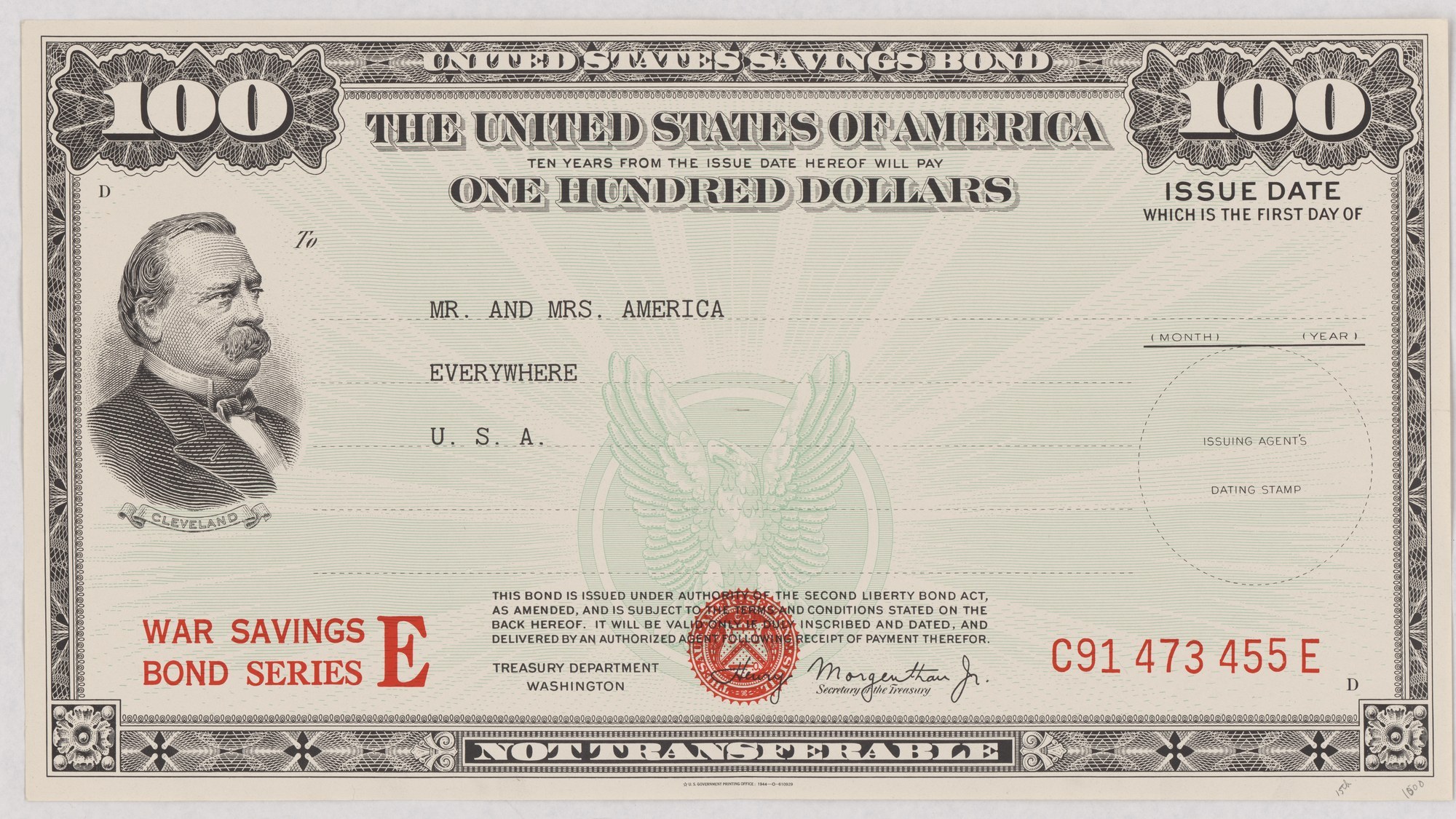
A drawer full of paper U.S. savings bonds can feel like money quietly working in the background, and for a long stretch it is. But every savings bond has a hard stop: at 30 years from its issue date it quits paying interest for good. A bond that sails past that mark is not growing anymore, and if it is left uncashed it can slowly lose ground to inflation while the owner assumes it is still building value.
When a Savings Bond Stops Paying
Series EE and Series I bonds both reach final maturity 30 years after their issue date, and at that point they earn 0%. A bond continues to earn its stated interest right up until it is cashed or hits that 30-year wall, whichever comes first. After final maturity the bond remains valid and can still be redeemed at any time, but it will not add another cent, according to TreasuryDirect’s guidance on how EE bonds work.
That matters because the issue date, not the year a bond was received as a gift or found in a file, sets the clock. Older EE bonds from the 1980s and 1990s have already passed maturity, and even bonds bought in the mid-1990s are reaching the end of their earning life now. A quick look at the issue date printed on each paper bond tells the owner exactly where it stands.
Free retirement updates: One number, like a bond’s issue date or a benefit threshold, can cost or save hundreds. The free Retirement Shield newsletter surfaces the ones worth knowing.
The Tax Trap of a Matured Bond in a Drawer
Leaving a matured bond untouched creates a second, less obvious problem. The interest a savings bond earns is subject to federal income tax, and most owners defer that tax until the bond is cashed. But the tax cannot be deferred forever: interest becomes reportable no later than the year the bond reaches final maturity, whether or not the owner has redeemed it. TreasuryDirect’s tax information for EE and I bonds spells out that timing.
The result can be an unwelcome surprise. A retiree who forgets a stack of bonds that matured years ago may technically owe tax on that accrued interest already, even though the money is still sitting in a drawer earning nothing. Cashing bonds in the year they mature, and reporting the interest then, keeps the tax picture clean and stops a dead asset from lingering. Savings bond interest is exempt from state and local income tax, which softens the bite, but the federal obligation is real.
How to Find and Cash Old Bonds
Redeeming paper bonds is straightforward. Many banks and credit unions will cash them for a customer, and the bonds can also be redeemed by mail through TreasuryDirect, which explains the current steps for cashing a bond, including the identification and signature requirements. Electronic bonds held in a TreasuryDirect account are redeemed online and the proceeds sent to a linked bank account.
Bonds that have gone missing or were never claimed are not necessarily lost money. The Treasury runs a free Treasury Hunt search that lets a person look up matured savings bonds registered to their name or Social Security number. Families settling an older relative’s affairs often turn up forgotten bonds this way, and because a matured bond has stopped earning, there is no reason to leave it unclaimed.
The Doubling Guarantee Built Into Newer EE Bonds
Series EE bonds issued since May 2005 carry a feature that makes checking the issue date even more valuable: a Treasury guarantee that the bond will be worth at least twice its purchase price at the 20-year mark. These bonds earn a fixed rate for the life of the bond, and if that interest alone has not doubled the value by 20 years, the Treasury makes a one-time adjustment to bring it up to double. After that point the bond keeps earning its fixed rate until final maturity at 30 years.
For an owner holding EE bonds bought in the 2000s or 2010s, that guarantee can mean a meaningful step-up right around the two-decade mark, so cashing one a few months early can leave money on the table. Reading the issue date against both the 20-year doubling point and the 30-year stop tells the owner whether a bond is still climbing, about to jump, or has quietly flatlined. Older EE bonds issued before May 2005 followed different, often variable, terms, which is one more reason the printed issue date is the number that decides how a particular bond should be handled.
Fitting Old Bonds Into a Retirement Plan
For an older saver, the takeaway is to treat savings bonds as an asset that needs periodic attention rather than a set-and-forget keepsake. Sorting a collection by issue date reveals which bonds have already stopped paying, which are approaching the 30-year mark, and which still have years of interest left. The ones that have matured should generally be cashed and the interest reported, so the money can be redeployed into an account that actually earns a return.
Bonds still within their earning window can stay put, but noting each maturity date makes it easy to act before a bond quietly slides into the zone where it earns nothing and may owe tax. A short inventory, checked against the TreasuryDirect rules, turns a forgotten drawer into a clear part of the retirement balance sheet.
This article was researched and drafted with the assistance of AI and reviewed by The Financial Wire editorial team.
More Financial Reading
- What really happens to your joint savings account when you die?
- Bank statements: how long to keep them and when to toss them