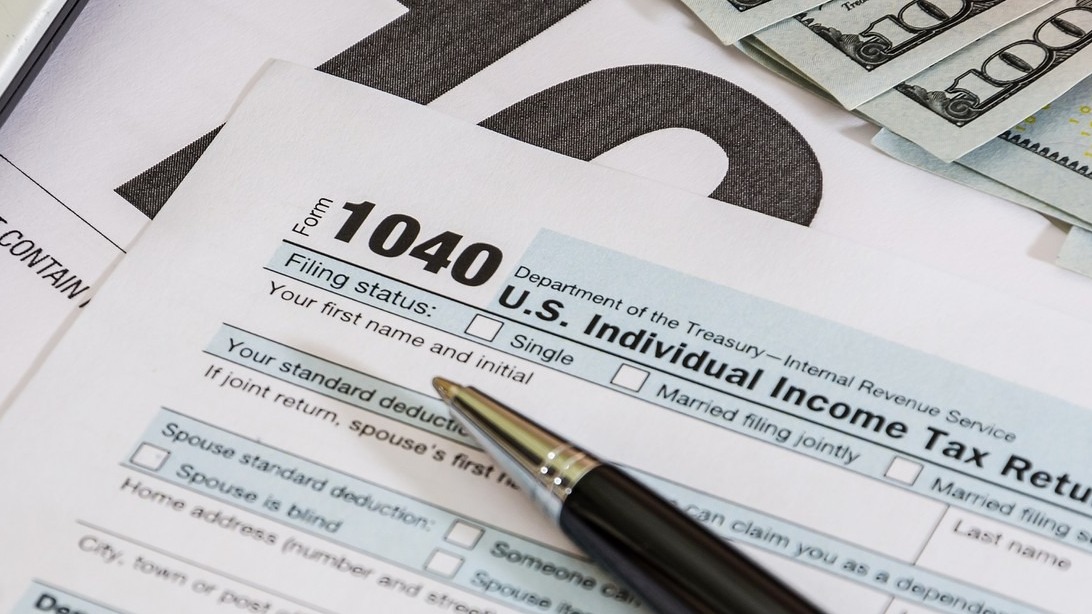
Tax professionals across the country are flagging the same problem this filing season: retirees who prepared their own 2025 federal returns checked the “65 or older” box on Form 1040, claimed the higher standard deduction, and stopped there. What many of them did not realize is that a separate, brand-new deduction worth up to $6,000 per person requires its own form, and skipping that form means leaving real money with the Treasury.
Enrolled agents and CPAs who spoke about the trend say amended returns for this missed benefit have become one of the most common corrections of the 2025 filing season. The pattern is consistent enough that practitioner estimates and the structural design of the new tax provision suggest roughly one in four eligible retirees may have filed without claiming it. That figure is not drawn from IRS return data, which the agency has not yet released for the 2025 tax year. It reflects the compounding effect of several procedural gaps described below.
The deduction is real, but it is not automatic
The Senior Bonus Deduction was enacted as part of the One Big Beautiful Bill Act (OBBBA, P.L. 119-21), the sweeping fiscal package signed into law in 2025. It provides up to $6,000 for a qualifying individual age 65 or older, which means a married couple filing jointly can claim as much as $12,000. The provision is codified in 26 U.S. Code Section 151, the personal-exemption provision that was suspended under the 2017 Tax Cuts and Jobs Act and revived in modified form by the OBBBA for tax year 2025 onward.
Here is what trips people up: the deduction does not flow from the age checkbox on the front of Form 1040 or 1040-SR. Filers must complete Schedule 1-A, a form the IRS created specifically for OBBBA-related deductions. The calculated amount on Schedule 1-A then transfers to Form 1040 (or 1040-SR), line 13b. Skip that step, and the deduction simply does not appear on the return.
The IRS confirmed this workflow in its official announcement of Schedule 1-A and again in Publication 554, the agency’s Tax Guide for Seniors for 2025. Both documents direct qualifying filers to the new schedule rather than to the standard deduction adjustment seniors have relied on for years. The Senior Bonus Deduction is separate from, and stacks on top of, the existing higher standard deduction for taxpayers 65 and older. It also stacks on top of itemized deductions for seniors who itemize, because it is a Section 151 deduction, not a component of the standard deduction.
Why so many retirees are likely missing it
The IRS has not yet released filing-season data showing how many eligible seniors attached Schedule 1-A to their 2025 returns. But the structural risk of under-claiming is significant, and several factors compound the problem as of June 2026:
- Muscle memory. For decades, the age checkbox was the only senior-specific step on the 1040. Retirees who self-file have no reason to suspect a second, unrelated form now exists.
- Software inconsistencies. Whether major platforms such as TurboTax, H&R Block, and FreeTaxUSA automatically prompt users to complete Schedule 1-A when they enter a birthdate before January 1, 1961, varies by vendor and update cycle, according to practitioner accounts from this filing season. Filers using older or free-tier versions may not receive the prompt at all.
- Preparer overload. The OBBBA created multiple new deductions at once: tips, overtime, auto-loan interest, and the senior benefit all route through Schedule 1-A. Tax preparers juggling all of these changes in a single season can overlook one, especially when the senior deduction sits in a code section most practitioners had not touched since 2017.
- Confusing legal placement. Parking the new deduction in Section 151, the old personal-exemption provision, risks misclassification by software or preparers who associate that section with a benefit that did not exist between 2018 and 2024.
The National Taxpayer Advocate, the independent office within the IRS that monitors filing-season problems, has previously warned that new provisions with separate form requirements tend to be under-claimed in their first year, a pattern seen with the Recovery Rebate Credit in 2020 and the Premium Tax Credit in 2014. The Senior Bonus Deduction fits that profile.
Income phaseouts can shrink or eliminate the benefit
Even retirees who know about Schedule 1-A may be surprised by the result. The $6,000 deduction phases out as modified adjusted gross income (MAGI) rises. Under the OBBBA, the phaseout begins at $150,000 of MAGI for single filers and $300,000 for married couples filing jointly. The deduction is reduced by $300 for every $10,000 (or fraction thereof) by which MAGI exceeds the applicable threshold, which means the benefit disappears entirely at $350,000 for single filers and $500,000 for joint filers.
To put that in concrete terms: a single retiree with a MAGI of $200,000 exceeds the $150,000 threshold by $50,000, or five $10,000 increments. Five times $300 equals $1,500 in reductions, leaving a partial deduction of $4,500. At a 22% marginal tax rate, that partial deduction still saves roughly $990 in federal tax. At the full $6,000, the savings would be about $1,320 at the same rate.
The phaseout calculation on Schedule 1-A factors in taxable retirement distributions, Social Security benefits above certain thresholds, tax-exempt interest, and other above-the-line adjustments. A retiree whose MAGI lands in the phaseout range could receive a partial deduction or none at all. Small changes in retirement-account withdrawals or part-time earnings can shift a filer from full eligibility to a reduced benefit. Seniors who took larger-than-usual IRA distributions in 2025 should pay close attention to the phaseout worksheet on Schedule 1-A before assuming they qualify for the full amount.
One important note: the Senior Bonus Deduction does not reduce MAGI for purposes of calculating how much of your Social Security benefits are taxable. That calculation uses a separate formula (found on the Social Security Benefits Worksheet in IRS Publication 915) and is determined before the Section 151 deduction is applied.
What to do if you already filed without it
Retirees who submitted their 2025 returns without Schedule 1-A are not out of luck, but they do need to act. The standard remedy is to file an amended return using Form 1040-X, attaching a completed Schedule 1-A and adjusting line 13b on the corrected 1040. The IRS generally allows amended returns within three years of the original filing deadline, so there is time. But the sooner a correction is filed, the sooner any additional refund arrives. Interest on overpayments accrues from the original due date, so early filers do not lose ground by amending now.
For those who have not yet filed, the checklist is short:
- Confirm you (or your spouse, if filing jointly) were 65 or older by December 31, 2025.
- Complete Schedule 1-A, including the phaseout worksheet if your MAGI is near or above the threshold ($150,000 single / $300,000 joint).
- Transfer the result from Schedule 1-A to Form 1040 or 1040-SR, line 13b.
- Attach Schedule 1-A to your return before submitting.
If you use tax software, search for “Schedule 1-A” or “Senior Bonus Deduction” in the program’s help or search bar. If the software does not surface it, consider updating to the latest version or consulting a tax professional before filing.
A $6,000 form that Congress forgot to connect
Congress gave seniors a meaningful tax break in the OBBBA. The IRS built a dedicated form to deliver it. But neither the law nor the form connects to the one step retirees have performed on autopilot for years: checking the age box. Until the agency bridges that gap, or until tax software universally automates the Schedule 1-A workflow, the burden falls on individual filers to know the form exists and to complete it. For a benefit worth up to $6,000 per person, or $12,000 per couple, that is a form worth finding.