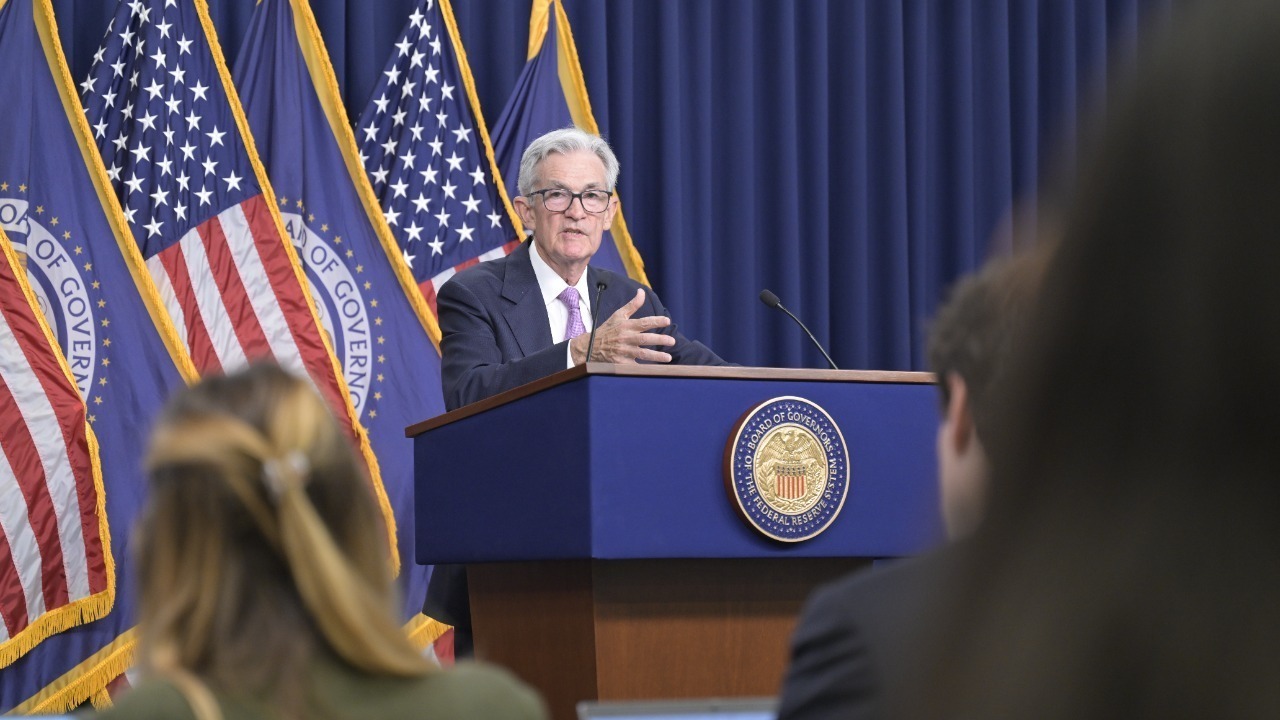
Jerome Powell is not leaving the Federal Reserve. He is stepping down as chair, but he intends to keep his seat on the Board of Governors until his term expires on January 31, 2028, according to his official Fed biography. That makes him the first outgoing chair to remain on the board since Marriner S. Eccles did so in 1948, and it carries a concrete political consequence: President Donald Trump loses a vacancy he would otherwise use to install a loyalist and tilt the seven-member board toward his administration.
Powell has signaled that legal actions taken by the Trump White House factored into his decision, according to Reuters reporting in early 2025 and subsequent coverage by The Washington Post. He has not released a formal public statement elaborating on his reasoning. But the move itself speaks clearly enough: Powell is using the structure of the Federal Reserve Act to hold his ground.
How the law works in Powell’s favor
The Federal Reserve Act creates a seven-member Board of Governors. Each member serves a single 14-year term, with one term expiring on January 31 of every even-numbered year. The chair and vice chair are not separate appointments; they are four-year designations given to sitting governors, as the Fed’s own Section 10 statutory text and its public FAQ make clear.
That distinction is the entire ballgame. When Powell’s four-year chair designation ends, his underlying governor seat does not vanish with it. He was confirmed to a full governor term running through January 2028, and nothing in the statute converts a leadership change into a board vacancy. A president can name a new chair from among sitting governors or nominate someone new to fill an open seat, but cannot force a governor out simply by choosing a different leader.
Removal of a Fed governor requires “cause,” a legal standard rooted in the 1935 Supreme Court decision Humphrey’s Executor v. United States. The Court has narrowed removal protections for some agency heads in recent years, notably in Seila Law v. CFPB (2020) and Collins v. Yellen (2021), but neither ruling directly overturned the for-cause shield that applies to multi-member boards like the Fed’s. As of mid-2026, that protection remains intact. No administration official has publicly announced a legal challenge to Powell’s continued service as a governor.
The board math Trump cannot change
With Powell occupying his seat through January 2028, the administration loses the one vacancy that would have given it a path to a four-seat majority on the seven-member board before the current presidential term ends in January 2029. Without that opening, and absent surprise resignations by other sitting governors, Trump must work with a board that includes holdovers whose views on interest rates, bank supervision, and financial regulation may differ sharply from the White House’s preferences.
The stakes are not abstract. The Board of Governors votes on interest-rate decisions alongside regional Fed bank presidents on the Federal Open Market Committee, sets supervisory priorities for the largest U.S. banks, and shapes rules governing everything from capital requirements to consumer lending. A president who controls a board majority can steer all of those functions. A president who does not must negotiate.
Trump has made no secret of his frustration with Powell. Throughout his first term and into his current one, he publicly attacked the chair for keeping interest rates too high, at times suggesting he had the authority to fire him. Powell consistently maintained that the president lacks that power, and no formal removal proceeding was ever initiated. By remaining on the board, Powell extends that standoff beyond the chair’s office and into the broader governance of the institution.
The question of who will replace Powell as chair adds another layer. Kevin Warsh, a former Fed governor, and Kevin Hassett, a former White House economic adviser, have both been reported as leading candidates, though the White House has not made a formal announcement as of July 2026. Whoever takes the gavel will lead a board they do not fully control.
A 78-year-old precedent, revived
The last Fed chair to pull this move was Marriner Eccles. In 1948, President Harry Truman chose not to reappoint Eccles to the chairmanship, passing him over in favor of Thomas McCabe. Eccles could have walked away. Instead, he stayed on as a rank-and-file governor and used his remaining time to wage a public fight for Fed independence during a bitter dispute with the Treasury Department over whether the central bank should continue pegging interest rates to keep government borrowing costs low. That fight culminated in the Treasury-Fed Accord of 1951, widely regarded as a landmark moment in central bank autonomy.
Every chair between Eccles and Powell took a different path. Some resigned from the board when their leadership term ended. Others saw their governor terms expire simultaneously. The Fed’s historical roster of board members confirms the unbroken pattern: for nearly eight decades, a departing chair departed entirely. Powell is breaking that norm, and he is doing so at a moment when the relationship between the White House and the Fed is more openly adversarial than at any point since the Truman era.
What remains unresolved
Powell has not publicly identified which specific legal actions by the Trump administration prompted his decision. Journalists have attributed the rationale to broader concerns about executive overreach into independent agencies, including the administration’s moves to restructure or sideline other federal bodies, but the precise trigger remains a matter of reporting rather than official record.
The board’s future composition is also uncertain. Governor terms expire on a staggered schedule, and any sitting member could resign at any time. A single unexpected departure would reopen the path to a Trump majority, making Powell’s blockade effective but fragile.
Then there is the legal question hanging over all of it. The Supreme Court’s recent willingness to revisit the constitutional status of independent agencies means a direct challenge to the Fed’s for-cause removal standard is not out of the question. If the Court were to rule that the president can dismiss Fed governors at will, Powell’s decision to stay would become moot overnight. No such case is currently on the Court’s docket as of July 2026, but the legal landscape is shifting, and both the White House and Fed watchers know it.
A procedural right with political force
On paper, Powell’s choice is a simple exercise of a right the Federal Reserve Act has always provided. Any governor whose term has not expired may continue serving regardless of whether they hold a leadership title. But context transforms a procedural decision into a political act. By staying, Powell preserves the board’s existing balance, limits the president’s ability to reshape monetary policy through appointments, and revives a precedent the institution itself had abandoned for the better part of a century.
Whether that amounts to institutional stewardship or institutional obstruction depends on where you stand. What the Fed’s own documents establish, without ambiguity, is that Powell has the legal right to do exactly what he is doing, and that the last person to do it helped secure the Fed’s independence for generations.