A restaurant owner in Chicago who runs $50,000 a month in credit card sales might pay $400 or more in interchange fees just on tips and sales tax. Illinois passed a law to eliminate those charges. In 29 days, the federal government will undo that protection.
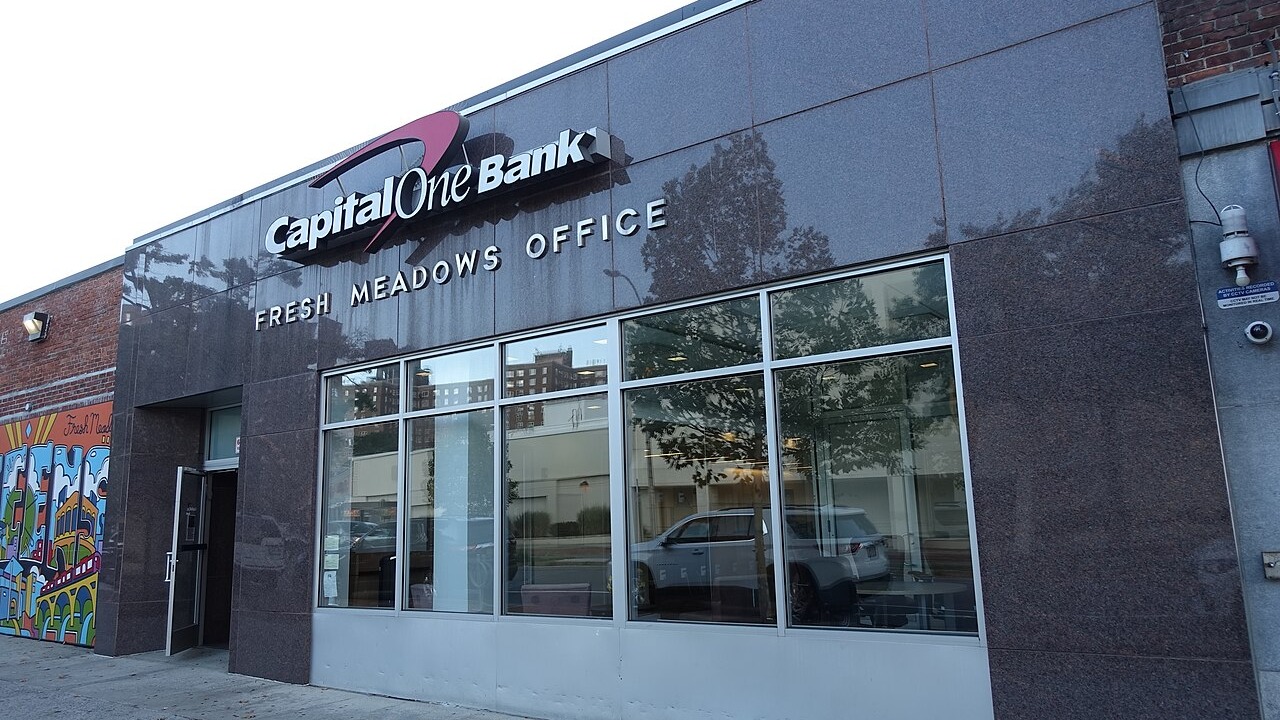
On June 30, 2026, an interim final rule from the Office of the Comptroller of the Currency takes effect. The rule amends 12 CFR 7.4002, the federal regulation governing non-interest charges that national banks may impose, and states explicitly that a national bank’s authority to charge fees extends to interchange fees set by third-party networks like Visa and Mastercard. A companion preemption order names one state law directly: the Illinois Interchange Fee Prohibition Act, or IFPA, which barred banks and card networks from collecting interchange on the tip and sales-tax portions of card transactions. For national banks and federal savings associations, that Illinois law will no longer apply.
What the OCC rule actually does
Every time a customer swipes, taps, or inserts a card, the merchant’s bank pays a fee to the card-issuing bank. That fee, called interchange, typically runs between 1.5% and 3.5% of the transaction total. On a $100 dinner tab with a $20 tip and $8 in sales tax, the merchant may owe interchange on the full $128, not just the $100 for food. The money from the tip goes to the server. The sales tax goes to the state. But the interchange fee is calculated on both.
The OCC’s interim final rule does not create a new power for banks. It clarifies one the agency says already existed under the National Bank Act: the authority to treat interchange fees, even those calculated by an outside network, as permissible non-interest charges. The practical result is that no state can cap, carve out, or restrict those fees for federally chartered institutions.
The preemption order paired with the rule targets Illinois because the IFPA was the most prominent state law directly limiting interchange on specific line items. Illinois enacted the IFPA to shield merchants from paying swipe fees on money that never belonged to them. The OCC concluded that federal law preempts the IFPA for any transaction processed through a national bank or federal savings association.
A separate supervisory bulletin tells banks how to comply. It directs them to review fee schedules, update merchant disclosures, and coordinate with payment networks so that interchange practices align with the clarified federal authority. Banks remain responsible for ensuring that third-party fee structures meet safety and soundness standards, even when Visa or Mastercard, not the bank, sets the rate.
Why this matters well beyond Illinois
Interchange fees are not a niche line item. U.S. merchants paid roughly $172 billion in card-processing fees in 2023, according to the Nilson Report (Issue 1271, March 2024), making interchange one of the largest operating costs for retailers and restaurants after labor and rent. The fees have been a flashpoint for more than a decade. The 2010 Durbin Amendment capped debit interchange for the largest banks. Visa and Mastercard proposed a settlement exceeding $5.6 billion in 2024 to resolve longstanding merchant interchange claims, but U.S. District Judge Margo Brodie in the Eastern District of New York rejected the deal that June, calling it inadequate. Senators Dick Durbin and Roger Marshall have repeatedly introduced the Credit Card Competition Act, most recently in 2025, to force more network routing options and potentially lower rates. None of those efforts have reached a floor vote.
Illinois was the first state to carve tips and sales tax out of the interchange calculation. Several other states have explored similar measures. But the OCC’s preemption logic does not stop at the IFPA. The agency’s reasoning applies to any state law that limits fees national banks are authorized to charge. That means legislators in other states considering interchange restrictions now face a federal ceiling they cannot breach for transactions routed through federally chartered institutions.
What is still unresolved
The OCC has not published data quantifying how much interchange revenue Illinois merchants saved under the IFPA, or how much national banks stand to recover once preemption kicks in. Without those figures, the financial scale of the shift is hard to pin down for either side.
Illinois state officials have not issued a public response to the preemption order as of early June 2026. Whether the state attorney general will challenge the order in court, whether the legislature will attempt a workaround targeting state-chartered banks (which fall outside OCC jurisdiction), or whether Illinois will simply accept the federal determination remains an open question.
The rule and order are both labeled “interim final,” a designation that means they take effect on the stated date but remain open to revision after a public comment period. Industry groups, merchant associations, and consumer advocates can submit comments that could lead to changes, though the OCC has not committed to a revision timeline beyond the June 30 effective date.
There is also a jurisdictional gap worth watching. The OCC oversees national banks and federal savings associations, but it does not regulate state-chartered banks or credit unions. State interchange restrictions could still apply to those institutions unless a separate federal agency or court extends the preemption reasoning. That distinction is not trivial: according to FDIC data, state-chartered institutions hold close to half of all U.S. banking assets and process a substantial share of card transactions.
What merchants and banks should do before June 30
For merchants, the immediate step is to identify which of their acquiring banks or payment processors hold national charters. Transactions routed through those institutions will be subject to the full interchange rate on the entire transaction amount, including tips and sales tax, regardless of any state law that previously said otherwise. Merchants whose processors use state-chartered banks should confirm whether the IFPA or similar state protections still apply to their accounts.
For banks, the OCC’s supervisory bulletin sets clear expectations: review fee schedules, update disclosures to merchants, and verify that network-set interchange rates are consistent with safety and soundness requirements. Banks that fail to update their compliance frameworks before the effective date risk supervisory scrutiny.
What the regulatory record shows as of June 2026
Twenty-nine days is not much runway. The OCC’s three primary documents, the news release, the rule bulletin, and the supervisory bulletin, establish the regulatory baseline that will govern interchange fees for national banks after June 30, 2026. Those texts confirm that national banks can treat interchange fees, including those calculated on tips and sales tax, as permissible non-interest charges under federal law, and that Illinois cannot enforce the IFPA against federally chartered institutions.
What the documents do not do is quantify the economic hit to merchants, predict how Illinois or other states will respond, or forecast whether Visa and Mastercard will adjust their rate schedules. The comment period could still produce revisions. A court challenge could pause enforcement. But unless one of those things happens, the rule stands, and merchants across Illinois will see the charges return to their statements starting July 1.