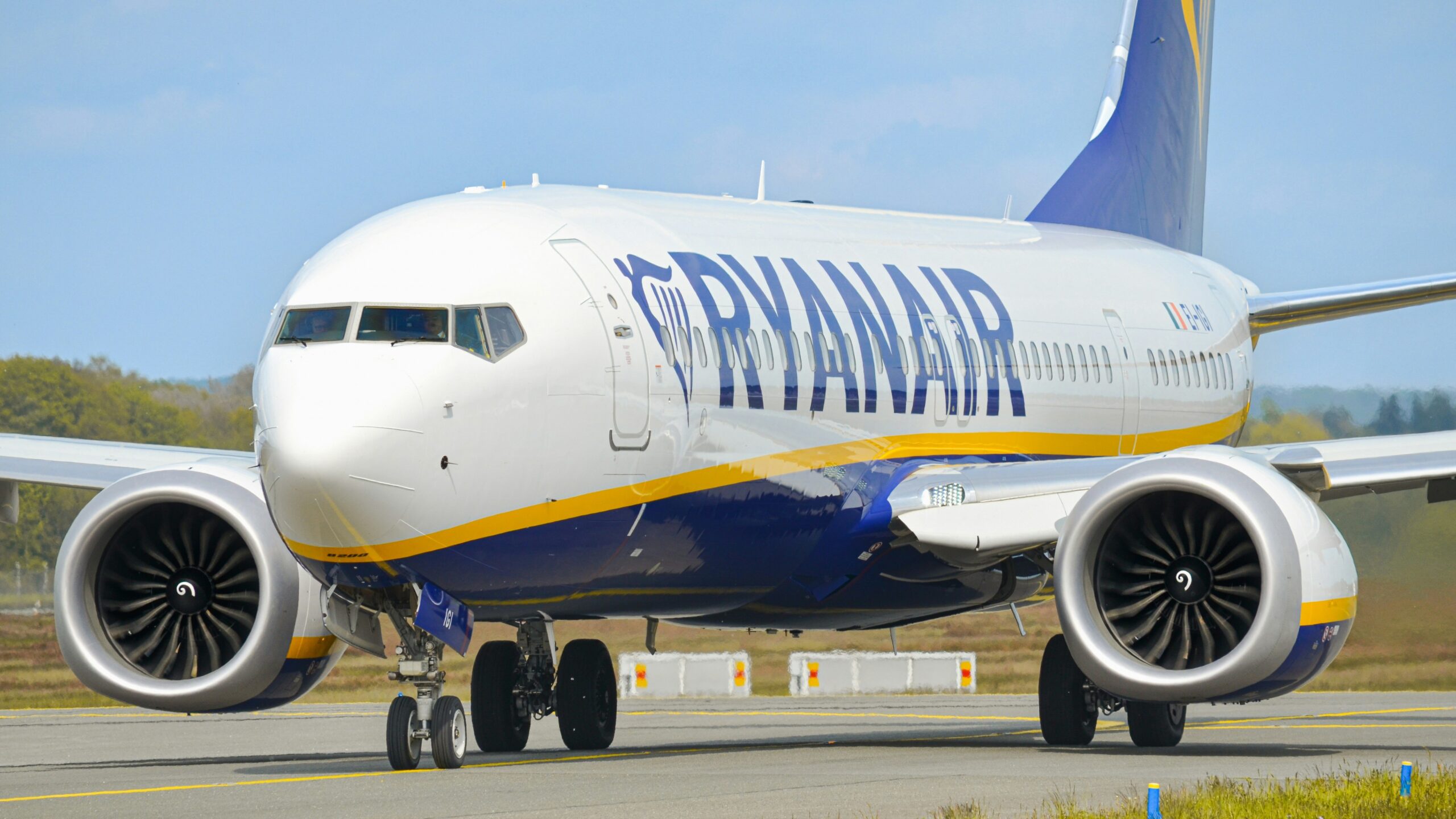
Ryanair chief executive Michael O’Leary has named Wizz Air and airBaltic as the European budget airlines most likely to go bankrupt before the end of 2026, warning that oil prices near $150 a barrel are creating an existential crisis for carriers that failed to lock in cheaper fuel.
“Two or three European airlines could go bankrupt this winter,” O’Leary said in remarks reported by Euronews and other European outlets in late April 2026. He singled out the two carriers by name, claiming neither hedged its fuel needs at lower prices before the spike driven by the ongoing conflict involving Iran.
How Ryanair hedged its way to a buffer
Ryanair locked in roughly 80 percent of its fuel requirements at earlier, lower rates, according to O’Leary. That figure is consistent with the airline’s long-standing hedging strategy, which it has disclosed in annual financial filings for years. The buffer has blunted the worst of the price surge but has not eliminated it. O’Leary said Ryanair’s monthly fuel bill has still climbed by approximately €50 million, a measure of how severe the cost shock has been even for a carrier that planned ahead.
Critically, O’Leary disclosed that Ryanair’s hedged fuel supply runs only through May 2026. After that date, the airline faces exposure to spot-market prices if the conflict continues to disrupt global oil supply. For carriers that entered 2026 with little or no hedging, the math is far worse: every flight burns cash at rates their business models were never built to absorb.
O’Leary did not say whether Ryanair has raised fares or added fuel surcharges in response to the crisis. The airline’s public statements as of late April 2026 have focused on its hedging position rather than on pricing changes, leaving it unclear how much of the increased cost is being passed to passengers.
Why Wizz Air and airBaltic are in the spotlight
The two airlines O’Leary named occupy different corners of the European market, but both operate on razor-thin margins that leave almost no room for a sustained fuel shock.
Wizz Air, the London-listed Hungarian carrier, has expanded aggressively across Central and Eastern Europe over the past decade. It has historically hedged a smaller share of its fuel than Ryanair. Wizz Air’s publicly available financial disclosures indicate lower hedging coverage than its larger rival, though the company had not published a quarterly update specifying exact hedging percentages for the period coinciding with the April 2026 price spike. That gap becomes dangerous when crude prices nearly double. The airline has also taken on significant debt to finance rapid fleet growth, including large orders for Airbus A321neo aircraft, which limits its financial flexibility in a crisis.
airBaltic, majority-owned by the Latvian government, is a smaller operator that has struggled with profitability for years. Government backing provides a potential lifeline that purely private carriers lack, but it does not guarantee a bailout if losses spiral. The airline had been pursuing an initial public offering as recently as 2024 and 2025, a plan that now looks far more difficult to execute given deteriorating market conditions.
Neither Wizz Air nor airBaltic had issued a formal public response to O’Leary’s comments as of late April 2026.
The fuel price picture
O’Leary’s $150-per-barrel figure reflects where Brent crude has traded in recent weeks, pushed higher by supply disruptions linked to the Iran conflict, as reported by Euronews in late April 2026. Whether prices stay at that level, climb further, or retreat depends on factors no airline controls: the duration and scope of the conflict, OPEC+ production decisions, and shifts in global demand.
For context, Brent crude averaged roughly $80 a barrel through much of 2024 and into early 2025. The jump toward $150 represents nearly a doubling of input costs. Jet fuel prices have tracked even higher on a percentage basis because refining margins have also widened. Industry group IATA has regularly cited fuel as representing 25 to 30 percent of a typical airline’s operating costs in its annual fact sheets, meaning a sustained doubling of crude prices can erase profit margins entirely for carriers without hedging protection.
Europe’s budget airline sector has been here before
Low-cost carriers in Europe have a grim track record during periods of financial stress. Monarch Airlines collapsed in 2017 after years of margin pressure. WOW Air, the Icelandic discounter, shut down abruptly in 2019. Flybe, the UK regional carrier, went under in early 2020 just as the pandemic arrived. In each case, thin margins, high fixed costs, and an external shock combined to prove fatal.
The current situation shares those features: a sudden cost spike that outpaces airlines’ ability to raise fares, a competitive environment that punishes price increases, and consumers already stretched by broader inflation. What sets this moment apart is scale. A sustained period of $150 oil pressures not just the weakest carriers but the entire sector, raising the possibility that failures could come in clusters rather than one at a time.
What passengers should watch for
If one or more budget carriers do fail, the immediate fallout would include canceled flights, stranded passengers, and a scramble for rebooking on surviving airlines. Fares on remaining carriers would almost certainly rise as competition decreases and fuel surcharges get passed through to ticket prices.
Even short of outright collapse, travelers may see schedule cuts, route cancellations, and higher fees as airlines try to reduce unprofitable flying. Under EU Regulation 261/2004, passengers on canceled flights are entitled to rebooking or refunds, but enforcing those rights against an insolvent airline is notoriously difficult. Travelers booking flights for late 2026 and into winter should consider choosing carriers with stronger balance sheets and watching for warning signs of financial distress, such as sudden route withdrawals or delays in processing refunds.
O’Leary’s motives deserve scrutiny
O’Leary is one of European aviation’s most deliberately provocative executives. His public statements have always served dual purposes: informing the market and positioning Ryanair competitively. Predicting the failure of direct rivals while highlighting his own airline’s preparedness is a message designed to reassure Ryanair investors and unsettle competitors’ customers and creditors.
That does not make his analysis wrong. The underlying mechanics he describes are real: unhedged airlines facing $150 oil on thin margins are genuinely vulnerable. But his specific predictions about which carriers will fail, and when, should be weighed against his obvious interest in the outcome. Until Wizz Air and airBaltic publish updated financial data, or until independent analysts issue detailed assessments, O’Leary’s warning is best understood as a credible alarm from an interested party, not a confirmed forecast.
A sector running out of runway
What is not in dispute is that European budget aviation is facing its most serious cost crisis since the pandemic. Oil near $150 a barrel, an uncertain geopolitical outlook, and a consumer base already squeezed by inflation create conditions where airline failures are a genuine possibility, not speculation. Whether the casualties are the specific carriers O’Leary named or others he did not, the coming months will test the financial resilience of every low-cost operator on the continent. The airlines that hedged early have bought themselves time. The ones that did not are running out of it.