Jerome Powell may have already cast his final consequential vote as Federal Reserve chair. Whether he used it to break ranks will become public knowledge on Wednesday afternoon.
The Fed held its benchmark interest rate steady at the April 28-29 meeting, keeping the federal funds rate in the 4.25%-4.50% range where it has sat since December 2024. The post-meeting statement announced the hold but, as is standard practice, did not break down individual votes beyond confirming the decision. The full minutes, scheduled for release Wednesday at 2 p.m. Eastern, will include the complete roll call, showing whether Powell or any other voting member dissented in favor of a rate cut.
The timing makes this document unusually charged. Powell is leading the FOMC in a caretaker capacity after President Trump nominated Kevin Warsh to succeed him as chair. Warsh’s confirmation process in the Senate Banking Committee has moved forward, though he has not yet been sworn in. Until that happens, Powell retains full voting authority and continues to preside over meetings and press conferences. If the minutes reveal that Powell used his final turn at the helm to dissent in favor of easing, it would rank among the most pointed parting signals any Fed chair has delivered to a successor.
Why Powell’s vote carries outsize weight
Fed chairs almost never dissent. The last sitting chair to vote against the committee’s decision was Arthur Burns in 1978, and even that case is debated by historians. A dissent from Powell at the April meeting would break nearly five decades of precedent and land squarely in the middle of a leadership transition that has already drawn intense scrutiny from markets and lawmakers.
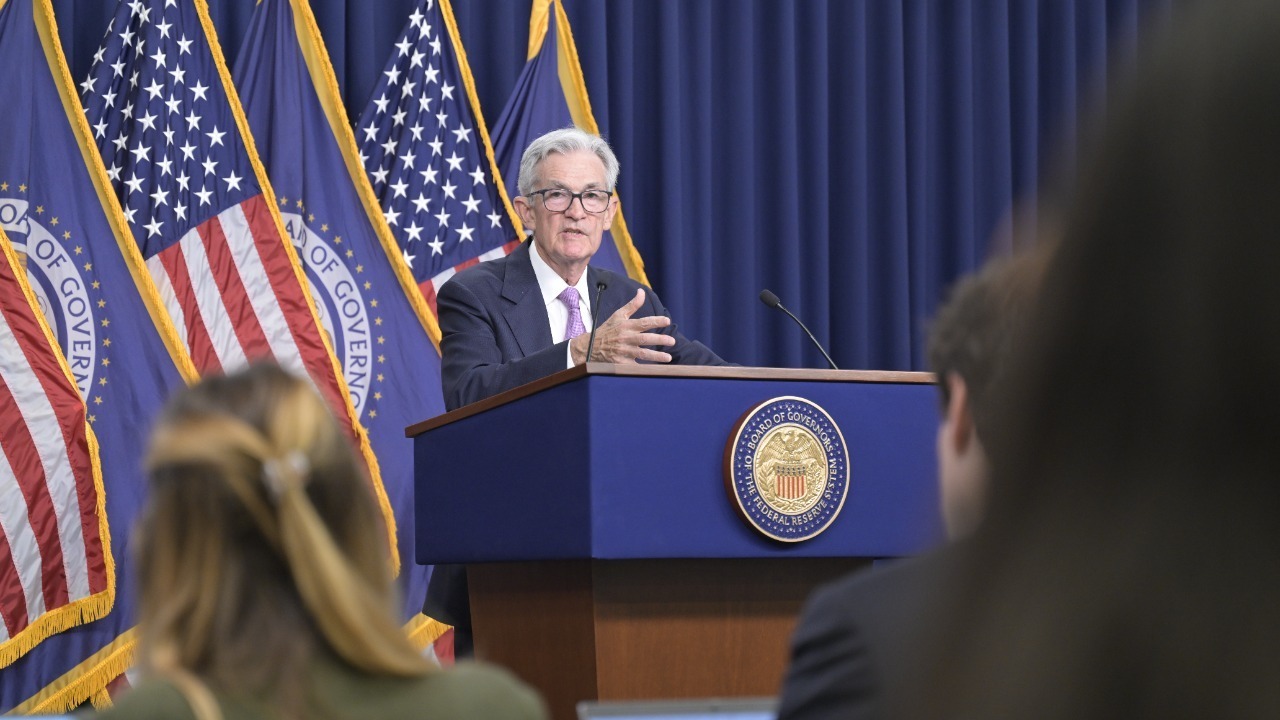
Powell’s post-meeting press conference offered hints but no definitive answer. He acknowledged that economic risks had shifted, flagged persistent uncertainty from trade policy, and repeated that the committee would remain “data dependent.” None of that language telegraphed a dissent, but none of it ruled one out either. The minutes will settle the question.
A unanimous vote to hold rates would signal continuity and a clean handoff to Warsh. A split decision, especially one with Powell on the losing side, would signal something far messier: that the outgoing chair believed the economy needed relief the rest of the committee was not ready to provide.
The economic crosscurrents that shaped the debate
The April meeting unfolded against data that gave both hawks and doves something to point to. The Bureau of Labor Statistics reported that the consumer price index for March rose 2.4% year-over-year, still above the Fed’s 2% target. Core CPI, which strips out food and energy, came in at 2.8%. Those numbers gave rate-cut skeptics a straightforward argument: inflation is not yet where it needs to be.
On the other side of the ledger, the Bureau of Economic Analysis reported that first-quarter GDP grew at an annualized rate of just 0.4%, a sharp deceleration from the prior quarter and well below consensus forecasts. Business investment softened, and consumer spending growth slowed. Several regional Fed presidents, in public remarks before the April meeting, noted that corporate contacts were pulling back on hiring and capital expenditure plans amid uncertainty over tariff policy.
That tariff uncertainty has been a persistent complication. The White House’s trade actions throughout early 2025, including new levies on Chinese goods and adjustments to tariffs on European imports, have rippled through supply chains and complicated the Fed’s inflation forecasts. Governor Christopher Waller said in an April speech that tariff-driven price increases could prove temporary but acknowledged the risk that they might feed into broader inflation expectations. The minutes will show how heavily that concern weighed on the committee’s deliberations behind closed doors.
What the minutes will show and what they won’t
FOMC minutes follow a consistent format. They summarize the range of views expressed during the two-day meeting, attribute arguments to “some participants” or “several members” without attaching names, and record the final vote with each member identified by name and the direction of any dissent. They do not include verbatim transcripts; those are released on a five-year lag under the Fed’s transparency policy.
That means Wednesday’s release will answer the vote question cleanly. If Powell dissented, his name will appear in the record. If the vote was unanimous, the document will say so explicitly. What the minutes will not provide is Powell’s private reasoning in his own words. Readers will need to piece that together from the discussion summary and his press conference remarks.
Equally important will be the staff economic projections embedded in the minutes. If Fed economists marked down their growth forecasts or flagged rising recession probabilities, that backdrop would explain why some members might have leaned toward a cut even with inflation still elevated.
Warsh’s shadow over the document
Kevin Warsh did not participate in the April meeting and holds no formal authority until he is sworn in. His path to the chair requires two separate Senate confirmations: one for the four-year chair term and one for a seat on the Board of Governors. The White House submitted both nominations, and procedural steps have advanced, but the process is not yet complete.
Warsh’s policy instincts are well documented from his earlier tenure as a Fed governor from 2006 to 2011 and from a decade of public commentary since, including op-eds in The Wall Street Journal and testimony before congressional committees. He has consistently argued against prolonged monetary accommodation and warned that the Fed risks its credibility by keeping rates too low for too long. Translating that general orientation into specific predictions about his first moves as chair requires guesswork, but the April minutes will define the policy landscape he inherits.
That gap between Powell’s departure and Warsh’s arrival matters for markets. Every sentence in the minutes will be parsed not just for what it reveals about the economy in late April, but for what it implies about the consensus, or lack of one, that the incoming chair will have to manage.
Three things to watch when the document drops
First, the vote count. A unanimous hold is the baseline expectation. Any dissent, from Powell or anyone else, would be a market-moving surprise. Second, the tone of the growth discussion. If multiple members voiced concern about overtightening or flagged deteriorating labor market conditions, that language will shift rate-cut expectations forward. The CME FedWatch tool currently shows traders pricing roughly 60% odds of at least one cut by the end of 2025, and dovish minutes could push that probability higher.
Third, the treatment of trade policy. If the committee treated tariff-related inflation as likely transitory, that would suggest a lower bar for future cuts. If members described it as a persistent risk requiring patience, the bar stays high.
For mortgage borrowers, corporate treasurers, and anyone with variable-rate debt, the practical question is whether the Fed’s internal temperature runs warmer toward cuts than the carefully negotiated post-meeting statement suggested. Statements reflect consensus. Minutes capture the debate underneath. If that debate reveals a committee closer to easing than the public-facing language let on, borrowing costs across the economy could start adjusting before the next meeting in June.
The document arrives Wednesday at 2 p.m. Eastern. Until then, the April decision is only half-told.