The U.S. economy added 115,000 jobs in April 2026, nearly doubling the roughly 65,000 that forecasters in the Reuters consensus survey as reported by the Associated Press had expected. The unemployment rate held at 4.3 percent. On the surface, that looks like resilience. But zoom out five months and a very different picture comes into focus: approximately 1.55 million Americans have dropped out of the labor force since November 2025. They are not working. They are not looking. And the government’s own data cannot yet explain where they went.
That tension between a better-than-expected hiring number and a steadily shrinking workforce is now the defining feature of the U.S. labor market. It will shape every Federal Reserve decision, every budget fight in Congress, and every household conversation about whether things are actually getting better or just look that way on paper.
What the April numbers actually show
The Bureau of Labor Statistics published its Employment Situation report on the first Friday of May 2026, drawing on two separate surveys that often tell different stories.
The establishment survey, which polls roughly 119,000 businesses and government agencies each month, produced the 115,000 payroll gain. Health care and leisure and hospitality drove most of the increase, extending a hiring pattern that has held for more than a year. These are sectors where demand for workers has consistently outstripped supply, and April was no exception.
The household survey, which contacts about 60,000 households, generated the 4.3 percent unemployment rate and the labor force participation data. The seasonally adjusted civilian labor force stood at roughly 164.45 million in the November 2025 release; the April 2026 figure came in near 162.90 million, a gap of approximately 1.55 million people. To put that in perspective, it is more than the entire population of San Antonio, Texas, the seventh-largest city in the country.
A few caveats are important. The household survey carries a wider margin of error than the establishment survey, so any single month’s labor force figure can swing by several hundred thousand. But the direction has been consistent: participation has drifted lower in each of the last several reports, and the cumulative decline is too large and too persistent to wave away as statistical noise.
Two headwinds that make the surprise matter more
Two forces make the 115,000 gain more significant than it would be in a calmer economy.
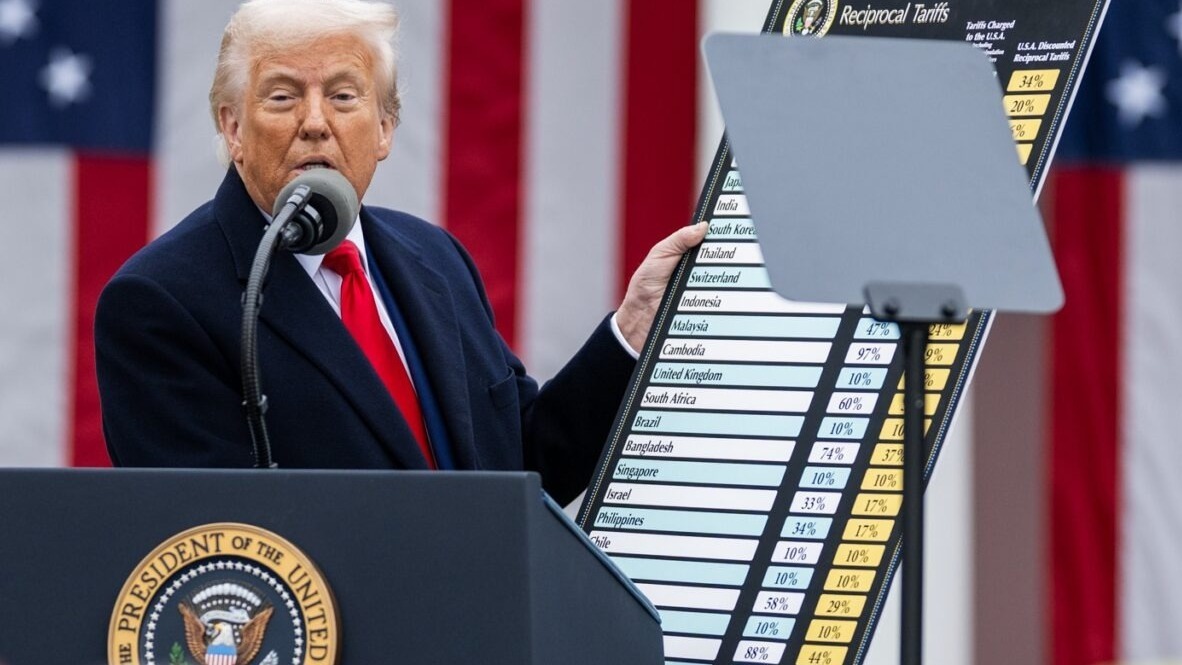
First, tariffs on imported goods have pushed up input costs across manufacturing and retail. The Institute for Supply Management’s manufacturing index, most recently published in May 2026 covering April activity, has shown its prices-paid component climbing for three consecutive months, with companies in the survey citing tariff-related surcharges on steel, electronics components, and packaging materials. Retailers have started passing those costs to consumers, which tightens household budgets and, over time, weakens demand for the workers who produce and sell those goods.
Second, energy prices have spiked amid the ongoing U.S.-Iran military conflict. Disruptions to tanker traffic through the Strait of Hormuz have pushed crude oil above $100 a barrel at points during 2026, according to reporting from the Associated Press. The resulting fuel and shipping cost increases have rippled through transportation, logistics, and consumer spending. Trucking firms, airlines, and delivery companies have all flagged margin pressure in recent earnings calls.
Against that backdrop, adding 115,000 jobs is a genuinely better outcome than most economists expected. It suggests that employers in health care, hospitality, and parts of the broader service sector are still finding enough demand to justify new hires. But those same cost pressures help explain why other workers may be stepping away: when wages in tariff-exposed industries fail to keep pace with rising prices, the math of commuting, child care, and daily expenses can tip toward staying home.
Who is leaving, and why nobody can say for certain
The blunt truth is that no one knows exactly who the 1.55 million are. The BLS publishes supplemental tables breaking participation down by age and sex, and those tables show the decline is not confined to a single demographic. Prime-age workers, those between 25 and 54, have seen participation slip, which is especially striking because this group had been recovering steadily since the pandemic.
Economists have floated several hypotheses. Early retirements may have accelerated as volatile equity and bond markets convinced some older workers that waiting longer would not improve their savings. Caregivers, disproportionately women, may have been priced out of the workforce by child-care costs that have risen faster than wages in many metro areas. Workers in sectors hit hardest by tariffs or energy costs may have grown discouraged after months of stagnant pay and uncertain prospects. And federal workforce reductions that began in late 2025 may have pushed some government employees out of jobs without a clear path back into the private sector.
None of these explanations has been confirmed by the BLS or any other federal agency. Granular data on exits by industry, region, or exposure to trade-affected sectors is not available in the current release. Until the BLS publishes its annual demographic supplements or the Census Bureau releases updated survey data later in 2026, the specific composition of this exodus will remain an educated guess.
The Fed’s quiet dilemma
The Federal Reserve has not publicly commented on the April jobs report as of this writing, which is standard practice during the blackout period before scheduled meetings. But the report puts policymakers in an uncomfortable position that traders are already trying to price.
A payroll gain that beats expectations by a wide margin argues against cutting interest rates, because it signals that the economy is still generating employment despite serious headwinds. But a labor force that has contracted by 1.55 million people in five months could eventually drag down consumer spending, which accounts for roughly 70 percent of U.S. GDP. Fewer people earning paychecks means fewer people buying goods and services, and that kind of drag tends to show up in growth figures with a lag of one to two quarters.
The April report did not show a dramatic move in average hourly earnings, removing one variable that might have tipped the Fed’s hand in either direction. For now, fed funds futures tracked by the CME FedWatch tool suggest traders expect the central bank to hold rates steady at its next meeting, with a modest lean toward a cut by late summer if labor force participation continues to erode.
What this means at the kitchen table
For workers still in the labor force, the tight ratio of job seekers to openings could translate into modestly better bargaining power. Employers drawing from a smaller applicant pool may have to raise wages or improve benefits to fill positions, particularly in health care and hospitality, where demand has outpaced supply for years.
For the 1.55 million who have stepped out, the picture is far less encouraging. Many of them are not retiring into comfort. If they left because caregiving costs exceeded what their jobs paid, or because chronic health issues made full-time work unsustainable, they are living on savings, family support, or public assistance programs that were not designed for prolonged use. The longer they stay out, the harder re-entry becomes. Skills erode. Professional networks thin out. Employers routinely view resume gaps with suspicion, even when the reasons behind them are entirely practical.
And for everyone, the combination of tariff-driven price increases and elevated energy costs is chewing into purchasing power. A paycheck that grew 3 percent over the past year does not feel like a raise when groceries, gas, and rent have all climbed faster. The April jobs report captures one side of that equation, the hiring side, but it cannot capture the lived experience of a household budget being squeezed from multiple directions at once.
A labor market running on two tracks at once
The April 2026 jobs report is not a clean good-news or bad-news story. It is a snapshot of a labor market operating on two separate tracks simultaneously.
On one track, employers are still hiring, beating forecasts, and keeping the unemployment rate flat in the face of a trade war and an energy shock. On the other, more than a million and a half Americans have quietly walked away from the workforce in less than half a year, and the data we have cannot yet explain why.
Both realities are true at the same time. Treating the 115,000 figure as proof of strength ignores the shrinking denominator underneath it. Treating the labor force decline as proof of weakness ignores the fact that businesses are still finding reasons to bring people on. The most accurate read is that the U.S. labor market is constrained: still functioning, still producing jobs, but doing so with a smaller and potentially more fragile workforce than it had six months ago.
What happens next depends on whether those 1.55 million workers find a reason to come back, or whether the economy learns to keep moving without them. So far, there is no sign of either.