For years, business owners in legal but politically sensitive industries have described the same experience: a phone call or a letter from their bank, sometimes with little explanation, informing them that their accounts were being closed. Firearms dealers, cryptocurrency startups, adult entertainers, and advocacy groups on both ends of the political spectrum have reported being cut off from basic banking services, not because of fraud or financial instability, but because federal examiners flagged their accounts as reputational liabilities.
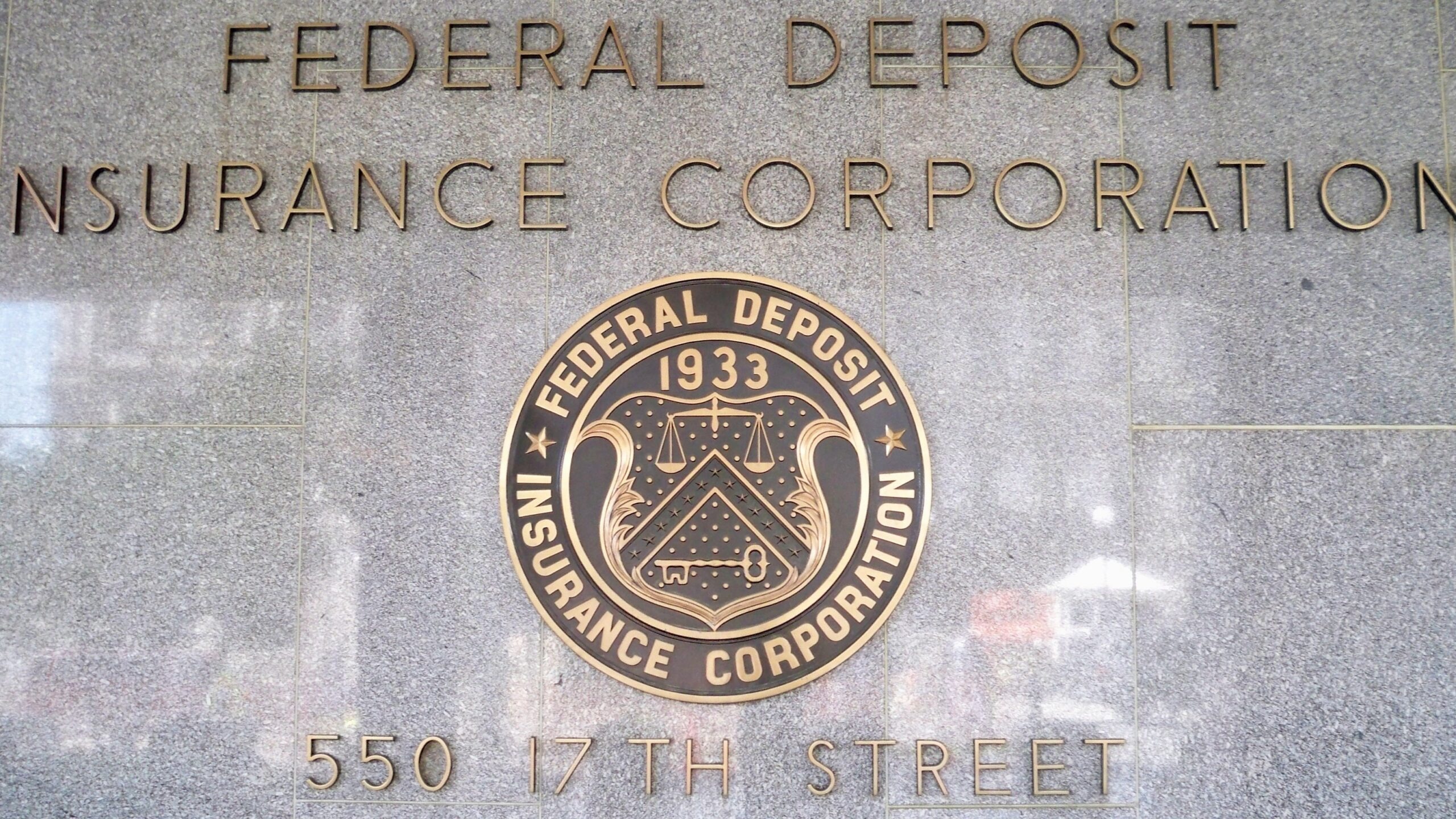
That practice is about to become formally illegal at the federal level. On June 9, 2026, a joint rule from the Federal Deposit Insurance Corporation and the Office of the Comptroller of the Currency takes effect, prohibiting federal bank examiners from pressuring financial institutions to close accounts based on a customer’s political views, religious beliefs, or constitutionally protected speech.
The rule is the most sweeping structural change to federal bank supervision in years, and it arrives after more than a decade of escalating conflict over who gets to participate in the American banking system.
What the rule actually does
The final rule targets a specific mechanism that critics say enabled politically motivated account closures for years. It prohibits the FDIC, OCC, and cooperating agencies from requiring, instructing, or encouraging banks to terminate customer relationships because of a person’s or organization’s lawful speech, beliefs, or associations. The ban covers formal directives, informal suggestions made during examinations, and any other supervisory communication designed to steer a bank away from a lawful customer.
To enforce that boundary, the agencies eliminated “reputation risk” as a standalone examination category. Under the old framework, examiners could flag a bank’s relationship with a disfavored industry or individual under that label, effectively pressuring the institution to sever ties without ever issuing a written order. No formal enforcement action was needed. A raised eyebrow during an exam, a pointed question about a client’s public profile, or a note in a supervisory letter could be enough.
Under the new rule, every recommendation to restrict or end a banking relationship must be grounded in objective, documented factors: credit risk, liquidity exposure, operational resilience, or compliance with anti-money-laundering and sanctions law. If an examiner cannot point to a specific financial or legal risk, the recommendation cannot stand.
Banks retain full authority to refuse or exit relationships tied to illegal activity or demonstrable financial exposure. The change is narrower but significant: a federal regulator can no longer lean on vague reputational concerns to nudge a bank away from a customer whose business is legal but politically controversial.
How regulators built the case for change
The rule followed months of public groundwork by the agencies themselves. FDIC Acting Chairman Travis Hill told the Senate Banking Committee in February 2026 testimony that “politicized or unlawful debanking” had become a serious problem within the supervisory system. Hill described a pattern in which examiners used reputation-risk findings to discourage banks from serving lawful customers whose activities were politically unpopular, even when those customers met ordinary underwriting and compliance standards.
The OCC reinforced that message in its own public announcement, stating that the rule “eliminates opportunities for regulatory abuse” and directing national banks to base account decisions on individualized risk assessments rather than broad judgments about an industry’s reputation or a client’s beliefs. The Comptroller’s office simultaneously updated its examination manuals and internal training materials.
Both actions trace back to an executive order titled “Guaranteeing Fair Banking For All Americans,” published in the Federal Register in the summer of 2025. That order directed federal agencies to propose rules preventing examiner criticism rooted in reputational concerns and to bar any pressure aimed at closing accounts over viewpoint-based objections. The June 9 rule formalizes that directive across the two primary federal bank regulators.
The long shadow of Operation Choke Point
To understand why this rule exists, you have to go back to 2013. That year, the Department of Justice launched Operation Choke Point, an initiative that pressured banks to cut off accounts for businesses the government considered high-risk for fraud. The program’s official targets included payday lenders and certain online merchants, but its reach extended further. Firearms dealers, coin dealers, and other legal businesses reported losing their banking relationships after their banks received pointed inquiries from federal officials.
The program was formally wound down during the first Trump administration in 2017, but its critics argued that the underlying infrastructure remained intact. As long as “reputation risk” existed as an examination category, examiners retained the discretion to achieve the same outcome without a formal enforcement action. A 2024 FDIC Office of Inspector General review found that the agency’s internal communications included discussions about discouraging banks from serving specific legal industries, lending weight to those concerns.
The new rule is designed to dismantle that infrastructure at the FDIC and OCC level. By removing reputation risk from the supervisory vocabulary entirely, the agencies are eliminating the tool that made informal pressure possible.
How industry and civil-liberties groups have responded
The final rule drew reactions from across the political and industry spectrum. Banking trade groups, including the American Bankers Association, expressed support for removing reputation risk as a supervisory category, arguing that the old framework created uncertainty for institutions trying to serve lawful customers. Cryptocurrency industry advocates, who had been among the most vocal critics of debanking practices, called the rule a necessary correction after years of what they described as regulatory hostility toward digital-asset firms.
Civil-liberties organizations offered a more mixed assessment. Some free-speech advocates welcomed the prohibition on viewpoint-based pressure from federal examiners, noting that the ability to access financial services is a practical prerequisite for exercising other rights. Others cautioned that the rule addresses only one side of the problem: it stops regulators from pushing banks to close accounts, but it does nothing to prevent banks from making those decisions on their own. Consumer-protection groups raised concerns that eliminating reputation risk as a supervisory tool could reduce regulators’ ability to flag banks whose client relationships pose genuine public-interest concerns, such as institutions facilitating predatory lending through third-party partnerships.
During the public comment period, the agencies received input from hundreds of individuals and organizations. Hill’s February 2026 testimony referenced letters from small-business owners who described losing accounts without explanation, as well as from compliance officers who said the old reputation-risk framework put them in an impossible position.
What the rule does not do
The prohibition binds federal regulators, not private banks. Financial institutions remain free to close accounts for any lawful business reason, including their own internal reputational calculations, as long as they comply with anti-discrimination statutes and fair-lending laws. A bank that independently decides a particular customer poses too much litigation exposure or public-relations risk can still act on that judgment. The rule ensures that federal examiners are not the ones applying that pressure behind the scenes.
Customers who believe they were debanked because of their views will not gain a new private right of action under this rule. Their legal options remain unchanged: filing a complaint with the relevant regulator, pursuing state consumer-protection claims, or bringing suit under existing theories such as breach of contract or unlawful discrimination. The agencies have not yet detailed how they will investigate allegations that examiners violated the new prohibition, or what disciplinary consequences would follow a confirmed violation.
Several states have moved further. Florida’s SB 7050 and Texas’s SB 751 restrict private banks more directly, prohibiting financial institutions from denying services based on a customer’s political or religious views. The federal rule does not preempt those laws. It operates alongside them, creating a layered framework that varies by jurisdiction.
What changes on the ground after June 9
The practical impact will depend on two things: how aggressively the agencies enforce the prohibition internally, and how banks recalibrate their own risk appetites without regulatory pressure pushing them in one direction.
Neither the FDIC nor the OCC has published comprehensive data on how frequently examiners used reputation-risk findings to push banks away from controversial customers, or how many businesses and individuals lost accounts as a result. Hill’s February 2026 testimony described the problem as widespread but did not cite a specific number of affected account holders. The absence of centralized data is itself part of the issue: because much of the pressure was communicated through tone and emphasis rather than written directives, according to Hill and accounts from affected businesses, the full scale of debanking remains difficult to quantify. That also means supervisors may need explicit retraining before the shift becomes meaningful at the examination level.
Some banks may welcome the rule as a shield. When advocacy groups or elected officials pressure a financial institution to cut ties with a particular industry, the bank can now point to a federal prohibition and decline to act on that pressure from the regulatory side. Others may quietly maintain their existing policies, citing independent business reasons for declining or exiting relationships.
The rule’s long-term durability is uncertain. A future administration could attempt to reinterpret or reverse the prohibition through new rulemaking, particularly if it views reputation risk as a necessary tool for steering banks away from activities it considers harmful. Courts may eventually be asked to define the boundary between permissible safety-and-soundness oversight and impermissible viewpoint-based pressure.
Why the June 9 deadline matters for account holders and banks alike
For now, the rule represents the clearest federal statement to date on a question that has divided regulators, banks, and their customers for more than a decade: having an unpopular opinion is not, by itself, a reason to lose your bank account. Starting June 9, 2026, that principle will be embedded in the examination standards that govern how federal regulators interact with the institutions that hold Americans’ money. Whether it changes the day-to-day experience of account holders in politically disfavored industries will depend on how faithfully the agencies enforce their own new rules, and how willing banks are to revisit the risk calculations they made under the old regime.