If you run a firearms shop, a cryptocurrency exchange, or a religious nonprofit, you may already know what it feels like to open a letter from your bank informing you that your account is being closed, with no meaningful explanation attached. For years, businesses and individuals operating in legal but politically sensitive spaces have reported losing access to basic banking services, not because of fraud or unpaid debts, but because regulators flagged them as a “reputation risk.” That practice is about to become formally off-limits.
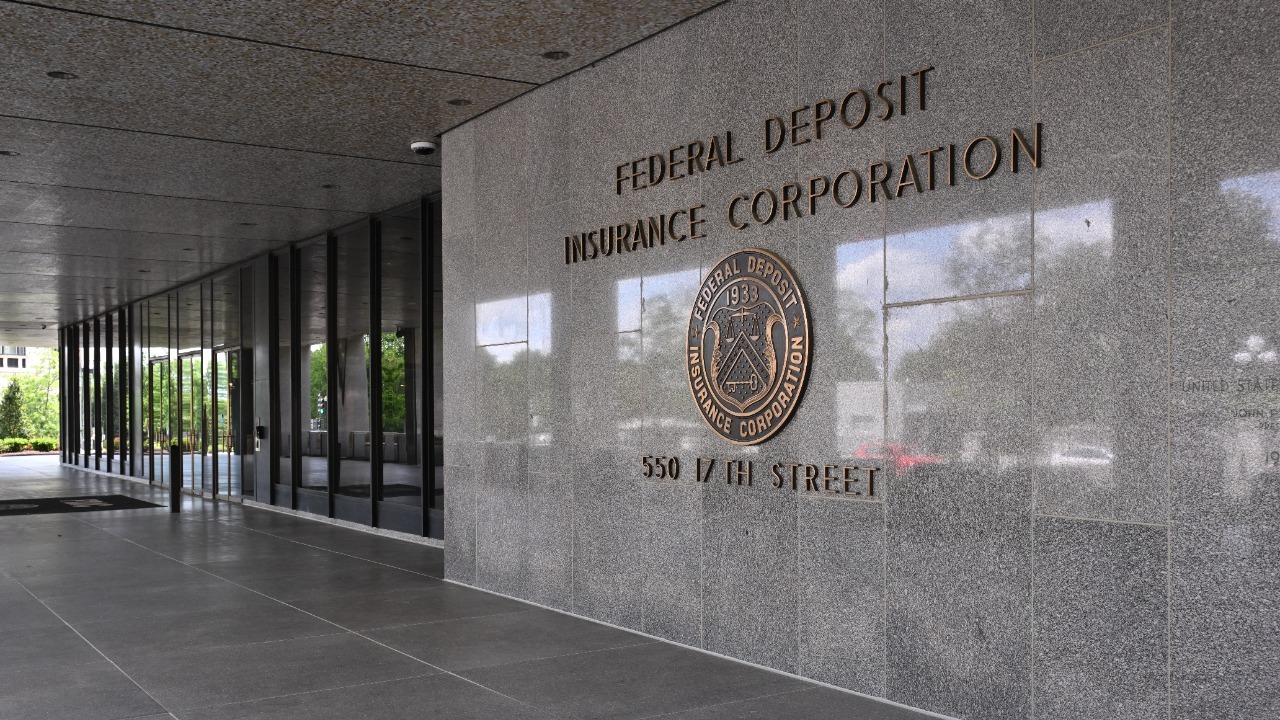
On June 9, 2026, a joint final rule from the Federal Deposit Insurance Corporation (FDIC), the Office of the Comptroller of the Currency (OCC), and the Federal Reserve will prohibit federal banking regulators from using “reputation risk” as a supervisory tool. Published in the Federal Register, the rule directly targets the practice known as debanking and represents the most significant federal response to the issue since complaints began mounting during the Obama-era Operation Choke Point controversy more than a decade ago.
What the rule actually changes
The FDIC Board voted to approve the final rule at an open meeting on April 7, 2026. Until now, federal examiners could flag a bank for “reputation risk” if it served customers whose businesses or viewpoints generated public controversy. That broad, subjective category gave regulators wide latitude to pressure banks into dropping clients who were operating entirely within the law.
The new rule eliminates that latitude. In a formal statement, FDIC Chairman Travis Hill said reputation risk should not be part of the agency’s supervisory and examination process. He tied the change directly to debanking allegations, framing it as a correction to a system that allowed subjective judgments about a customer’s public image to override standard risk analysis.
Going forward, examiners must limit their assessments to concrete, quantifiable concerns: credit risk, liquidity risk, operational risk, and compliance risk. A customer’s political profile, religious affiliation, or media footprint is no longer a valid basis for supervisory action.
The OCC reinforced the shift with its own bulletin distributed to all regulated national banks and federal savings associations, instructing examiners to stop using reputation risk assessments when evaluating bank safety and soundness. A joint announcement from the three agencies defines debanking as restricting access to financial services on the basis of political or religious beliefs or lawful business activities.
By acting together, the FDIC, OCC, and Federal Reserve aim to prevent banks from receiving conflicting signals depending on which agency examines them. A unified standard means a bank supervised by the OCC will not be told one thing while an FDIC-supervised competitor hears another.
The Operation Choke Point backstory
The debanking debate did not start in 2026. It traces back to Operation Choke Point, a Department of Justice initiative launched in 2013 under the Obama administration that pressured banks to sever ties with industries the government considered high-risk for fraud. The program’s internal target list included payday lenders, firearms dealers, coin dealers, and dozens of other categories. Critics argued the program went far beyond fraud prevention and effectively blacklisted entire legal industries by threatening banks with regulatory consequences for serving them.
The DOJ formally ended Operation Choke Point in 2017, but the underlying supervisory framework that enabled it, particularly the use of “reputation risk” in bank examinations, remained intact.
A second wave of complaints emerged in 2022 and 2023, centered on the cryptocurrency sector. Coinbase, the largest publicly traded U.S. crypto exchange, published FDIC letters it obtained through FOIA showing the agency had sent what the company described as “pause letters” to banks, instructing them to hold off on crypto-related activities. Industry advocates labeled the pattern “Operation Choke Point 2.0.” Members of Congress from both parties pressed for answers, and internal FDIC documents released through Freedom of Information Act requests showed examiners had raised concerns about banks’ crypto-related customers.
Those earlier controversies built the political pressure that led to the interagency rule finalized in April 2026.
What the rule does not do
This is a constraint on regulators, not a direct mandate on private banks. Federal examiners can no longer treat reputation risk as a safety-and-soundness concern, but banks still retain broad discretion to manage their customer relationships. A bank can still close an account if a customer poses genuine compliance problems, fails to meet due diligence requirements, or presents unacceptable financial risk under standard categories.
That distinction is critical. Some banks may continue to decline relationships they view as high-profile or controversial, but justify those decisions under credit, operational, or compliance risk. Without detailed examination reports or public enforcement actions, it will be difficult for outside observers to tell whether a particular account closure reflects legitimate risk management or a reputation-risk judgment repackaged under a different label.
The rule also does not create a new private right of action. If your account was closed for political or religious reasons before June 9, 2026, the rule does not give you a legal claim or a formal process for revisiting that decision. You may have stronger footing when filing complaints with regulators or appealing through a bank’s internal dispute process, but the agencies have not committed to any systematic review of past cases.
Another limitation worth noting: the rule applies to institutions supervised by the FDIC, OCC, and Federal Reserve. State-chartered banks that fall outside these agencies’ direct oversight may not be immediately affected, though state regulators often follow federal guidance over time.
What happens after June 9
The rule’s real test begins when examiners start conducting reviews under the new framework. Several factors will determine whether the policy shift translates into meaningful change.
Enforcement. If a bank closes accounts in a pattern that suggests reputation-based decision-making, will regulators intervene? The agencies have not published specific enforcement protocols tied to the new rule. Without public case data, it will be hard to gauge how aggressively they police the boundary between legitimate risk management and disguised debanking.
Industry response. Trade groups representing firearms dealers, cryptocurrency firms, and religious organizations have pushed for this change for years. Whether those groups report a measurable improvement in banking access over the coming months will be the most practical indicator of the rule’s impact.
Political durability. Regulatory rules can be revised or rescinded by future administrations. The current rule reflects priorities of the appointees leading the FDIC and OCC in 2026. A future administration with different views on financial regulation could revisit the framework, though unwinding a joint interagency rule is procedurally more complex than reversing a single agency’s guidance document.
As of June 2026, the regulatory record is clear: federal banking examiners are barred from using reputation risk to pressure banks into dropping lawful customers. Whether that prohibition holds in practice, and whether it reaches the small-business owners and founders who have been fighting for it, depends entirely on what happens next.