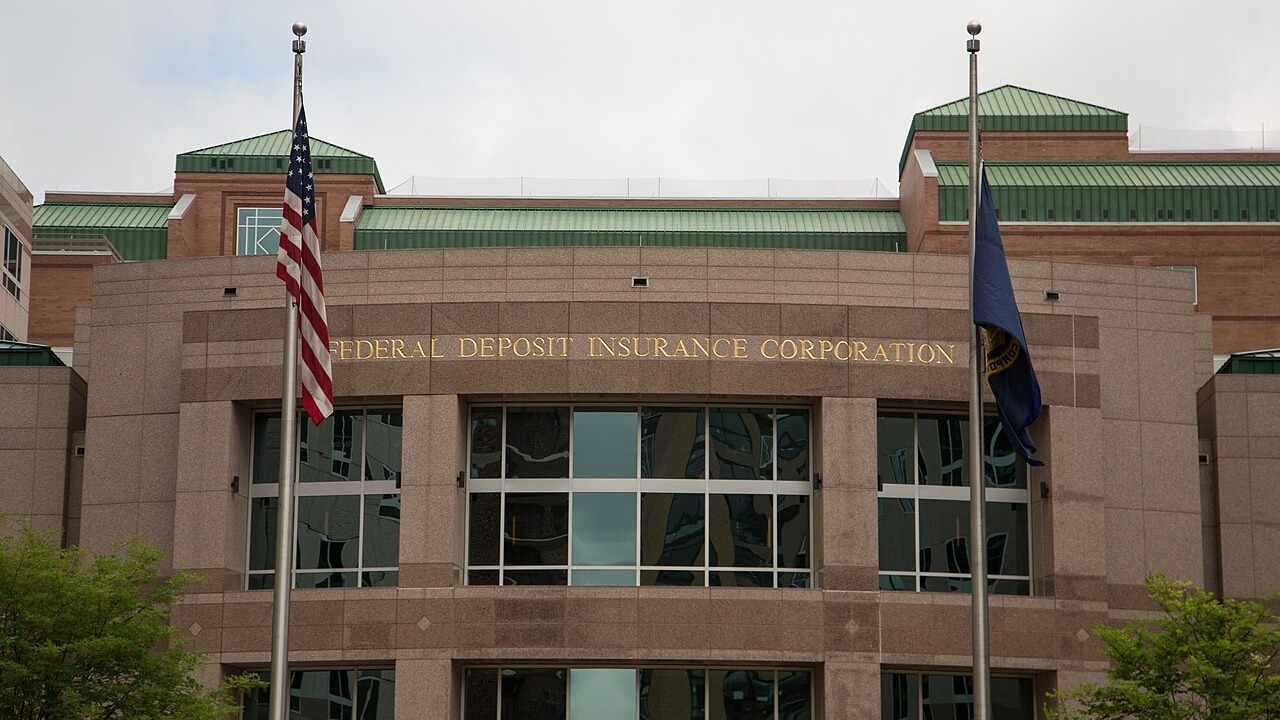
Starting June 9, 2026, federal bank examiners will no longer be able to push banks into closing customer accounts based on political beliefs, religious affiliations, or social views. The new rule, finalized by the FDIC and fellow banking regulators, strips examiners of a tool that critics say was used to quietly cut off lawful businesses and individuals from the financial system. For anyone who has worried about losing a bank account over speech or activism, the countdown now stands at eight days.
What is verified so far
The final rule carries an effective date of June 9, 2026, as listed on the FDIC’s Federal Register index. Its core prohibition is specific: regulators cannot require, instruct, or encourage banks to close accounts based on a customer’s political, social, cultural, or religious views. The rule also covers protected speech and what the agency calls “lawful but disfavored activities,” meaning businesses or individuals operating within the law but facing informal regulatory hostility.
The rulemaking traces directly to Executive Order 14331, titled “Guaranteeing Fair Banking for All Americans,” which established the policy that no American should be denied financial services because of protected beliefs, affiliations, or political positions. The text of the order, published in the official record, directs federal financial regulators to align their supervision with that principle. Acting Chairman Travis Hill tied the FDIC’s regulatory response to that executive order in a formal statement, outlining plans to end examiner pressure on banks that was rooted in reputational concerns rather than legal violations.
The FDIC’s own press release on the final rule confirms that the prohibition targets the use of “reputation risk” as a supervisory justification. For years, that category allowed examiners broad discretion to flag banks for maintaining relationships with account holders whose lawful activities were controversial, politically sensitive, or unpopular in certain communities. Under the new standard, examiners may still consider safety and soundness, fraud, money laundering, or clear legal violations, but they cannot lean on generalized reputational concerns tied to a customer’s beliefs or advocacy.
The practical effect is direct. Before June 9, a bank examiner could cite reputation risk during a supervisory review and pressure a bank to drop a customer whose business or views the examiner considered controversial. After June 9, that lever disappears from the regulatory toolkit. Banks still retain their own contractual rights to close accounts for standard reasons such as fraud, compliance violations, or inactivity, but the federal thumb on the scale is gone. For customers, that distinction matters: the rule does not guarantee access to any particular bank, but it does bar federal supervisors from nudging institutions to exit relationships solely because of lawful, protected expression.
What remains uncertain
No publicly available examination records or supervisory data quantify how often examiners actually directed or encouraged account closures tied to political views before this rule. The FDIC has not released internal audit datasets or inspector general findings that measure the scale of so-called debanking linked to protected characteristics. Individual banks have not filed public disclosures detailing specific account-closure decisions attributed to examiner guidance. Without that baseline data, it is difficult to measure the rule’s real-world impact once it takes effect.
Enforcement mechanics also remain partially unclear. The rule prohibits examiner behavior, but the agencies have not yet detailed how violations will be identified, reported, or penalized. Whether affected customers will have a formal complaint channel or appeal process tied specifically to this rule has not been spelled out in the published materials. The gap between a prohibition on paper and accountability in practice is one that bank customers, advocacy groups, and compliance officers will be watching closely in the months after June 9.
Another open question is how banks will adjust their internal policies. Some institutions may welcome the clearer boundary and document that account decisions are grounded in risk, not ideology. Others may respond cautiously, wary that any relationship with a controversial client could still draw scrutiny under different regulatory rubrics such as anti–money laundering or consumer protection. Until examination manuals and supervisory guidance are updated and applied in the field, the balance between examiner discretion and customer protections will remain partly theoretical.
How to read the evidence
The strongest evidence here comes from primary federal sources: the FDIC’s press release, the Federal Register listing, the text of Executive Order 14331, and Acting Chairman Hill’s statement. These documents confirm the rule’s existence, its June 9, 2026 effective date, and its focus on curbing the use of reputation risk to pressure banks into closing accounts tied to lawful but disfavored activities. They also establish that the change is not a voluntary policy tweak but a binding regulatory standard anchored in a presidential directive.
What those sources do not provide is a numeric estimate of past harm or a guarantee about future enforcement vigor. Readers weighing the significance of the rule should separate two questions: what the law now formally requires of examiners, and how consistently those requirements will be honored in day-to-day supervision. On the first point, the record is clear: federal bank regulators are no longer allowed to push account closures because of political, religious, or social views. On the second, only future examinations, complaint patterns, and potential oversight reports will reveal how fully that promise is kept.