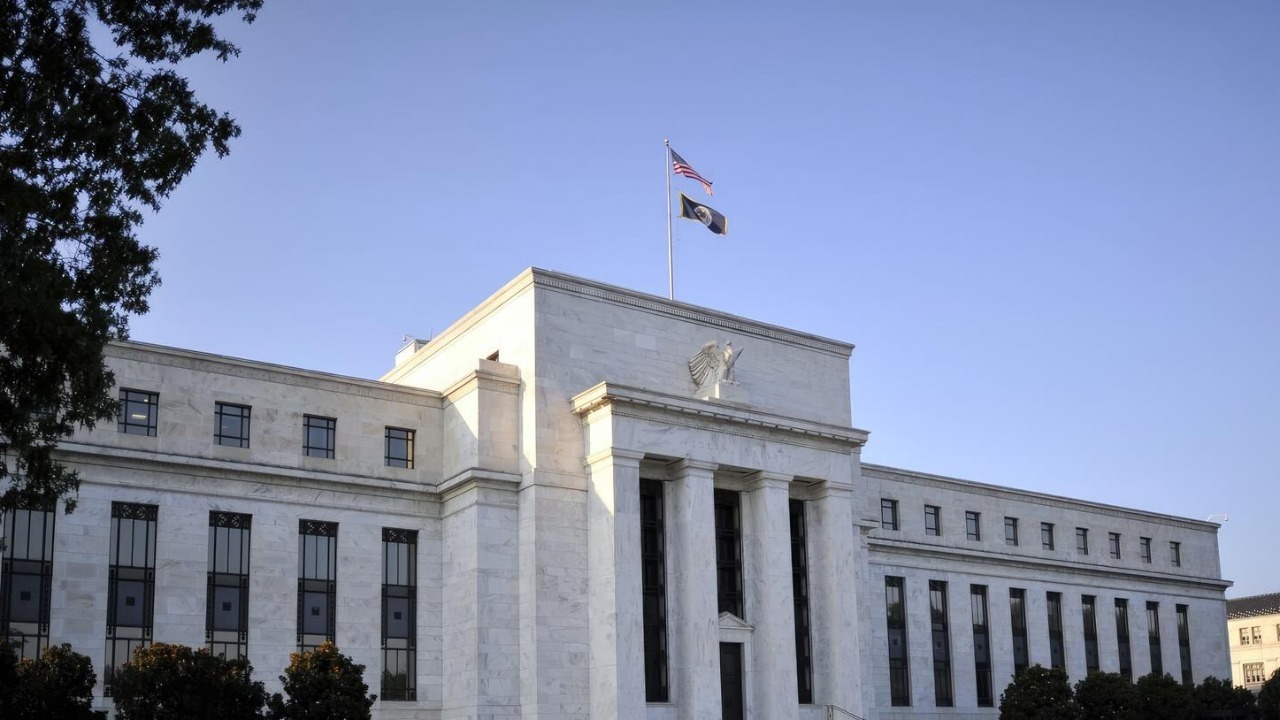
The Federal Reserve’s next interest rate decision lands June 16, and futures traders have already written the script: no cut. The CME FedWatch tool, which translates fed-funds futures into implied probabilities, shows a zero-percent chance the committee lowers its benchmark rate at the June meeting. That leaves the target range at 4.25 to 4.50 percent, exactly where it has sat since December 2024, and it leaves borrowing costs for mortgages, credit cards, and auto loans locked at levels that are squeezing household budgets nationwide.
A 30-year fixed mortgage near 6.6 percent. A credit card balance compounding above 21 percent. For the millions of families carrying either or both, those numbers have stopped feeling temporary. And the June meeting is not going to change them.
Where mortgage rates stand right now
Freddie Mac’s Primary Mortgage Market Survey, released weekly, recently pegged the average 30-year fixed rate at 6.81 percent, the highest reading since mid-February. Weekly observations in the Federal Reserve’s MORTGAGE30US series confirm the upward drift, with readings hovering between roughly 6.5 and 6.8 percent through late May 2026.
Mortgage rates do not move in lockstep with the Fed’s benchmark. They track the 10-year Treasury yield, which reflects where bond investors expect short-term rates and inflation to settle over the coming decade. When traders see no easing on the horizon, long-term yields stay elevated, and lenders pass those costs straight through to borrowers.
The practical impact is stark. A buyer financing $400,000 at 6.6 percent faces a monthly principal-and-interest payment of about $2,560. The same loan at 3 percent, the kind available during the pandemic-era lows, would cost roughly $1,686. That gap of nearly $880 a month adds up to more than $10,500 a year, enough to price out a significant share of first-time buyers or force painful trade-offs on square footage and location.
Credit card APRs remain punishing
The Fed’s G.19 consumer credit report tracks the interest rates commercial banks charge on credit card plans. The most recent quarterly data show average APRs running consistently in the low-20 percent range, and the historical tables confirm that card rates have climbed steadily alongside the Fed’s tightening cycle that began in March 2022.
One detail worth understanding: the Fed’s published average reflects rates charged on accounts that actually carried a balance and were assessed interest, per the FR 2835a reporting form banks file each quarter. Accounts sitting in a promotional zero-percent window are excluded. So the 21.5 percent figure widely referenced in consumer finance coverage is not an artifact of methodology. It represents what revolving cardholders are actually paying.
Consider a cardholder with $6,000 in revolving debt at 21.5 percent who makes only the minimum payment each month. In the first year alone, roughly $1,290 goes to interest. At that pace, full repayment stretches past 17 years, and total interest paid more than doubles the original balance. That math has not improved in over a year, and the June meeting will not improve it either.
Why the Fed is expected to hold
The June session is one of the Fed’s quarterly meetings that produces a fresh Summary of Economic Projections, including the closely watched “dot plot” mapping where each official expects the federal funds rate to land over the next several quarters. That makes the meeting significant even without a rate change, because the updated projections will signal how long the pause might last and whether policymakers still see any cuts in 2026 at all.
Several forces are keeping the committee on hold. Inflation, while well below its June 2022 peak of 9.1 percent, has proven stubborn in categories like shelter and core services. The Bureau of Labor Statistics reported that the Consumer Price Index rose 2.3 percent year-over-year in April 2025, still above the Fed’s 2 percent target. Wage growth, meanwhile, remains firm enough to make policymakers cautious about declaring victory prematurely.
Fed Chair Jerome Powell reinforced that caution after the May 2025 meeting, telling reporters the committee needs “greater confidence” that inflation is moving sustainably toward 2 percent before adjusting rates. Governor Christopher Waller echoed the sentiment in a late-May speech, noting that tariff-related uncertainty has made the inflation outlook harder to read and that patience is the appropriate posture. Global trade policy, including shifting tariff regimes, has added a layer of unpredictability that the Fed’s staff models struggle to capture cleanly.
That rhetoric aligns with what futures markets are pricing: not just a hold in June, but a narrowing window for any cuts before the end of the year. As of late May 2026, CME FedWatch data suggest the first cut with meaningful probability does not arrive until September at the earliest, and even that is far from certain.
What could shift the timeline
Markets are not infallible. If inflation data between now and mid-June come in sharply below expectations, or if the labor market shows sudden weakness, the probability of a cut could shift. The Fed has repeatedly described its approach as “data dependent,” and the committee’s own forward guidance leaves room for surprises in either direction.
But the bar for a June cut is high. The Consumer Price Index, the Personal Consumption Expenditures price index, and the monthly jobs report would all need to move meaningfully in the same dovish direction to give policymakers cover. One soft print will not be enough. And even if the data cooperate, the Fed has historically telegraphed rate changes well in advance through speeches, interviews, and carefully placed language in its post-meeting statement. No such signal has been sent.
The more realistic question is not whether June brings a cut but whether the dot plot shifts enough to keep a September or December cut on the table. If the median dot moves higher, markets will reprice accordingly, and mortgage rates could drift up further rather than down.
What borrowers can do without waiting for the Fed
Waiting for lower rates is a strategy, but it carries its own cost. Every month a homebuyer delays in hopes of a cheaper mortgage is a month of rent paid and a month of potential equity not built. Every month a cardholder carries a balance at 21-plus percent is a month of compounding interest working against them.
For mortgage shoppers, the spread between lenders can be meaningful. Freddie Mac’s average is just that: an average. Borrowers with strong credit and the willingness to compare quotes across three or four lenders often find rates a quarter-point or more below the headline number. Adjustable-rate mortgages, which carry lower initial rates, have also regained popularity among buyers who expect to refinance within five to seven years if rates eventually fall.
For credit card holders, the most direct relief comes from transferring balances to a card with a zero-percent introductory offer or consolidating debt with a fixed-rate personal loan in the 8-to-12 percent range. Neither option requires the Fed to act, and both can save hundreds or thousands of dollars in interest over the next year.
Why household budgets should plan for rates to stay here
The data from the Fed’s own releases, Freddie Mac’s weekly survey, and CME futures all point in the same direction: borrowing costs are elevated, the central bank is in no rush to bring them down, and the June 16 decision is overwhelmingly likely to confirm that stance. The dot plot may offer a hint about the second half of the year, but hints are not relief.
Households that build their budgets around current rates, rather than hoping for a surprise, will be better positioned no matter what the projections eventually show. The floor is set. The question now is only how long borrowers will have to stand on it.