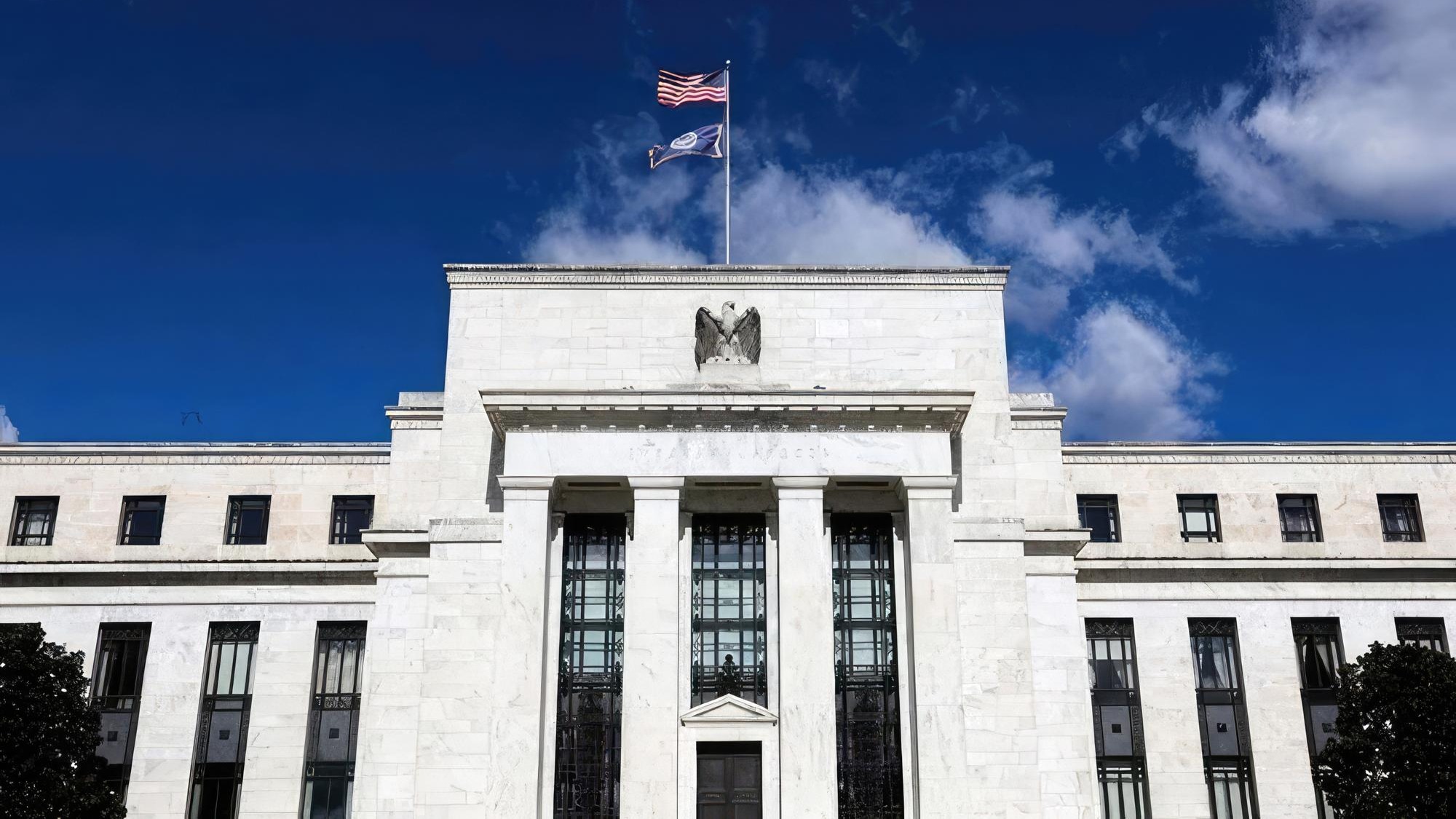
Four Federal Reserve officials broke ranks at the April 29-30 meeting, dissenting from the committee’s decision to hold interest rates steady and exposing the deepest split on the Federal Open Market Committee in recent memory. The minutes released May 28, 2026, lay out the fault lines: some policymakers pushed to begin cutting rates immediately, arguing that the current stance is already choking the housing market and slowing hiring, while others insisted that inflation remains too sticky to justify any easing. The result is a committee frozen in place, and a 30-year fixed mortgage rate that continues to hover near 6.58%, according to the most recent Freddie Mac Primary Mortgage Market Survey.
At that rate, a $400,000 loan (assuming 20% down on a $500,000 home) costs roughly $2,553 per month in principal and interest. If the Fed had managed to start cutting and mortgage rates had drifted toward 5.5%, the same loan would run about $2,271 a month. That $282 monthly gap, nearly $3,400 a year, is the tangible cost of a central bank that cannot agree on what to do next.
What four dissents actually mean
One or two dissents on an FOMC statement are common enough to be unremarkable. Four are not. The last time the committee fractured this badly was in 2019, when three officials dissented from a single rate decision during a far less volatile economic backdrop. The April 2026 split signals that the 19-member committee (12 of whom vote at any given meeting) is being pulled hard in opposite directions, with neither camp able to build a decisive majority.
The minutes identify the contours of the disagreement. The dovish dissenters pointed to softening housing starts, a string of weekly initial jobless claims readings that trended higher through April, and existing-home sales that remain well below pre-pandemic norms. Their argument: the federal funds rate, held at its current restrictive level since mid-2024, has already done its job on inflation and is now inflicting unnecessary damage on rate-sensitive sectors, housing chief among them.
The hawkish dissenters countered with the March 2026 personal consumption expenditures price index, the Fed’s preferred inflation gauge, which showed core prices still running above the 2% target. Their position: cutting before inflation is convincingly defeated risks a repeat of the stop-and-start tightening cycles that plagued earlier decades. Chair Jerome Powell, in his post-meeting press conference, acknowledged the tension but sided with the majority in holding steady, calling the current stance “appropriately restrictive given the balance of risks.”
For borrowers, the direction of the dissents matters more than the number. The fact that at least some officials wanted to cut immediately suggests the committee is closer to easing than the hold decision implies. But the hawkish resistance means any cut will require stronger evidence that inflation is retreating, evidence that has not yet arrived.
Why mortgage rates refuse to budge
The 30-year fixed mortgage does not move in lockstep with the federal funds rate. It tracks the 10-year Treasury yield, which responds to inflation expectations, fiscal policy, and global appetite for U.S. government debt. But the Fed’s posture acts as a gravitational anchor. When the committee signals a clear direction, Treasury yields tend to move in anticipation, pulling mortgage rates along. When the committee signals internal conflict, as four dissents unmistakably do, that anchor holds yields in place or pushes them higher.
Freddie Mac’s weekly survey has reflected that uncertainty. After a brief three-week slide that brought the average 30-year rate down to about 6.3% in early May 2026, the benchmark climbed back toward 6.58% as traders digested the April statement and began pricing in a longer hold. Both figures sit well above the threshold that housing economists say would meaningfully expand affordability. Lawrence Yun, chief economist at the National Association of Realtors, has said repeatedly that rates need to fall closer to 5.5% before a significant wave of sidelined buyers returns to the market.
The bond market’s reaction to the minutes will be the first real test. If traders read the four dissents as a sign that cuts are closer than expected, the 10-year yield could ease, dragging mortgage rates down modestly in the coming weeks. If the hawkish dissents dominate the narrative, yields stay put, and so do borrowing costs.
The June meeting and what to watch before it
The June 17-18 FOMC meeting is the next major decision point, and it carries extra weight because it comes with an updated Summary of Economic Projections. That package includes the “dot plot,” the chart showing each member’s expected path for the federal funds rate through the end of 2027. The dot plot will reveal whether the April dissenters have pulled the committee’s median rate forecast lower or whether the majority still projects rates staying at current levels into the fall. For anyone watching mortgage rates, the dot plot may matter more than the June rate decision itself, because it shapes the market expectations that drive Treasury yields for months afterward.
Two data releases before that meeting will heavily influence the debate. The May consumer price index, due in mid-June, will show whether inflation continued to cool or stalled again. And the May jobs report, out in early June, will reveal whether the labor market is softening enough to give doves the ammunition they need. If both reports point toward a slowing economy with easing price pressures, the case for a summer cut strengthens, and mortgage rates could begin drifting lower in anticipation. If either report surprises to the upside, the hawks dig in, and borrowers face more months near current levels.
What this means if you are buying or refinancing now
For buyers facing a purchase deadline, the math is uncomfortable but straightforward. Waiting for a Fed-driven rate drop risks paying more for the house itself, particularly in markets where inventory remains tight and prices are still climbing. A buyer who locks at 6.58% today on a $400,000 mortgage and refinances a year later at 5.5% would recover the higher interest cost within roughly 18 months of the refinance, assuming typical closing costs of around $5,000 to $7,000. That calculus favors buying now in markets where home values are appreciating at 3% or more annually, because the price gains outpace the extra interest paid in the interim.
Refinancers who locked in rates above 7% during late 2023 or early 2024 have a different calculation. Even a modest decline to the low 6% range could justify a refinance if they plan to stay in the home long enough to recoup closing costs, typically three to five years. But that decision hinges on individual timelines, local market conditions, and how much equity has accumulated since the original purchase, not on parsing FOMC minutes for hints about the next move.
A frozen Fed and the housing market it leaves behind
The four dissents in the April minutes are not a procedural footnote. They are a public admission that the officials who control the most powerful lever in the U.S. economy cannot agree on which way to pull it. Until inflation cools more convincingly or the labor market weakens enough to forge a stronger consensus, that internal standoff will keep mortgage rates in a range that prices out first-time buyers, discourages existing homeowners from listing (and giving up their sub-4% pandemic-era rates), and stalls refinancing activity across the country. The minutes released today fill in the reasoning behind the split. They do not resolve it. For the millions of Americans whose largest financial decision depends on borrowing costs, the wait for relief just got a clearer explanation but no closer end date.