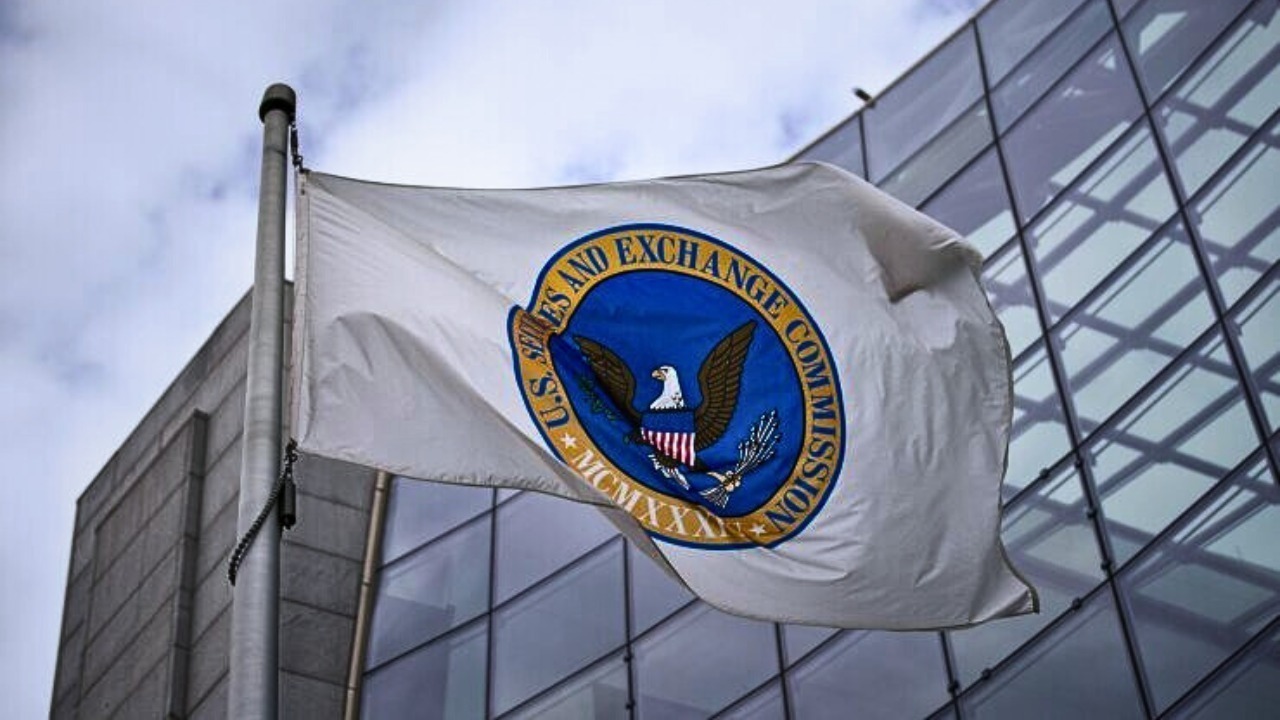
The Securities and Exchange Commission filed charges against seven entities for allegedly running fake crypto trading platforms and AI-themed investment clubs that defrauded retail investors of roughly $14 million. The defendants, which include Morocoin Tech Corp., Berge Blockchain Technology Co. Ltd., Cirkor Inc., AI Wealth Inc., Lane Wealth Inc., AI Investment Education Foundation Ltd., and Zenith Asset Tech Foundation, stand accused of luring victims through social media group chats, fabricating profits on sham dashboards, and then demanding advance fees before vanishing with the money.
How fake AI investment clubs exploited social media trust
The SEC describes the operation as an “investment confidence scam” that specifically targeted everyday investors on platforms where group chats serve as entry points. Operators allegedly impersonated financial experts using AI-generated content and deepfake technology, then directed targets to one of three bogus trading platforms. Once victims deposited crypto assets, they saw fabricated profit dashboards designed to encourage larger deposits. When investors tried to withdraw, the scammers demanded advance fees, claiming the payments were necessary to release funds. No real trading ever took place.
The speed at which similar schemes have surfaced in unrelated state dockets raises a pointed question: whether the operators behind these AI-club tactics belong to coordinated networks that shift jurisdictions faster than any single enforcement action can shut them down. Washington state regulators have flagged cryptocurrency scams that incorporate local business registrations as a credibility tool, and Arkansas securities officials have published enforcement documents tied to Cirkor Inc., one of the same defendants named in the federal case. Mapping shared wallet clusters or WhatsApp administrator identities across these separate proceedings could reveal whether the same people are recycling the playbook under new corporate shells.
SEC charges allege securities fraud across seven entities
The agency’s federal complaint names three purported trading platforms and four investment clubs operating in concert. According to SEC Litigation Release No. 26453, the defendants face allegations of violating Securities Act Section 17(a) and Exchange Act Section 10(b) and Rule 10b-5, the core federal anti-fraud provisions that prohibit material misrepresentations in connection with the sale of securities. The SEC is seeking injunctions, civil penalties, disgorgement, and prejudgment interest against the platform defendants, along with officer-and-director bars where appropriate.
The four investment clubs, branded with names like AI Wealth Inc. and AI Investment Education Foundation Ltd., functioned as recruitment funnels. They used WhatsApp groups to build a sense of community and expertise, then steered members toward the three trading platforms where deposits were collected. The structure made it difficult for individual investors to distinguish between a legitimate educational community and a coordinated fraud ring. Each layer of the operation reinforced the next, creating an illusion of independent verification that broke down only when withdrawal requests went unanswered.
Investigators say the defendants also relied on social proof. Early participants were shown screenshots of supposed gains, sometimes attributed to “AI-assisted trading models” or “quantitative bots” that could not be independently verified. New recruits were urged to invite friends and family, with referral bonuses that mimicked multi-level marketing programs. The combination of technical jargon, pseudo-academic “education” sessions, and tight-knit chat groups helped normalize increasingly large deposits into platforms that, according to the SEC, never executed a single legitimate trade.
Gaps in the public record and what investors should watch
Several pieces of evidence remain outside public view. Complete transaction ledgers or wallet addresses showing the flow of the alleged $14 million have not been released as raw data. Internal corporate records from the named defendants that would confirm ownership and control are referenced through exhibits in the SEC’s filings, but the underlying documents are not yet broadly accessible in searchable form. That limits outside researchers’ ability to trace whether the same organizers have appeared in prior crypto fraud cases or to map connections across state and federal dockets.
Regulators have, however, sketched enough detail for investors to recognize recurring warning signs. The combination of unsolicited outreach in encrypted messaging apps, guarantees of high returns from “AI trading,” and pressure to pay additional “tax” or “unlock” fees before withdrawals is a hallmark pattern. The SEC’s description of an “investment confidence scam” echoes earlier alerts warning that scammers increasingly use professional-looking websites and dashboards to simulate legitimate brokerage activity while keeping full control of deposited assets.
Prospective investors can take several practical steps before wiring money to any online platform or club. First, verify whether the entity or its promoters appear in official databases or have made required filings. The SEC’s EDGAR filer tools offer one pathway to check whether a company has taken basic steps to register or report, though the absence of a filing is not proof of fraud by itself. Second, treat any demand for advance fees to “release” supposed profits as a serious red flag; legitimate brokers and custodians do not condition withdrawals on extra payments unrelated to clearly disclosed charges.
Finally, investors should be cautious about conflating technological buzzwords with regulatory oversight. A platform that advertises “AI-driven strategies,” displays glossy charts, or claims to partner with unnamed liquidity providers may still be operating entirely outside securities law. Until more of the evidentiary record in the SEC’s case becomes public, the clearest takeaway is behavioral rather than technical: if an opportunity depends on private group chats, opaque algorithms, and pressure to keep depositing, the safest move is to step away before any money leaves your wallet.