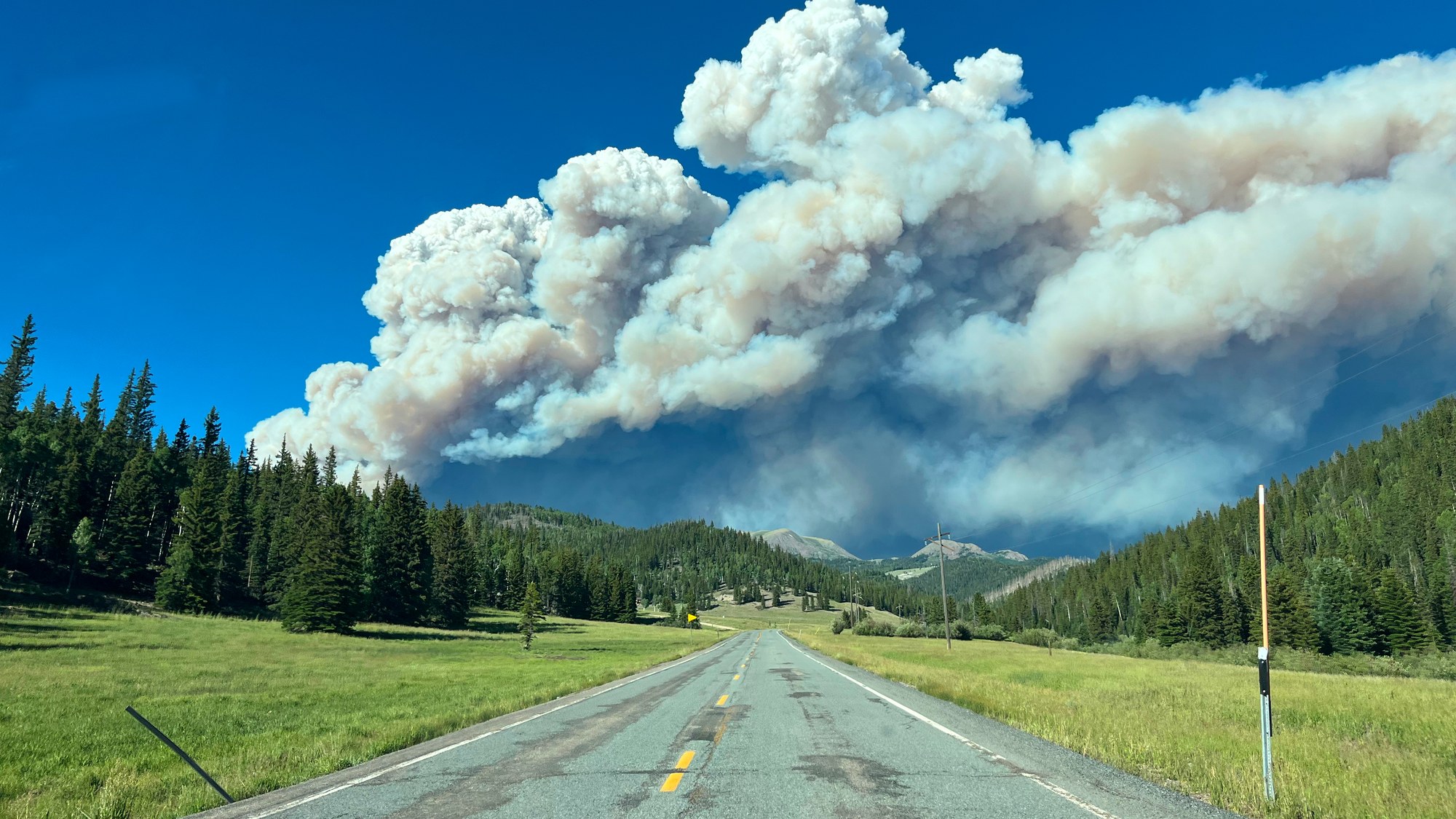
The Internal Revenue Service has moved a long list of tax deadlines to February 1, 2027 for people and businesses hit by the Washington wildfires that began July 31, 2026. The relief covers three tribal nations: the Confederated Tribes and Bands of the Yakama Nation, the Confederated Tribes of the Colville Reservation and the Spokane Tribe of Indians.
It also covers six counties: Chelan, Ferry, Okanogan, Spokane, Stevens and Yakima. The IRS announced it on August 31, 2026, as release WA-2026-03, tied to FEMA disaster declaration 3650-EM.
The people who most need to check their dates are residents and businesses in those six counties and on those three nations’ lands, and anyone whose records sit there. The IRS says the relief is applied automatically to taxpayers in the area, so there is nothing to file to receive the new date. Anyone outside the area who needs it can call 866-562-5227.
What changed this year: Social Security and Medicare change every year, and nobody sends you a memo. The Retirement Money Brief breaks down what changed and what to do.
Get the Retirement Money Brief →
We may earn a commission from links on this page.
Which deadlines moved
Most returns and payments with original or extended due dates between July 31, 2026 and February 1, 2027 now fall on February 1. The IRS lists individual, corporate, estate and trust, partnership, S corporation and exempt organization returns, along with gift, employment and certain excise returns.
For individuals, two dates matter most. Anyone with a valid extension for a 2025 return, normally due October 15, now has until February 1, 2027 to file. Estimated tax installments originally due on or after July 31, 2026 are also postponed, and the IRS says no failure-to-pay estimated tax penalty applies if they are paid by then.
Quarterly payroll and excise returns normally due on July 31 and November 2, 2026 get the same new date. The IRS also postponed other time-sensitive acts due in that window under federal regulations.
The window is broad. Under the release, deadlines that fall on or after July 31, 2026 and before February 1, 2027 are pushed to February 1. That is a stretch of more than six months, so a payroll return, an estimated payment or a late extension can each land on the same day. Anyone with several of them in that window should list each one now rather than rely on memory in late January.
What the relief leaves out
The IRS says the relief does not cover payments owed for 2025 returns that were due April 15, 2026. An extension gave more time to file, but it never gave more time to pay, and the release states that “those payments are not eligible for this relief.” Interest on unpaid tax from that date keeps running.
Information returns in the W-2, 1094, 1095, 1097, 1098 and 1099 series are also excluded, as are Forms 1042-S, 3921, 3922 and 8027 unless a separate IRS procedure lists them. Employment and excise tax deposits were not postponed either. The IRS abated penalties on deposits due between July 31 and August 17, 2026 if they were made by August 17.
Payment plans and penalty notices
Taxpayers on an IRS payment agreement who miss a payment during the postponement will not be put in default, the release says. Reminder notices and direct debits continue, and interest and late-payment penalties still accrue. Anyone who wants to stop a direct debit must contact the IRS or their bank.
If a late-filing or late-payment penalty notice arrives for a deadline inside the postponement period, the release says to call the number on the notice and ask for abatement. People who do not qualify for disaster relief can still ask for relief on reasonable-cause grounds.
Who counts as covered
The IRS says individuals and households living in the six counties or within the three tribal nations qualify, as do businesses located there. Residents and businesses on the Yakama, Colville and Spokane lands get the same February 1 date as the counties around them.
Taxpayers outside the area also qualify if the records they need to meet a deadline are inside it. So do relief workers affiliated with recognized government or philanthropic groups, and any visitor to the area who was killed or injured in the disaster. Accountants who keep records in the area for clients elsewhere can call the same IRS Special Services line.
Losses, retirement accounts and free help
The IRS says people with uninsured personal property losses can claim a casualty loss on the year of the event or the prior year, using Form 4684, and should write 3650-EM on the return. Fees for copies of earlier returns are waived when the number is written at the top of Form 4506 or 4506-T.
The release also notes that special disaster distributions from retirement plans, reported on Form 8915-F, avoid the extra 10 percent early-withdrawal tax and can be spread over three years. Free help is listed through AARP Tax-Aide at 888-227-7669 and the VITA locator at 800-906-9887. The IRS says VITA sites normally cannot help claim disaster losses. The release also points to IRS Free File guided software for people whose 2025 adjusted gross income was $89,000 or less, and to Free File Fillable Forms, which have no income limit.
A separate IRS release, WA-2026-02, gives Douglas County the same February 1, 2027 date for wildfires that also began July 31. The IRS keeps a running list on its disaster relief page.
Is your home or business inside the relief area?
The new date is February 1, 2027, and the April 15 payment on a 2025 return is not part of it. A penalty or balance notice that arrives anyway can be hard to read, and it is easy to miss which line says what.
The IRS Refund Recovery Kit includes a notice decoder that explains what common IRS letters mean, plus a refund status and notice tracker in Excel for logging each letter and its due date. It also covers why a refund stalls and how to trace one that was sent but never arrived.
More Financial Reading
- The New $6,000 Senior Deduction and 14 More Tax Moves for Retirees
- 21 Ways to Stretch a $2,087 Social Security Check
- 15 Ways Out of 22% Credit Card Interest
This article was produced with the assistance of AI and reviewed by the editorial team.