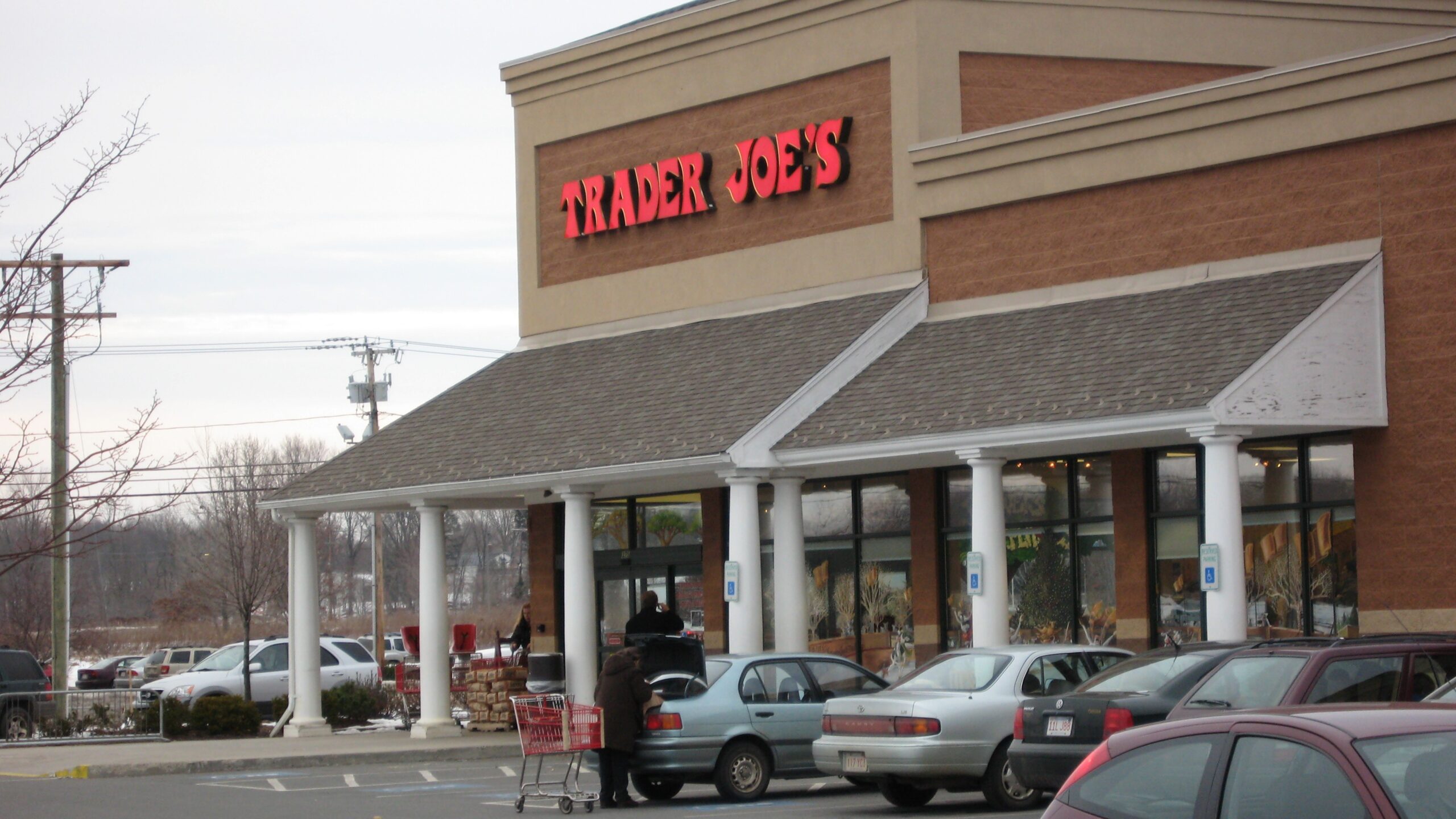
If you have swiped a credit or debit card at Trader Joe’s in recent years, a receipt you barely glanced at could now be worth up to $102. The grocery chain has agreed to a $7.4 million class-action settlement after being accused of printing too many digits of customers’ card numbers on store receipts, a violation of a federal law designed to prevent identity theft.
The case, Mara v. Trader Joe’s Company, was filed in the U.S. District Court for the Central District of California. It hinges on the Fair and Accurate Credit Transactions Act (FACTA). Below is what the law requires, how the settlement breaks down, and what you need to do to collect.
The federal receipt rule at the center of the case
Congress passed FACTA in 2003 to strengthen consumer protections against identity theft. One of its most concrete provisions is a receipt-truncation rule, codified at 15 U.S.C. Section 1681c(g). The rule is simple: any business that accepts credit or debit cards is prohibited from printing more than the last five digits of the card number, or the card’s expiration date, on any electronically generated receipt given to a customer.
The logic behind the rule is equally simple. A receipt tossed in a parking lot trash can or left on a counter should never hand a thief enough data to commit fraud. There is no exception for good intentions, legacy software, or the argument that no actual fraud occurred.
The Federal Trade Commission underscored that standard in a May 2007 press release, warning retailers nationwide that printing excess card digits could trigger civil penalties. After that notice, every major chain in the country was on record: compliance was mandatory, not aspirational.
What the lawsuit claims Trader Joe’s did
According to the complaint, Trader Joe’s point-of-sale systems generated receipts that displayed more card digits than FACTA allows. Critically, the plaintiffs did not need to prove that anyone’s identity was actually stolen as a result. Under FACTA’s private right of action, the statutory violation itself supports a claim for damages.
That legal framework is what makes receipt-truncation cases viable as class actions. The violation can be verified by examining a single receipt, and the potential class sweeps in every customer who received a non-compliant printout during the covered period.
Trader Joe’s has not publicly commented on the allegations and did not respond to a request for comment. Court records reviewed for this article do not indicate that the company admitted any wrongdoing as part of the settlement.
How the $7.4 million settlement breaks down
The settlement establishes a fixed fund of $7.4 million. Before any money reaches shoppers, the fund must cover court-approved attorney fees, service awards to the named plaintiffs, and administrative costs for processing claims. Whatever remains gets divided among all valid claimants.
That math matters. The $102 figure is a per-person cap, not a guarantee. If hundreds of thousands of Trader Joe’s customers file claims, individual checks will be significantly smaller. If relatively few people participate, each claimant’s share grows closer to the maximum. This is standard in consumer class actions, and historically, low claim rates tend to reward the people who actually bother to file.
Shoppers who do nothing will not receive a payment. Unlike some settlements that distribute funds automatically, this one requires an affirmative claim submission.
How to file a claim before the deadline
To collect, eligible shoppers must submit a claim through the official settlement website operated by a court-appointed claims administrator. The settlement notice, which class members may have received by mail or email, contains the web address, filing deadline, and documentation requirements. In many FACTA receipt settlements, claimants are not required to produce the original receipt, though requirements vary.
If you paid with a credit or debit card at Trader Joe’s during the class period, here is what to do:
- Check your mail and email for any correspondence from the settlement administrator. The notice will spell out whether your purchases fall within the covered dates and locations.
- Search for the case on PACER. The federal court’s electronic filing system allows you to look up Mara v. Trader Joe’s Company in the U.S. District Court for the Central District of California for the full docket, including the settlement agreement and claim form.
- File before the deadline closes. Late submissions are not accepted regardless of eligibility, so do not wait.
How FACTA’s receipt rule applies beyond Trader Joe’s
This case is not unique to Trader Joe’s. FACTA’s truncation rule applies to every business in the country that accepts card payments, from national chains to corner shops. If you notice a full card number or expiration date printed on a receipt from any retailer, that business may be in violation of federal law.
Consumers who believe their card information has been mishandled can file a complaint through the FTC’s fraud reporting portal, which routes reports to federal and state enforcement agencies. Anyone who suspects they are already a victim of identity theft can use the government’s dedicated recovery site to place fraud alerts, dispute unauthorized charges, and begin rebuilding their credit.