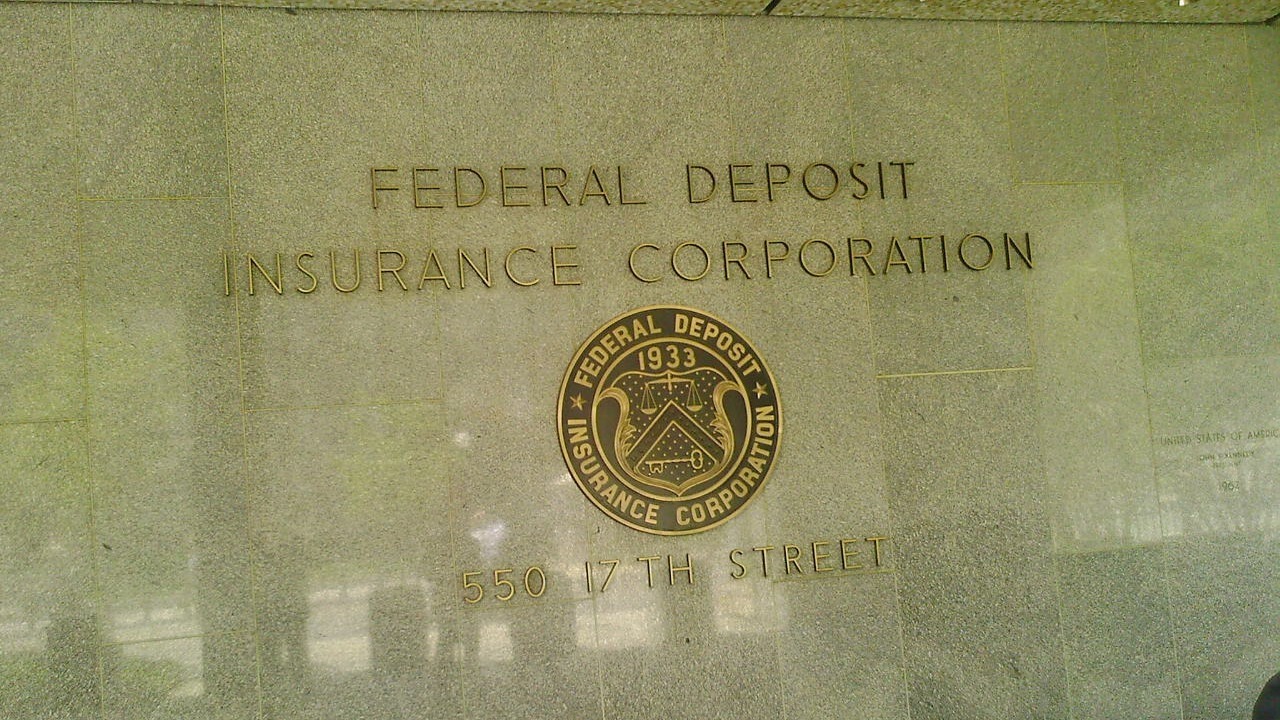
Every insured depositor at two failed U.S. banks in 2026 has been made whole, but the speed of both closures raises pointed questions about what stress signals regulators saw before pulling the trigger. Metropolitan Capital Bank and Trust and Community Bank and Trust, based in West Georgia, are the only FDIC-insured institutions to fail so far this year. On May 1, Georgia’s Department of Banking and Finance took possession of the West Georgia bank, and Anchor Bank assumed substantially all of its insured deposits, giving customers immediate access to their money.
Why these two 2026 closures demand attention now
Two failures in the first five months of a calendar year is a small number by historical standards, but the pattern matters more than the count. Both banks were small community lenders, and their closures arrived while commercial real-estate portfolios across the banking sector remain under pressure from high interest rates and falling property valuations. The central question is whether these two institutions carried unusually high concentrations of uninsured deposits tied to commercial borrowers, which would raise resolution costs for the FDIC’s Deposit Insurance Fund even though every insured account stayed protected.
No public FDIC dataset has yet released post-failure loss estimates or exact uninsured deposit totals for either institution. That gap limits any direct comparison with the 2023 cohort of failures, which included Silicon Valley Bank and Signature Bank and prompted extraordinary government intervention. Without those numbers, the hypothesis that 2026 failures reflect deeper commercial real-estate exposure remains untested. What is confirmed is that the resolution process worked as designed: insured depositors lost nothing and gained access to their funds without delay.
FDIC records and Georgia state action confirm the timeline
The FDIC’s own 2026 in-brief listing shows exactly two bank closures for the year so far, underscoring how isolated these events remain. Metropolitan Capital Bank and Trust appears on the agency’s dedicated failed-institution page, which outlines how its insured deposits were handled and notes specific categories, such as certain custodial accounts, that did not transfer.
Community Bank and Trust of West Georgia, headquartered in LaGrange, entered receivership after Georgia’s Department of Banking and Finance moved to take possession on May 1. That same day, the FDIC announced that Anchor Bank would assume substantially all insured deposits under a purchase and assumption agreement. In its detailed transaction notice, the FDIC emphasized that customers retained immediate access to insured funds, while certain brokered deposits were excluded from the transfer.
Taken together, these federal and state records confirm a clean resolution chain: state supervisors closed the troubled institution, the FDIC stepped in as receiver, and an acquiring bank absorbed the insured liabilities within the same business day. That sequence is critical to maintaining depositor confidence, particularly in smaller communities that rely on a single local lender for day-to-day banking services.
What remains unknown about the risk profile
Even with a clear procedural record, material questions linger about what made these banks vulnerable at this moment. Neither the FDIC nor state regulators have released detailed breakdowns of loan books, sector exposures, or the share of deposits above the standard insurance limit. Those missing data points make it difficult to determine whether the failures were idiosyncratic-driven by management missteps at individual institutions-or symptomatic of broader stress in commercial real estate and related business lending.
Regulators typically wait to publish loss estimates and receivership updates until asset sales progress, meaning the eventual cost to the Deposit Insurance Fund is still uncertain. If losses turn out to be modest relative to each bank’s size, the episodes may be remembered as routine cleanups in a higher-rate environment. If, instead, the failures generate outsized charges, they could reinforce concerns that smaller banks with concentrated local portfolios are more exposed than headline capital ratios suggest.
Implications for depositors and policymakers
For individual depositors, the immediate lesson is straightforward: standard insurance coverage did exactly what it was supposed to do. Customers at both failed institutions retained access to their insured balances without interruption, either directly through the FDIC as receiver or via the acquiring bank. That outcome contrasts sharply with the uncertainty that surrounded some prior high-profile failures, when questions about uninsured balances and systemic risk prompted emergency measures.
For policymakers and supervisors, the takeaways are more nuanced. Two isolated failures do not, by themselves, signal a brewing crisis. Yet they arrive in a context of elevated interest rates, uneven commercial property markets, and growing scrutiny of regional and community banks’ balance sheets. The absence of granular public data on losses and uninsured deposits keeps analysts from fully assessing whether these closures are early warnings or contained events.
As additional information emerges from the receiverships, regulators will face pressure to clarify how they are monitoring commercial real-estate concentrations, interest-rate risk, and deposit stickiness at smaller institutions. In the meantime, the 2026 failures of Metropolitan Capital Bank and Trust and Community Bank and Trust stand as a reminder that even when the system works and insured depositors are protected, the underlying vulnerabilities that trigger closures can remain stubbornly opaque.