When Sarah Kline started apartment hunting in Austin this past February, she expected the same bruising experience she had in 2022: bidding wars, application fees stacked on top of each other, and landlords who wouldn’t return calls. Instead, the property manager at the first complex she toured offered two months free on a 14-month lease and waived the $300 administrative fee on the spot.
“I actually laughed,” Kline said. “I thought there had to be a catch.”
There wasn’t. Across much of the country, landlords are dangling sweeteners that would have been unthinkable two years ago, when tenants competed fiercely for scarce apartments and accepted whatever terms were offered. The power dynamic between renters and property owners has flipped, and the reason is straightforward: a historic wave of new apartment construction is delivering more units than the market can absorb.
Industry data from RealPage, one of the largest commercial real estate analytics firms, shows that close to 40% of professionally managed apartment properties were offering concessions as of the firm’s Q4 2025 market report, a share that analysts say has continued climbing into early 2026. That marks the highest concession rate since the early pandemic period, when landlords in locked-down cities slashed prices to stem vacancy losses.
This time, the cause is not a demand collapse. It is a supply surge.
A construction wave years in the making
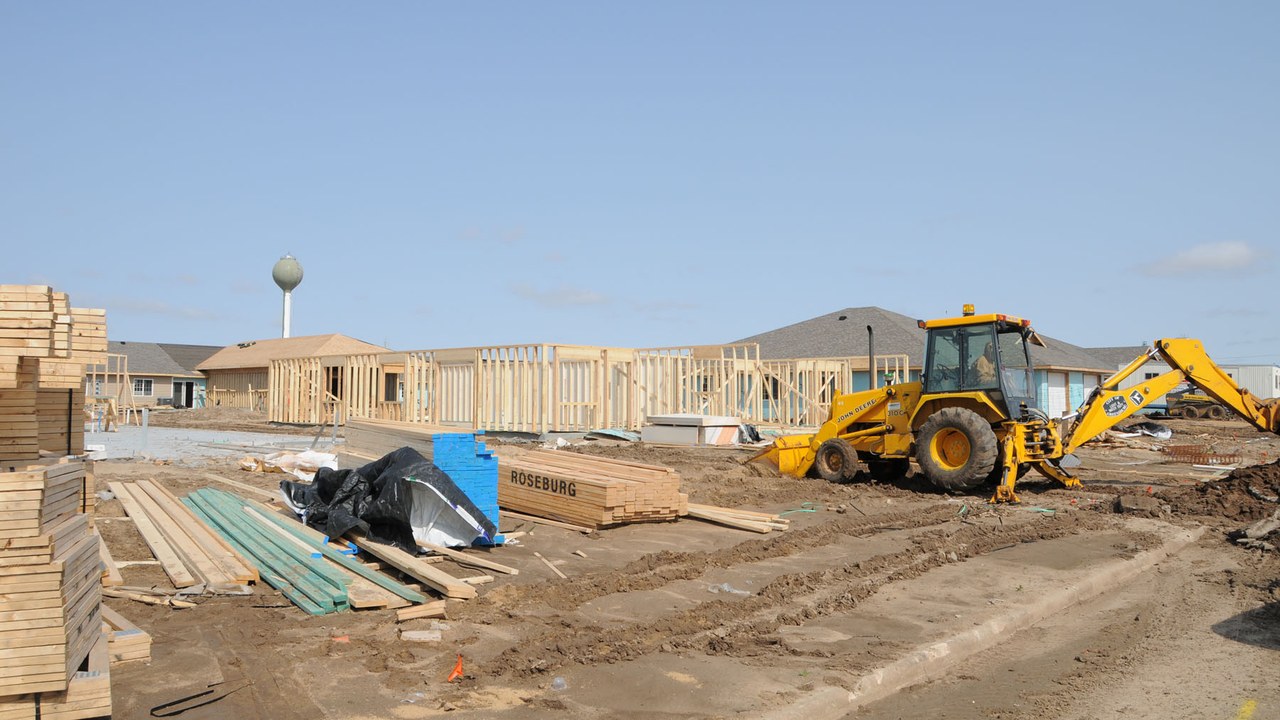
The roots of today’s renter-friendly market trace back to 2021 and 2022, when soaring rents and rapid migration into Sun Belt cities triggered a multifamily building boom. Developers broke ground on hundreds of thousands of units, and those projects are now reaching completion almost simultaneously.
Federal data from the U.S. Census Bureau’s New Residential Construction reports confirms the scale. Multifamily completions ran above 400,000 units on an annualized basis through the second half of 2025, according to the Bureau’s monthly releases, well above the roughly 300,000-unit annual pace that prevailed for most of the prior decade. The Census Bureau’s Building Permits Survey shows that the heaviest activity has been concentrated in a handful of metros: Austin, Dallas-Fort Worth, Phoenix, Atlanta, and Charlotte have consistently ranked among the top markets for new apartment permits since 2022.
Those are precisely the cities where concessions are now most aggressive. In Austin, where the metro absorbed roughly 30,000 new apartment units over the past two years according to CoStar tracking data, landlords have offered two or even three months free on new leases at some properties. Phoenix and Dallas have followed similar patterns, with effective rents (the amount tenants actually pay after concessions are factored in) declining even as headline asking rents hold relatively steady, according to listings tracked by Apartments.com and Zillow’s rental trends data.
Jay Parsons, a housing economist and former head of economics at RealPage, noted in an April 2026 analysis that the concession wave is “concentrated almost entirely in the lease-up phase of new buildings,” meaning properties that opened in the last six to 12 months are competing hardest for tenants.
What concessions actually look like
Not all concessions are created equal, and the distinction matters for renters trying to calculate real savings.
The most common offer is one or two months of free rent folded into a 12- or 13-month lease. On a $1,800-per-month apartment with one month free over 13 months, the effective monthly rent drops to roughly $1,662, a savings of about 7.7%. Some properties go further, bundling free parking, waived amenity fees, or reduced deposits on top of the free month.
Less common but increasingly visible are outright reductions in base rent. Private-sector rent indexes from Apartment List and Zillow show that asking rents in the most oversupplied Sun Belt metros have declined 2% to 5% year over year as of early 2026. That is a modest but meaningful shift after the double-digit increases renters absorbed in 2021 and 2022.
Renters should pay close attention to the structure of any deal. A concession that lowers the effective rent during the initial lease term but resets to a higher base at renewal may deliver less long-term value than a smaller upfront discount paired with a lower starting rent. Reading the full lease language, not just the promotional banner, is essential.
“The worst version for a renter is a big upfront freebie on a lease with a built-in escalation clause,” said Jenny Schuetz, a senior fellow at the Brookings Institution who studies housing policy. “You save money in year one and get hit with an above-market increase in year two.”
Where the deals are, and where they are not
The concession trend is far from uniform. Sun Belt metros with the deepest new-construction pipelines are the epicenter, but legacy rental markets on the coasts tell a different story.
In New York City, vacancy rates remain among the tightest in the nation. Zoning constraints, lengthy approval processes, and high construction costs have kept new supply well below demand, and rents have continued to climb. San Francisco and Boston face similar dynamics: limited new inventory and strong demand from high-income renters keep landlords firmly in control of lease negotiations.
Even within Sun Belt metros, the concession landscape varies block by block. Newly built Class A towers with resort-style amenities are competing hardest for tenants, because they entered the market at the same time as dozens of similar buildings. Older, more affordable Class B and C properties in the same cities may see less concession pressure, since they serve a different segment of the renter population and face less direct competition from the new supply.
That distinction raises an important question about who actually benefits. The renters most likely to score concessions are those with the income and credit profiles to qualify for brand-new luxury apartments. Lower-income renters in older housing stock, the group most likely to be cost-burdened, may see little relief from the supply wave unless filtering effects gradually ease pricing across the broader market.
For renters evaluating a move, the most reliable way to gauge local conditions is to check permit and completion data for a specific metro through the Census Bureau’s Building Permits Survey, then cross-reference with current listings on major rental platforms. A market with thousands of recently completed units and visible concession offers is one where negotiation is likely to pay off.
How long the window stays open
The durability of this renter-friendly moment depends on what happens next in the construction pipeline, and the signals are mixed.
New multifamily permit issuance has slowed sharply from its 2022 peak. Higher interest rates raised the cost of construction financing, and developers can see the concession pressure already squeezing returns on recently delivered buildings. Rising costs for construction materials, compounded by tariff uncertainty on steel and lumber imports, have further dampened appetite for new projects. If fewer developments break ground through 2026, the current surplus of units could be absorbed within 12 to 18 months as population growth and household formation gradually fill vacancies. That would restore pricing power to landlords, potentially ending the concession cycle.
On the other hand, a significant number of projects permitted in 2023 and early 2024 are still under construction and will deliver units through late 2026 and into 2027. Until that pipeline is fully digested, supply pressure in the most active markets is unlikely to vanish.
External factors could tip the balance in either direction. A slowdown in job growth would weaken renter demand and extend the concession period. A rebound in migration to Sun Belt cities, or a further pullback in new construction starts, would tighten the market faster. Federal data tracks permits and completions with a lag of several months, so renters and analysts watching for turning points should supplement government statistics with real-time listing data and local market reports from firms like RealPage, CoStar, and Apartment List.
There is also the question of financial stress on landlords themselves. Property owners who financed acquisitions or construction at low interest rates in 2021 and 2022 now face refinancing at significantly higher rates, while concessions eat into the rental income they need to service that debt. If enough properties fall into distress, it could accelerate sales or conversions that reshape local markets in unpredictable ways.
Negotiating leverage in Austin, Phoenix, and other oversupplied metros
For tenants whose leases are expiring in the coming months, the current environment offers genuine leverage, but only in the right markets and only for those willing to do the homework.
In the metros where concessions are most prevalent, the numbers tell the story. Austin’s average effective rent on newly leased Class A apartments has fallen roughly 4% year over year as of early 2026, according to CoStar, with some properties along the East Riverside corridor and in the Domain area advertising up to three months free. In Phoenix, the Southeast Valley submarkets around Chandler and Gilbert, where thousands of units delivered in 2025, have seen one- to two-month concessions become standard on new lease-ups. Dallas-Fort Worth’s concession activity is heaviest in Frisco and the Design District, where new luxury towers are clustered within blocks of each other.
Renters in those areas should start by checking the Census Bureau’s Building Permits Survey and reports from firms like RealPage and CoStar to confirm whether their metro has experienced a completion surge. From there, check competing properties in the immediate neighborhood for advertised concessions. Even if a current building is not advertising deals, the existence of concessions at nearby competitors gives a tenant a concrete basis for negotiating a renewal discount or requesting perks like a waived rent increase.
Be specific in negotiations. Citing a competitor’s two-months-free offer or a lower asking rent at a comparable property down the street is far more persuasive than a vague appeal to “market conditions.” Landlords facing vacancy pressure would rather keep a reliable tenant at a modest discount than turn the unit and risk weeks of lost income plus leasing costs.
And keep perspective on timing. This window of tenant leverage is real, but it is tied to a supply cycle that will eventually normalize. Locking in a favorable lease now, particularly one with a lower base rent rather than a one-time concession, could deliver savings that outlast the current market moment. For renters who have spent the last few years absorbing steep increases with no recourse, that is not a small thing.