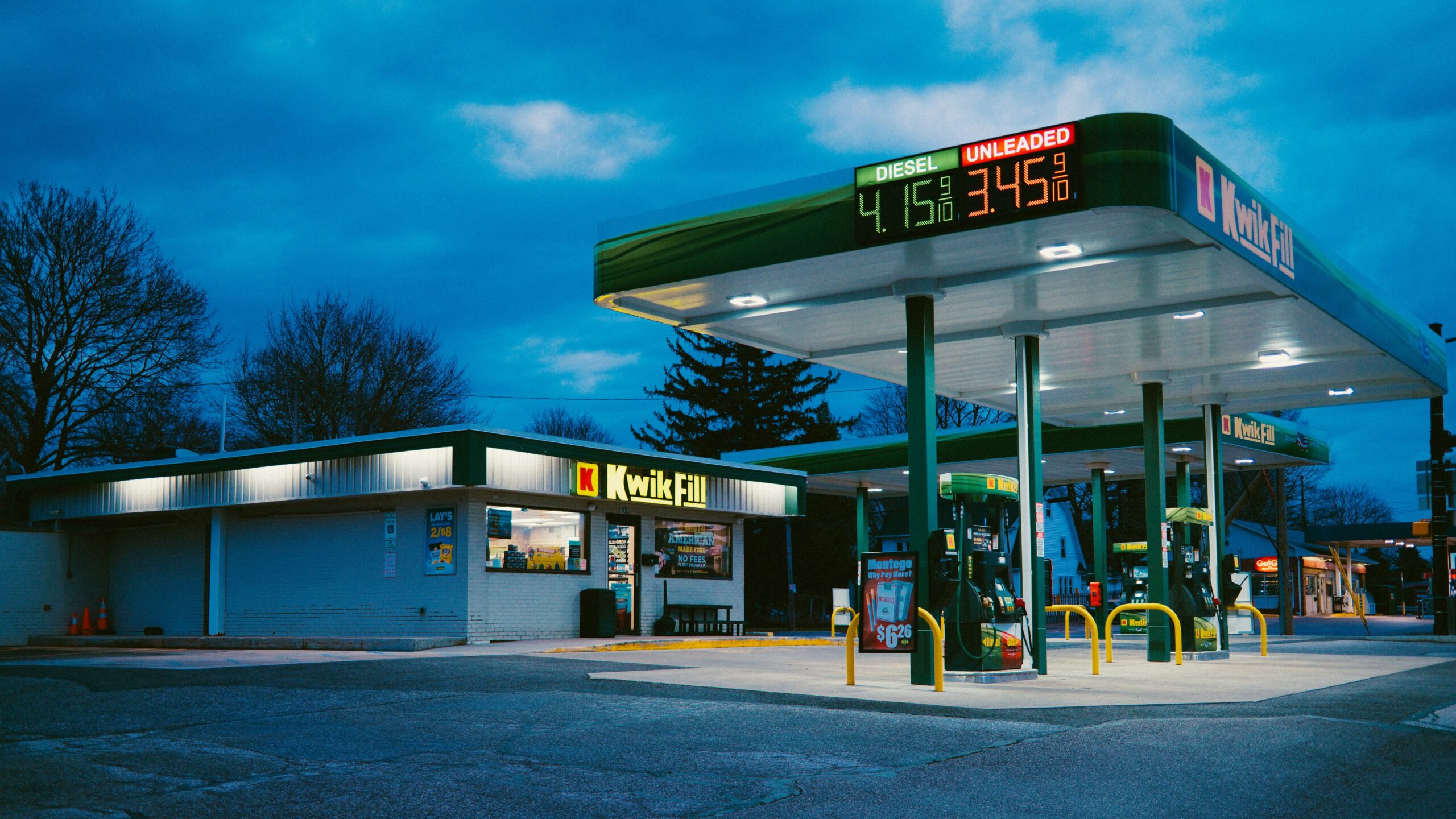
A driver topping off a 50-gallon pickup truck in mid-February 2026 paid roughly $155 at the pump. That same fill-up now costs about $222, a difference of roughly $67, after the national average price of regular unleaded gasoline surged 30 cents in a single week to $4.45 a gallon as of the second week of May 2026, according to AAA’s daily Fuel Gauge Report. It is the highest national average since the summer of 2022, when prices briefly topped $5 a gallon, and AAA has signaled the climb is likely not finished.
Even for smaller vehicles, the math stings. Back in mid-February, AAA pegged the national average near $3.10 a gallon. A household filling a 20-gallon SUV at that price paid about $62; the same tank at $4.45 now runs roughly $89. Multiply that $27 gap by two cars and four or five fill-ups a month, and a family can easily face a few hundred extra dollars in fuel costs compared to just three months ago.
Why prices spiked so fast
Tightening global supply and the start of peak driving season in the United States hit at the same time.
On the supply side, OPEC+ announced on May 3 that member nations would raise output by just 188,000 barrels per day, a figure reported by The Associated Press that analysts widely described as too small to meaningfully loosen global crude markets. Simultaneously, tensions near the Strait of Hormuz, the narrow waterway through which roughly 20 percent of the world’s traded oil passes daily according to the U.S. Energy Information Administration, have kept a risk premium embedded in every barrel. Iran’s military posture in the region has unsettled shipping insurers and commodity traders, pushing benchmark crude prices higher before the fuel ever reaches a U.S. refinery.
Domestically, refineries are in the middle of their seasonal switchover to summer-blend gasoline, a more expensive formulation the EPA requires to reduce smog during warmer months. That transition temporarily tightens supply every spring, but this year it landed on top of already elevated crude costs. The EIA’s weekly retail gasoline price data confirms the steep upward trend through late April and into May, closely tracking AAA’s numbers.
Where prices are highest and lowest
The national average obscures dramatic regional differences. California, which layers state taxes and its own cap-and-trade fuel surcharges on top of federal levies, has consistently posted averages above $5.50 a gallon in recent weeks, according to AAA state-level data. Nevada, Washington, and Oregon are not far behind. On the cheaper end, drivers in Texas, Mississippi, and Oklahoma are seeing prices closer to $3.80, benefiting from proximity to Gulf Coast refineries and lower state fuel taxes.
Those gaps determine whether the spike feels like an annoyance or a genuine household budget crisis. A two-car family in Los Angeles filling up weekly could be spending several hundred dollars more per month than in February. A single-vehicle commuter in Houston feels the pinch, but it is far more manageable.
Diesel and the ripple effect on everyday goods
Gasoline is not the only fuel climbing. Diesel prices, which AAA also tracks daily, have followed a similar upward path. Because diesel powers the trucks, trains, and ships that move nearly every consumer product in the country, higher diesel costs tend to ripple into grocery bills, shipping fees, and the price of building materials. Households that do not own a car still feel the effects when the cost of transporting food and goods rises. AAA’s fuel data and the EIA’s weekly diesel price series both show diesel trending higher alongside gasoline through May 2026, adding pressure across the supply chain.
How this compares to the 2022 record
The last time gas prices dominated national conversation this intensely was June 2022, when Russia’s full-scale invasion of Ukraine sent crude markets into turmoil and the national average hit $5.02 a gallon, per AAA records. Today’s $4.45 remains below that peak, but the velocity of the current climb is what has economists and energy analysts paying close attention. According to AAA’s historical data, a 30-cent weekly increase is unusually large; during the 2022 run-up, most weekly jumps were smaller, and weeks with gains of that magnitude typically preceded further spikes.
When both the EIA’s survey of thousands of retail stations and AAA’s daily tracker point in the same direction with similar magnitude, the signal is hard to dismiss. Right now, both say prices are climbing, and neither dataset shows early signs of a reversal.
What AAA is watching next
AAA has noted in its recent reporting that the conditions needed to slow the rally, including a significant OPEC+ output increase, easing tensions in the Middle East, or a measurable drop in U.S. driving demand, have not materialized. Memorial Day weekend, traditionally the unofficial start of summer driving season, is expected to bring a surge in road travel that could push gasoline demand even higher.
Projecting exactly where prices land by July or August involves more uncertainty than precision. Futures markets for gasoline suggest traders expect elevated prices through the summer, but futures contracts are bets, not forecasts etched in stone. An unexpected refinery outage, a hurricane threatening Gulf Coast infrastructure, or a diplomatic breakthrough in the Persian Gulf could shift the trajectory in either direction.
The EIA is expected to publish its next Short-Term Energy Outlook in early June 2026, which should include updated summer price forecasts grounded in supply-and-demand modeling. Until that data arrives, the most honest assessment is that prices are high, still rising, and facing headwinds that show no sign of letting up.
How to spend less at the pump before summer peaks
AAA and consumer advocates recommend a handful of steps that sound simple but genuinely add up during a sustained price spike. Apps like GasBuddy can surface the cheapest stations within a few miles; warehouse clubs such as Costco and Sam’s Club routinely sell fuel 20 to 40 cents below the street price. Unless your vehicle’s owner’s manual specifically requires premium, stick with regular. Most cars do not need it, and the per-gallon savings at today’s prices can top 50 cents.
Keeping tires inflated to the manufacturer’s recommended pressure and clearing unnecessary weight from the trunk or cargo area can improve fuel economy by a few percentage points, savings that compound over weeks of $4-plus gas. For commuters with any scheduling flexibility, batching errands into fewer trips and carpooling remain the most effective ways to cut consumption without trading in the car.
None of that erases the reality of paying $67 more to fill a full-size truck or $27 more to top off an SUV every time you pull up to the pump. But it can blunt the impact while drivers wait to see whether summer brings relief or another leg higher.