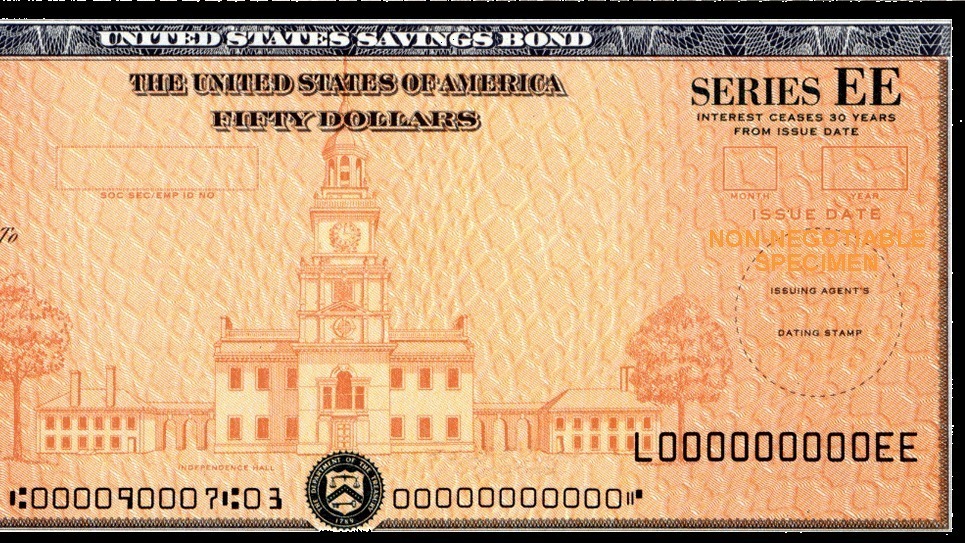
A Series I savings bond pays a rate backed directly by the U.S. Treasury and adjusted twice a year for inflation, which makes it one of the safer places to park money outside a bank account. That safety comes with a timing rule that catches savers off guard: money placed in an I bond cannot be touched at all for a full year, and pulling it out too soon after that carries its own cost. Understanding the schedule matters before committing retirement savings, or an emergency fund, to one.
The One-Year Lock and What It Means
Unlike a certificate of deposit, which usually allows early withdrawal in exchange for a penalty, an I bond simply cannot be redeemed at all during the first twelve months after purchase. There is no early-withdrawal option to pay a fee and get the money anyway; the funds are fully inaccessible for that entire year, even in a genuine emergency. Bonds are typically purchased electronically through a TreasuryDirect account, though paper I bonds remain available through part of a federal tax refund. The interest rate itself is a composite figure that combines a fixed rate, locked in at the time of purchase and unchanged for the life of the bond, with an inflation-adjusted rate that resets every six months based on the Consumer Price Index, so the total yield moves with inflation even though the fixed portion never does.
Free retirement updates: Want plain-English help keeping more of your money in retirement? The free Retirement Shield newsletter covers the benefits, deadlines, and money mistakes that cost retirees, a couple times a week. Subscribe free.
The Three-Month Penalty Between Years One and Five
Once the one-year mark passes, an I bond can be cashed at any time, but doing so before the five-year mark comes with a cost: the three most recent months of interest are forfeited. A bond cashed at month 20, for example, is paid out as though it had earned interest for only 17 months, even though the money had actually been growing for 20. That penalty shrinks in relative importance the longer a bond is held, since three months of interest matters less against three years of accumulated growth than it does against thirteen months. After five years, the penalty disappears entirely, and the bond can be redeemed for its full accrued value at any point up to the maximum 30-year life of the bond, after which it stops earning interest altogether even if never cashed in.
Redemptions happen directly through the TreasuryDirect account where the bond is held, and the proceeds, including all accrued interest, are typically available within a few business days of the request. Interest earned on I bonds is subject to federal income tax but exempt from state and local income tax, and taxpayers can choose to report the interest annually as it accrues or defer reporting it until the bond is cashed or matures, whichever comes first.
Where an I Bond Fits Next to CDs and Savings Accounts
An I bond is best suited to money that will not be needed for at least a year, and ideally not for five years, since that is the point at which the early-redemption penalty stops applying entirely. Money that might be needed sooner, for a near-term expense or as a true emergency cushion, is generally better kept in a high-yield savings account or a shorter-term CD, both of which offer faster or penalty-free access. There is also no secondary market for reselling an I bond early the way there sometimes is for other bonds, so once the money is committed, waiting out the schedule is the only way to avoid a penalty. Electronic purchases are currently capped at $10,000 per person per calendar year through a TreasuryDirect account, with an additional allowance available through a paper bond purchased using part of a federal tax refund, a detail worth checking directly on TreasuryDirect before assuming a larger sum can be placed in I bonds in a single year.
Because the purchase limit is set per person, per calendar year, some households ladder I bond purchases across a spouse’s own TreasuryDirect account, or split a single year’s savings goal across two January-to-December cycles, to get more money working under the same inflation-protected rate structure. Doing so does not change the one-year lock or the three-month penalty for any individual bond; each bond purchased carries its own twelve-month clock starting on its own purchase date, so bonds bought a year apart become penalty-free at five years apart as well, not on the same calendar schedule.
This article was produced with AI assistance and reviewed by The Financial Wire editorial team.
More Financial Reading
- How many CDs can you park at 1 bank? FDIC rules you must know
- Adding someone to your bank account: tax traps and smart moves