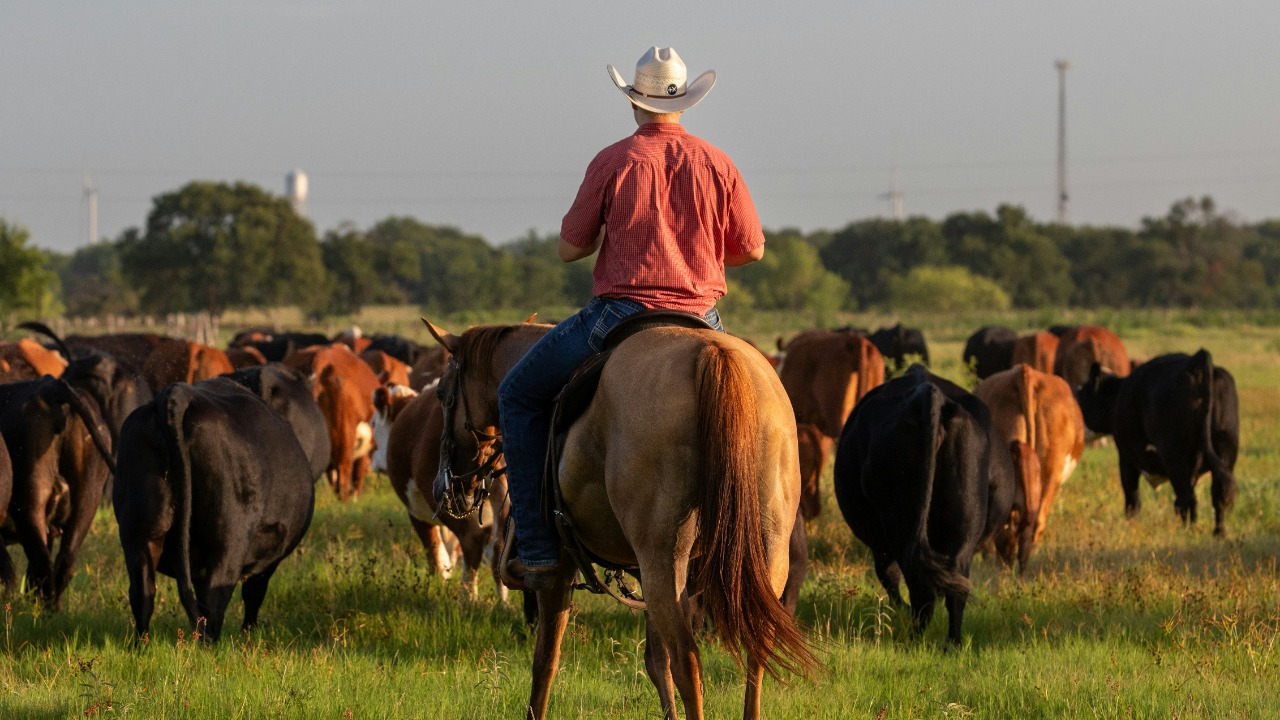
Ranchers and farmers who were forced to sell draft, dairy or breeding livestock because of drought now have roughly double the usual time to replace those animals before the sale counts as taxable income, under relief the IRS extended to 49 states plus the District of Columbia and Puerto Rico. The change doesn’t erase the tax bill on the sale; it pushes the deadline for reinvesting the money back into a herd, which is the only way the gain stays deferred rather than taxed the year the animals were sold. For a rancher whose income already runs close to a higher tax bracket in a normal year, when that deferred gain eventually lands matters almost as much as whether it’s taxed at all.
IR-2026-110: A Four-Year Window Instead of Two
The IRS said in IR-2026-110, dated September 15, 2026, that eligible ranchers and farmers now have “until the end of their next tax year to replace the sold or exchanged livestock” and “defer tax on any gains from the forced sales or exchanges,” extending what is normally a two-year replacement period to a four-year one. The IRS notice covers “49 states, the District of Columbia, Puerto Rico, and other areas” that experienced drought conditions in the twelve months ending August 31, 2026, according to the release, describing the covered window as running from “Sept. 1, 2025, and Aug. 31, 2026.” In a county still under drought when the four-year window is about to close, the IRS said the deadline extends again, one year at a time, for as long as the drought designation continues. The release does not name which single state, of the 50, falls outside the 49 covered — only that 49 states, D.C. and Puerto Rico qualify.
What the notice doesn’t track: IR-2026-110 sets a new replacement deadline but leaves a rancher to keep their own record of which tax year the sale falls in, when the deferred gain becomes due, and what documentation an eventual IRS notice about the sale might ask for. See the IRS notice decoder in The IRS Refund Recovery Kit.
A Long-Standing Relief, Not a New Program
IR-2026-110 is not a one-time law; it is the IRS applying a standing rule the agency has used for droughts in prior years, citing its own earlier guidance, “Notice 2006-82,” as the basis for how the extension is calculated. That means the four-year replacement period is not unique to 2026’s drought conditions — it is the same mechanism the IRS has applied to other bad drought years, reapplied now to a drought footprint covering 49 states. The release directs ranchers and farmers to Publication 225, the Farmer’s Tax Guide, for “more information on reporting drought sales and other farm-related tax issues,” rather than laying out the reporting steps in the news release itself. That gap between the news release and the actual reporting mechanics is common with IRS drought announcements: the release exists to establish which counties and which tax year qualify, while the mechanics of how a specific sale gets reported live in the standing publication the agency updates separately.
Which Animals Qualify and Which Counties Are Covered
The relief is narrower than “livestock” in general. IR-2026-110 limits it to animals “held for draft, dairy or breeding purposes,” which excludes livestock raised for slaughter and excludes poultry outright. Which counties within the 49 states actually qualify is spelled out separately: the release points to Notice 2026-54 as the document listing the specific counties and jurisdictions covered by the drought designation, rather than applying the relief to every county in every one of the 49 states. A rancher whose herd sale doesn’t fall in a listed county, or whose animals were raised for meat rather than breeding, dairy or draft work, doesn’t get the extended replacement period under this notice. Draft animals — those used for pulling equipment or plowing rather than for meat, milk or breeding stock — are a narrower category than “livestock” in everyday use, and the release treats all three qualifying purposes as equally eligible without ranking one above another.
A Deferral, Not a Tax Break
Nothing in IR-2026-110 forgives the tax on the gain from a forced livestock sale; the notice only changes when that gain has to be reported if the rancher reinvests in a new herd within the window. If the replacement period closes without new livestock purchased, the deferred gain becomes taxable income for that later year, which can land at a different point in a rancher’s income — and different tax bracket — than the year of the original sale. For ranchers at or near retirement age who sold off a herd rather than rebuild it, the four-year window still requires a decision: replace the animals to keep deferring the gain, or let the deferral period run out and report the income when it does. A rancher who is winding down operations rather than continuing to raise livestock gets no separate exception in IR-2026-110; the same four-year clock applies whether the eventual plan is to rebuild the herd or retire from ranching altogether, and choosing not to replace the animals simply moves the tax bill to whichever later year the window closes.
Tracking a Deferred Gain Across Tax Years
IR-2026-110 extends the livestock-replacement window to four years and points to Notice 2026-54 for which counties qualify, but the relief only works if the deferred gain gets reported correctly whenever the replacement period actually closes — a date that can land years after the original sale and in a different tax year’s paperwork entirely.
The IRS Refund Recovery Kit includes a refund status tracker spreadsheet built to keep a multi-year paper trail straight, plus the refund-trace steps under Form 3911 for tracking down a refund that a later year’s return says was sent but never arrived.
Open the refund status tracker in The IRS Refund Recovery Kit.
This article was produced with AI assistance and checked against the primary source linked above.