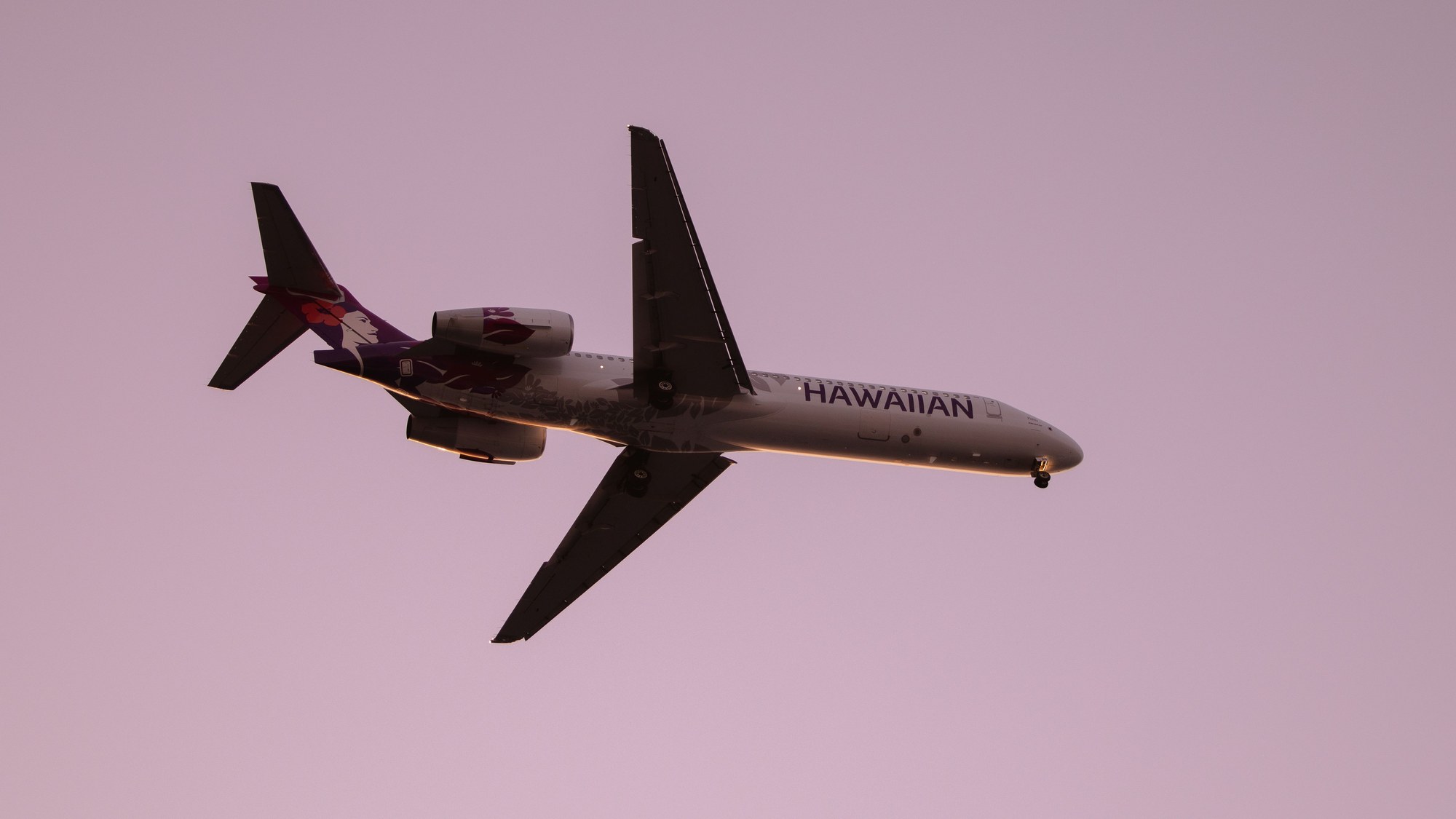
Hawaiian Airlines’ Huakaʻi by Hawaiian program now includes two free checked bags on Neighbor Island travel, according to Alaska Air Group’s third-quarter earnings release on October 20. The same release says an Atmos debit card launches in early 2027. Both announcements arrived in a quarter when the airline group lost $147 million, while fuel costs rose 60 percent.
Huakaʻi is Hawaiian’s loyalty program for residents. When Hawaiian started it in November 2024, Maui Now reported it was free, open to Hawaiʻi residents with a HawaiianMiles account and a Hawaiʻi mailing address, and built around inter-island flights. Joe Sprague, Hawaiian’s chief executive at the launch, described it as a way to thank residents for supporting the airline.
That first version offered one free checked bag on Neighbor Island flights, starting January 8, plus a quarterly discount code worth 10 percent on one Neighbor Island booking. The code was worth 20 percent for holders of the Hawaiian Airlines World Elite Mastercard. Surfboards and golf bags counted as the free bag, which made the benefit practical for island sports travel.
The new benefit doubles the bags. Hawaiian’s own September 2 announcement says members get two free checked bags on Neighbor Island flights, including sports equipment. The question for a Hawaiʻi resident is whether the household flies between islands with luggage, because the benefit does not reach flights to the mainland or any other route.
Retirement deadlines, in your inbox: Miss an enrollment or claim deadline and the money can be gone. The Retirement Money Brief keeps you ahead of the ones that matter, every weekday.
Get the Retirement Money Brief →
We may earn a commission from links on this page.
What the two-bag benefit covers
Membership is the gate, and joining is free. Hawaiian’s post tells residents to sign up at hawaiianairlines.com/huakai, and the program page describes its deals as exclusive to Hawaiʻi residents. The airline’s announcement does not give a start date for the second bag, and the earnings release adds no detail beyond one sentence.
Other benefits sit alongside the bags. Hawaiian says members get quarterly Neighbor Island fare discounts that extend to up to six guests on the same reservation, and monthly fare deals on the combined Alaska and Hawaiian network. A limited-time offer of 25 percent off flights between Hawaiʻi and the U.S. mainland also went out by email to members.
Points are part of the update. Members now get three times the Atmos Rewards points when they redeem Foodland Maikaʻi points, so 1,000 Foodland points convert to 3,000 Atmos points, Hawaiian says. Atmos Rewards is the loyalty program shared by Alaska and Hawaiian, and points can be earned and redeemed with oneworld airlines serving more than 1,100 destinations.
The Atmos debit card and the rule change behind it
The debit card is listed in Alaska Air Group’s release among loyalty enhancements, alongside expanded credit card offerings, four new Atmos communities and added partnerships. It says the card launches in early 2027. The release does not name a bank, a fee, a rewards rate or a launch month.
A separate change starts January 1, 2027. Beginning in October, Atmos Rewards members can choose how they earn points and status points, by distance traveled, price paid or segments flown, on flights departing on or after that date. Members can set the choice themselves, which matters because the same trip could earn very different totals.
The release also describes premium changes at Hawaiian. Leihōkū by Alaska and Hawaiian, a new premium experience, is set for Hawaiian’s A330 fleet with lie-flat suites, exclusive check-in and concierge services. A premium economy product, Premium Reserve, is set to debut in 2028 on the A330s and other aircraft, the company says.
The loss and the loyalty revenue behind the perks
Alaska Air Group reported third-quarter revenue of $4.308 billion, up 14 percent, and a net loss of $147 million, against net income of $73 million a year earlier. Aircraft fuel cost $1.214 billion, up 60 percent, as the price paid per gallon rose to $3.94 from $2.51. Operating income fell 45 percent to $82 million.
Loyalty was the bright line. Cash payments from the loyalty program grew 21 percent to $721 million, and other loyalty revenue rose 32 percent to $263 million, the release says. Premium revenue grew about 25 percent and now makes up more than 36 percent of the total.
Chief executive Ben Minicucci said the group was not satisfied with the quarter and pointed to a $1.8 billion fuel headwind for the year. The company forecasts a full-year adjusted loss of $5.00 to $5.50 a share, and the release says third-quarter revenue also faced what it calls Hawaiʻi headwinds.
For a resident, the perk has a clear dollar value only on trips with checked bags. The release does not state what Hawaiian charges for a bag, so the saving per trip depends on the fee schedule and not on anything Alaska Air Group published. A household that flies inter-island a few times a year will feel it less than one that flies monthly.
The open question for a Hawaiʻi household is how many of the year’s inter-island trips involve checked bags, and what two free bags are worth against the fee Hawaiian would otherwise charge. That number is not in any of the announcements, and it decides whether the perk shows up in the monthly budget.
Do free bags cover the household costs that really add up?
A free checked bag trims one travel cost for a Hawaiʻi family that flies between the islands, but it leaves the monthly bills untouched. Benefit programs that cut those bills must be applied for, and many go unclaimed because nobody scans for them.
The Benefits Checklist is the related job here, not a Hawaiian Airlines tool. It scans 11 benefit programs, with the 2026 income limits and a 50-state phone directory, and the download includes a printable application tracker for the household to follow through on each one.
Scan the 11 benefit programs with the Benefits Checklist →
More Financial Reading
- 21 Ways to Stretch a $2,087 Social Security Check
- 15 Places to Find Your Share of the $4.25 Billion States Give Back
- 15 Ways Out of 22% Credit Card Interest
This article was produced with AI assistance and edited for accuracy against the sources linked above.