A Virginia widow has taken the federal government and several mortgage companies to court, arguing she was pushed out of her home over a reverse mortgage that was only ever in her late husband’s name. Her federal lawsuit contends that surviving spouses are entitled to remain in the home under the government’s own rules, even when they never signed the loan. The case is a pending complaint, and none of its allegations have been tested or proven in court. Its outcome could matter to any older homeowner whose spouse holds a reverse mortgage alone.
The Kendall-Mayo complaint against HUD and PHH
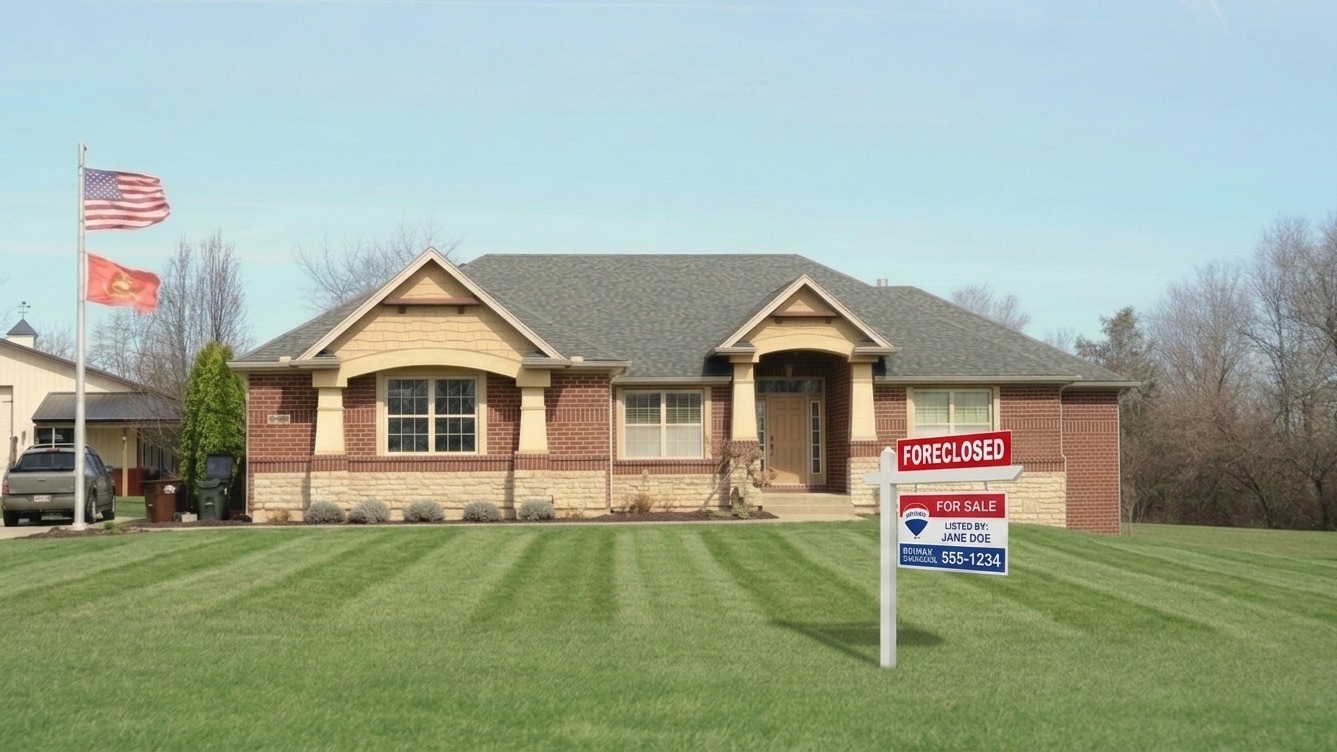
As reported by the mortgage-industry outlet HousingWire, Janice Kendall-Mayo filed suit in the U.S. District Court for the Eastern District of Virginia around March 23, 2026. Her late husband, Cleveland Mayo, obtained a Home Equity Conversion Mortgage in June 2011 after a kidney-failure diagnosis. The complaint says the couple understood the arrangement to mean that either spouse could remain in the home after the other died. Cleveland Mayo died in December 2024, after which the loan was declared due and payable. The home was foreclosed in June 2025 and sold to Cascade Funding Mortgage Trust.
The lawsuit names the U.S. Department of Housing and Urban Development and its secretary, Scott Turner, along with PHH Mortgage Corporation, Mortgage Assets Management LLC and MetLife Home Loans. It challenges the way HUD administers its federally insured reverse-mortgage program, arguing under the Administrative Procedure Act that federal law requires protections for surviving spouses even when they are not listed as borrowers. Among other relief, the complaint asks the court to declare that the borrower’s death should not have triggered foreclosure and to reform the mortgage to include spousal protections. The defendants have not been found to have done anything unlawful, and the allegations remain unproven.
Free retirement updates: Want plain-English help keeping more of your money in retirement? The free Retirement Shield newsletter covers scams, benefits, and money many retirees may be owed, a couple times a week. Subscribe free.
What the rules say about non-borrowing spouses
The dispute turns on how the HECM program treats a spouse who was not named on the loan. The Home Equity Conversion Mortgage is the reverse mortgage insured by the Federal Housing Administration, the dominant form of the product in the United States, and its rules are set by HUD rather than by any single lender. Under the federal consumer agency’s guidance, a reverse mortgage generally comes due and payable when the last surviving borrower dies, and heirs typically must repay the balance or sell the home. For a married couple where only one spouse signed, however, HUD created a path for the survivor to stay. After the federal court decision in Bennett v. Donovan found the agency’s earlier approach conflicted with the governing statute, HUD issued a series of mortgagee letters, most recently the 2021 update to its policy, establishing a Mortgagee Optional Election, or MOE, that can defer the loan’s due-and-payable status for an eligible non-borrowing spouse.
Under that framework, described in a summary published through the federal Administration for Community Living, an eligible surviving spouse does not receive loan proceeds and does not become a borrower, but may remain in the home during a deferral period. To keep that protection, the survivor generally must certify each year that the home is a principal residence and must stay current on obligations such as property taxes and homeowners insurance. The foreclosure is deferred until the spouse moves out, dies or fails to meet those conditions.
Eligibility is not open-ended. The framework generally reaches a spouse who was married to the borrower at the time the loan closed, or who met the program’s definition of a spouse, and who has occupied the property as a principal residence throughout. The survivor must also be able to establish legal ownership or a legal right to remain in the home within a set period after the borrower’s death. Those conditions are why advocates describe the protection as real but conditional: it exists to keep a surviving spouse housed, yet it can be lost if the paperwork, residency, or property charges are not kept in order, and it does not turn the survivor into a borrower who can draw further loan proceeds. The Kendall-Mayo complaint argues those protections should have applied to her and did not; the servicer and agency defendants have not responded to those specific claims in any ruling, and the court has made no finding on the merits.
Why the case matters for surviving spouses
The lawsuit highlights a gap that has tripped up families before: a surviving spouse who assumed a reverse mortgage was safe, only to face foreclosure after the borrowing spouse’s death. Whether the widow’s specific claims succeed is now a question for the court. The broader lesson for older couples is that non-borrowing-spouse status is not automatic protection but a set of conditions that must be documented and maintained. Households with a HECM in only one spouse’s name can ask the servicer in writing whether the other spouse is recorded as an eligible non-borrowing spouse, confirm the annual certification and property-charge requirements, and keep proof of residency and payments. Anyone who believes a servicer mishandled a deferral can file a complaint with HUD or the Consumer Financial Protection Bureau while the underlying legal questions work through the courts.
This article was researched and drafted with AI assistance and reviewed against the linked primary sources.
More Financial Reading
- The ideal retirement withdrawal rate so your savings actually last
- How many CDs can you park at 1 bank? FDIC rules you must know