A shopper filling the same cart every week could be forgiven for wondering whether the government’s grocery inflation number was pulled from a different universe. A dozen eggs averaged about $3.20 in March 2026, based on BLS average retail price data published in the Consumer Price Index report, down 44.7% from the record highs of a year earlier. A pound of ground beef, scanned at the same register, ran about $5.90 per the same BLS data, part of a 12.1% year-over-year surge across the beef and veal category. The USDA’s official projection for overall grocery inflation in 2026? Just 1.7%.
That single number, drawn from the USDA Economic Research Service’s Food Price Outlook, blends those opposing forces into one tidy figure. It is technically accurate and practically useless for describing what most families actually pay. The gap between eggs and beef reveals how a calm-sounding average can paper over violent swings happening aisle by aisle.
Why eggs are finally cheap again
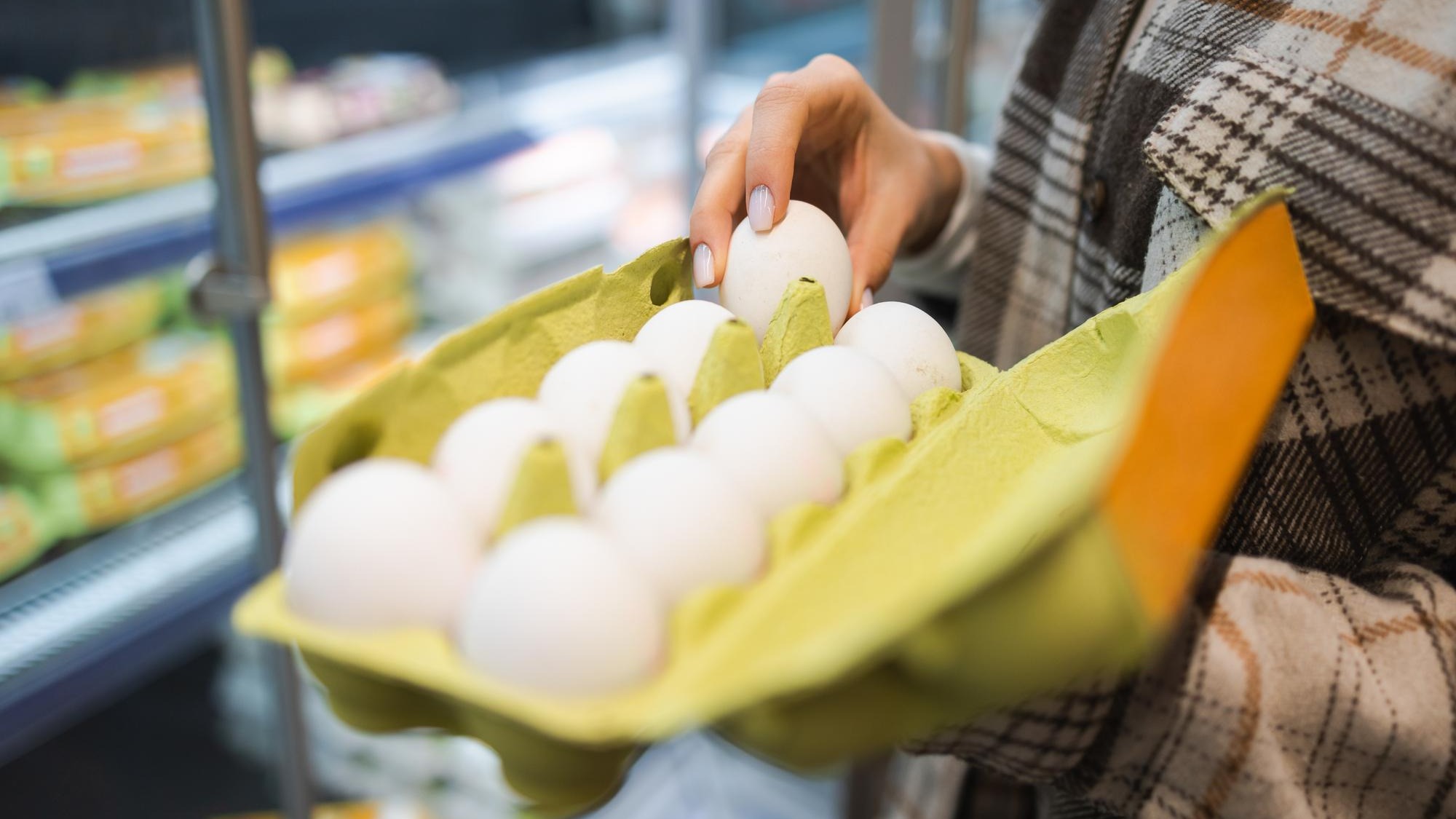
The egg price collapse traces directly to the easing of the worst avian flu crisis in U.S. history. Highly pathogenic avian influenza (HPAI) killed tens of millions of commercial laying hens between 2022 and early 2025, gutting supply and pushing retail egg prices above $5 a dozen in some markets. The USDA’s Animal and Plant Health Inspection Service, which tracks confirmed HPAI detections in commercial flocks, shows that new outbreaks slowed significantly through the second half of 2025.
With fewer birds dying, producers rebuilt their flocks. The national laying flock expanded back toward pre-crisis levels, and egg output followed. That supply recovery collided with prices still inflated from the shortage period, and the correction was sharp. The 44.7% decline recorded in the March 2026 CPI is a snapback from an abnormal peak, not evidence that eggs have become permanently cheap. One bad HPAI season in a major egg-producing state could tighten supply all over again.
Why beef keeps climbing
Beef prices are moving in the opposite direction for reasons that have nothing to do with a single disease event and everything to do with a supply squeeze years in the making. The U.S. cattle herd has been contracting since around 2019, squeezed by persistent drought across key ranching states, rising feed and input costs, and aging producers leaving the business. By January 2025, the national herd had fallen to its smallest size since the early 1960s, according to the USDA’s National Agricultural Statistics Service cattle inventory data.
Fewer cattle on ranches means fewer animals flowing into feedlots and packing plants. Consumer demand for beef has not dropped to match. That mismatch is the fundamental engine behind the 12.1% year-over-year increase the BLS recorded in March 2026. Unlike the egg situation, there is no quick fix. Rebuilding a cattle herd is a biological process: a cow must be bred, carry a calf for nine months, and that calf needs another 18 to 24 months before it reaches market weight. David Anderson, a livestock economist at Texas A&M University who regularly analyzes USDA cattle data, has noted publicly that meaningful supply relief is unlikely before 2028 at the earliest given the biological lag involved in herd expansion.
Trade policy is compounding the pressure. The broad tariffs the administration applied to imports from Canada, Australia, and Brazil in early 2025 have restricted the flow of foreign beef into the U.S. market during a period when domestic production is already constrained. The combination of a shrinking domestic herd and reduced import competition leaves packers and retailers with less room to absorb costs, and more of the increase lands on the receipt.
How the math hides the pain
The USDA’s Economic Research Service builds its food-at-home inflation forecast by aggregating price changes across every grocery category, from fresh produce to dairy to packaged snacks. The 1.7% projection for 2026 is a weighted average, and like any average, it smooths out the extremes. Eggs pulling prices down on one end and beef pushing them up on the other can cancel each other out in the math while still hitting household budgets hard.
Consider a family of four that eats three dozen eggs and four pounds of ground beef a week. At March 2026 prices, their weekly egg bill is about $9.60, down roughly $7.75 from a year ago. Their ground beef bill is about $23.60, up roughly $2.55. They are saving on eggs and losing on beef, and the net effect depends entirely on the mix of proteins in their cart, not on the national average. A household that skews heavily toward beef and away from eggs is experiencing inflation well above 1.7%. A household that eats eggs daily and rarely buys steak is seeing deflation.
ERS publishes prediction intervals alongside its point estimates, acknowledging that the final number could land higher or lower. A renewed HPAI outbreak, a shift in trade policy that reopens import channels, or weather shocks in grain-producing regions could all move the needle. The 1.7% figure is the agency’s best current estimate, not a guarantee.
The chicken question
Readers scanning beef prices will naturally ask: what about chicken? The BLS data for March 2026 show poultry prices rising at a more moderate pace than beef, though still above the overall grocery average. Chicken has long served as the default substitute when beef gets expensive, and retail scanner data from firms like NielsenIQ and Circana suggest that pattern is repeating. Grocery chains have reported in recent earnings calls that unit sales of chicken breasts and thighs have ticked up even as beef volume softens. Store-brand purchases have also climbed across multiple protein categories, another signal that shoppers are trading down where they can.
Those observations come from private-sector data rather than USDA or BLS household surveys, so they are best read as directional signals. But the price incentives for substitution are hard to ignore: with eggs nearly half the price they were a year ago and beef more than 12% more expensive, budget-conscious families have strong reasons to rethink their weekly protein rotation.
Why your zip code matters
One limitation of the federal data is that the headline figures are national averages. The BLS publishes regional and metro-level CPI data, but the Food Price Outlook does not break its projections down by geography. That gap matters because grocery prices vary significantly by location. Egg prices in the Southeast, where a large share of commercial laying operations are concentrated, may have corrected faster than in the Mountain West, where supply chains stretch longer. Beef prices in cattle country may behave differently than in coastal cities that depend on extended distribution networks and higher transportation costs.
A shopper in Atlanta and a shopper in Denver can both be living inside the same 1.7% average while experiencing very different realities at their local store. Until the next round of regional CPI detail is published, the national numbers offer a useful but incomplete picture.
What the rest of 2026 hinges on for eggs and beef
The USDA outlined its broader food price outlook at the 102nd annual Agricultural Outlook Forum in February 2026 and will continue updating projections monthly as new CPI data arrive. For eggs, the critical variable remains HPAI containment. For beef, the timeline is longer and less forgiving: even if ranchers are expanding herds now, the biological lag means consumers should not expect price relief soon.
For anyone trying to plan a grocery budget this year, the 1.7% headline is a poor guide to what any single trip to the store will cost. The real story lives in the line items, and those line items are moving in sharply different directions depending on the biology, disease dynamics, trade policy, and supply-chain structure behind each product. Paying attention to the specific proteins, produce, and staples your household actually buys will tell you far more than any national average ever could.