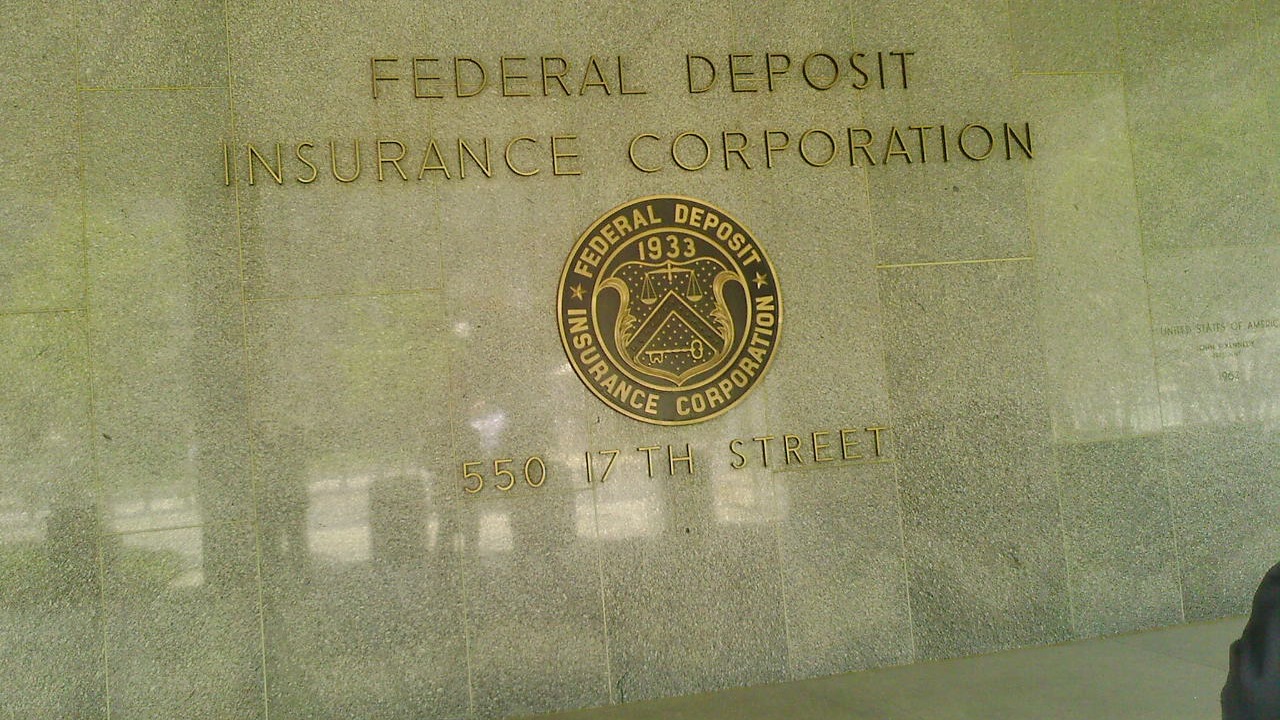
Businesses in firearms, cryptocurrency, adult entertainment, and other politically sensitive sectors have long reported losing bank accounts without clear explanation. Federal regulators just shut down the mechanism that made those closures possible. The Office of the Comptroller of the Currency (OCC) and the Federal Deposit Insurance Corporation (FDIC) adopted a final rule that bars examiners from criticizing banks or taking adverse action based on “reputation risk,” a subjective category that allowed regulators to pressure institutions into dropping legal but controversial customers. The rule implements Executive Order 14331, titled “Guaranteeing Fair Banking For All Americans,” which directed agencies to stop practices tied to politicized account terminations.
How the reputation risk ban changes bank supervision
For years, federal examiners could flag a bank’s relationship with a lawful customer as a reputational liability. That finding carried real weight: it could lower a bank’s supervisory rating, trigger enforcement actions, or lead to consent orders. Banks responded by quietly closing accounts rather than defending them during exams. The final rule, summarized in an OCC bulletin, now prohibits regulators from issuing criticism or taking adverse supervisory action on the basis of reputation risk. The prohibition applies to all national banks, federal savings associations, and FDIC‑supervised institutions.
The three major prudential regulators moved in sequence. The OCC announced it would cease examining for reputation risk and began stripping references from the Comptroller’s Handbook. The Federal Reserve Board separately confirmed that reputational risk would no longer be part of its examination programs and that it would retrain examiners accordingly. The FDIC removed references to reputation risk from its examination manuals even before the final rule was adopted, signaling how seriously the agency treated the issue.
FDIC Chairman Travis Hill framed the change as eliminating “an explicit or implicit focus on reputation risk” that could lead banks to terminate accounts based on customers’ protected views or affiliations. In his public statement, Hill connected the supervisory practice directly to the debanking complaints that had accumulated across multiple industries, arguing that removing reputation risk from the supervisory framework would reduce pressure on banks to cut ties with lawful but controversial customers. The question now is whether removing the regulatory pressure actually changes bank behavior, or whether institutions will continue to shed controversial clients for their own commercial reasons.
Executive Order 14331 and the regulatory timeline
The final rule did not emerge in isolation. Executive Order 14331, issued by the White House, declared it federal policy that Americans should not be denied financial services based on protected beliefs or affiliations. It directed banking regulators to review their supervisory frameworks and remediate practices that enabled politicized debanking. The joint announcement from the OCC and FDIC describes the rule as the direct regulatory product of that directive and emphasizes that supervisory decisions must now rest on concrete safety‑and‑soundness concerns rather than reputational judgments.
The agencies followed a standard rulemaking process. The FDIC published a notice of proposed rulemaking, accepted public comment, and then finalized the prohibition. Between the proposal and the final rule, the FDIC edited its Risk Management Manual of Examination Policies to remove reputation risk language, creating a period where the supervisory practice had already stopped in the field before the legal prohibition took effect. The OCC took a parallel track, publicly announcing in advance that examiners would no longer cite reputation risk and updating internal guidance so that banks would see the shift reflected in their next examination cycle.
Executive Order 14331 also set deadlines for regulators to report back on their progress. According to the agencies’ description of the process, staff reviewed existing guidance, examiner training materials, and historical enforcement actions to identify areas where reputational concerns had played a role. That review informed the specific language in the final rule, which not only removes reputation risk as a standalone category but also instructs examiners to base criticisms on demonstrable violations of law or unsafe and unsound practices.
What changes for banks and customers
In practice, the rule narrows the grounds on which examiners may pressure banks over their customer base. Regulators can still act if a client poses money‑laundering, fraud, or credit risks, but they may not rely on the possibility of public controversy alone. Banks that previously felt compelled to exit certain industries during exams now have clearer footing to retain those relationships, provided they manage traditional financial risks appropriately.
For customers, the impact will be more gradual. The rule does not require banks to serve any particular business or individual, and institutions remain free to make their own risk‑based decisions. However, by removing a key source of supervisory pressure, the agencies have made it less likely that lawful customers will lose accounts solely because regulators view them as politically or socially unpopular. Over time, industries that have struggled to maintain basic banking services will test whether the new framework delivers more stable access.
The effectiveness of the change will depend on implementation. Examiners must internalize the new limits, banks must be willing to revisit past account‑closure policies, and affected customers will need to document any continuing problems. If the rule functions as intended, reputation risk will no longer serve as a backdoor tool for shaping banks’ customer lists, and disputes over controversial clients will shift from the supervisory arena to the competitive marketplace.