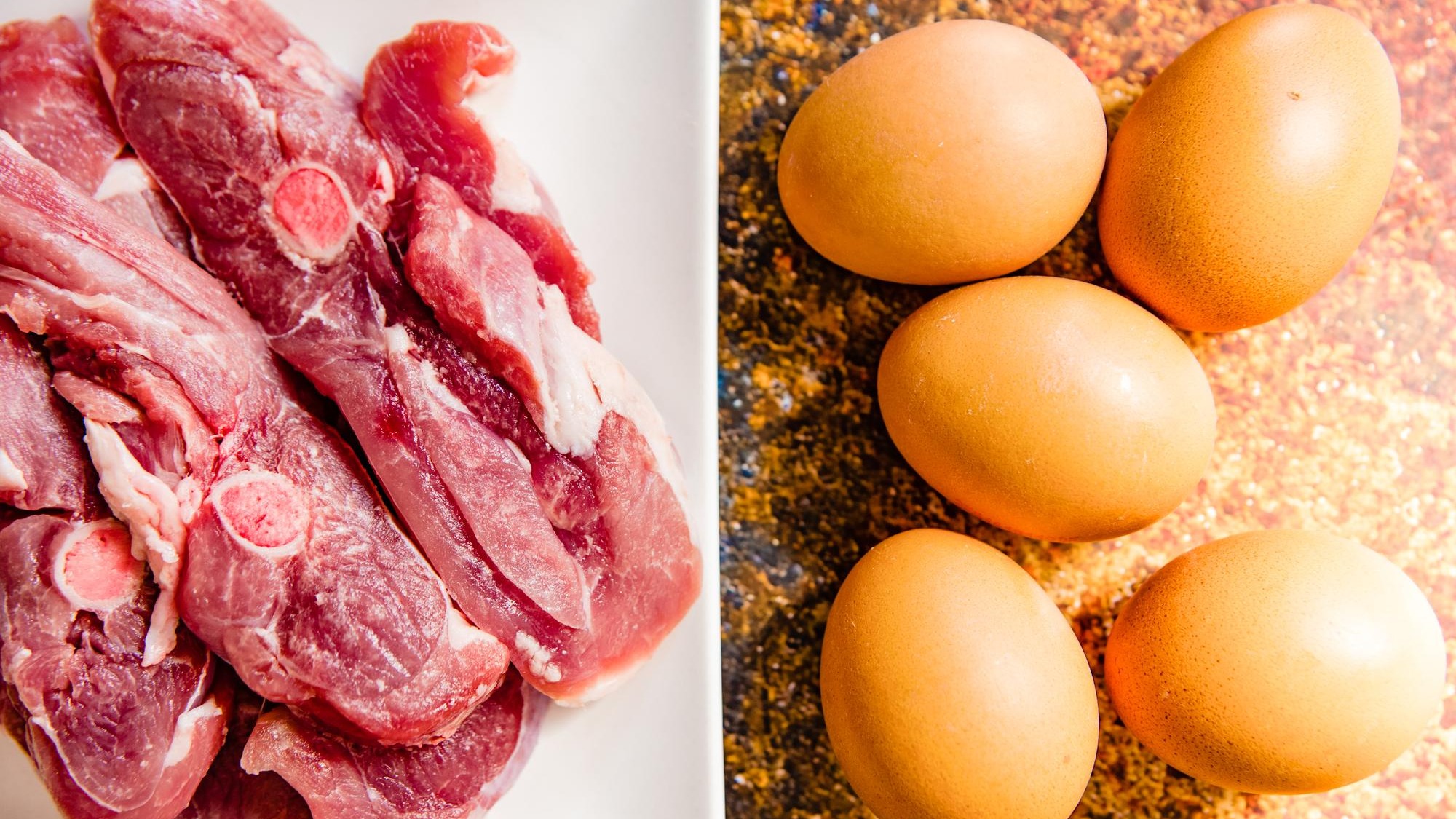
A pound of ground beef averaged $5.63 in March 2026, according to Bureau of Labor Statistics average price data, up 12.1% from a year earlier. A dozen large Grade A eggs, meanwhile, averaged roughly $3.10, down 44.7% from the record highs that rattled shoppers in early 2025. And the government’s official measure of grocery inflation? A placid 1.9%. All three numbers are accurate. Together, they reveal how little a single inflation figure tells you about what is actually happening at the checkout line.
The USDA Economic Research Service’s food price outlook and the BLS Consumer Price Index both confirm the same split: beef and veal have posted double-digit annual gains, eggs have cratered by nearly half, and the overall food-at-home index sits below 2%, a weighted average that smooths over enormous category-level swings. For families trying to plan meals on a fixed budget, that smooth number is nearly meaningless.
Why beef keeps climbing
The U.S. cattle herd has been contracting for years, and the squeeze is now showing up at every meat counter in the country. The USDA’s National Agricultural Statistics Service reported in its January 2025 cattle inventory that the national herd had fallen to roughly 87.2 million head, the smallest count since 1961. Years of severe drought across Texas, the Southern Plains, and parts of the West forced ranchers to liquidate breeding stock they could no longer afford to feed and water. Fewer cows meant fewer calves entering feedlots, and that pipeline is still running thin.
Rebuilding takes time. A rancher who holds back heifers for breeding today will not see those animals produce market-ready calves for about two years. USDA livestock economists have noted that tight supplies are likely to persist into 2027, and monthly cattle-on-feed reports have not yet shown the sustained jump in heifer retention that would signal a turnaround. Until that shift appears, consumers will keep paying elevated prices on everything from chuck roast to ribeye.
Trade policy adds another layer. Tariffs on beef imports from key suppliers, including Australia and Brazil, have tightened the supply picture further by making imported beef more expensive and reducing the competitive pressure that might otherwise temper domestic prices. The USDA’s Economic Research Service has flagged trade conditions as a contributing factor in its 2026 price forecasts.
Why eggs collapsed
Egg prices tell the opposite story. Through much of 2024 and into early 2025, waves of highly pathogenic avian influenza (HPAI) devastated commercial laying flocks. The USDA’s Animal and Plant Health Inspection Service documented outbreaks that, combined with earlier waves dating to 2022, destroyed more than 100 million birds nationwide. At the peak, the national average for a dozen large Grade A eggs topped $4.80, and some metro areas saw prices above $6.
Then the recovery came faster than most analysts expected. Producers restocked barns aggressively, biosecurity protocols improved across the industry, and by early 2026 weekly egg production had rebounded past pre-crisis levels. Supply overtook demand, and prices fell hard. The 44.7% year-over-year drop recorded in March is a snapback to something closer to normal, not a sign that eggs are permanently cheap. Producers will trim flock sizes if margins compress too far, which should put a floor under prices in the months ahead.
How shoppers are adjusting
When one protein spikes, grocery shoppers historically pivot to cheaper alternatives. BLS Consumer Expenditure Survey data from previous beef price cycles, including the 2014 and 2021 run-ups, showed measurable shifts toward chicken and pork when beef crossed certain price thresholds. The pattern is almost certainly repeating now, though confirmed national spending data for 2026 will not be published by the BLS for several more months.
The price gaps are wide enough to make substitution compelling. As of March 2026, the USDA’s food price outlook shows poultry prices rising in the low single digits year over year, a fraction of beef’s 12.1% surge. Retail pork has edged higher but remains well below beef on a per-pound basis. And eggs, now dramatically cheaper than they were a year ago, have become a more attractive protein option beyond breakfast. A family that replaces one beef dinner per week with an egg-based or chicken-based meal can claw back a meaningful portion of the beef premium without rethinking its entire grocery list.
Why the average hides the pain
The 1.9% food-at-home figure in the CPI is a weighted average of hundreds of items, each scaled by its share of the typical household budget. When beef surges 12.1% and eggs drop 44.7%, those moves partially cancel each other in the index. Layer in categories like cereals, dairy, and canned goods that are barely moving, and the headline number settles into a range that looks almost tranquil.
That tranquility is real in a statistical sense. It is not real for a household that grills beef three nights a week and never buys eggs, or for a family in a region where local supply conditions push prices further from the national average. The BLS publishes CPI data nationally and for a handful of large metro areas, but it does not break out beef or egg prices by state or by smaller cities. A ranching community in the Texas Panhandle and a coastal suburb in Connecticut may be living through very different versions of 2026 grocery inflation, and the federal data simply does not capture those gaps at a granular level.
Food-away-from-home prices add another dimension the grocery number misses entirely. The BLS reported restaurant and takeout inflation running above 3% in March 2026, meaning families who eat out frequently face a separate and steeper cost increase that the food-at-home figure never touches.
What will shift the picture through late 2026
Several variables will determine whether the beef-egg gap narrows or widens before the year is out. On the beef side, the signal to watch is heifer retention. If USDA cattle-on-feed reports begin showing a sustained increase in heifers held back from slaughter, herd rebuilding has started and supply relief, though still years away, is at least on the horizon. If retention stays flat, prices will likely hold or climb further.
For eggs, the wild card remains avian influenza. Another major HPAI outbreak could reverse the price decline almost overnight, just as it did in 2025. USDA APHIS detection data and weekly egg production reports from the National Agricultural Statistics Service are the closest thing to real-time indicators available. Absent a significant new outbreak, egg prices are more likely to stabilize near current levels than to keep falling.
The broader grocery inflation trajectory depends on forces beyond any single protein: diesel and energy costs that feed into transportation and cold-chain logistics, labor conditions in meatpacking and food retail, and ongoing trade policy decisions that affect both imports and input costs. The USDA’s food prices and spending tracker and the monthly BLS CPI release remain the most reliable public sources for tracking how all of these forces combine.
None of that helps much when you are standing in the meat aisle doing mental math. The 1.9% average is not wrong, but it describes an economy-wide abstraction, not your grocery cart. What you eat, how much of it you buy, and where you live will determine whether 2026 inflation feels like background noise or a genuine strain on your household budget. Right now, the gap between those two experiences is as wide as it has been in years.