A family that bought a new set of tires in 2025 paid more because of tariffs. So did anyone who picked up a laptop, a winter coat, or a plastic toy for a birthday party. Those tariffs have now been declared illegal. The money is being returned. But it is not going back to the people who actually paid the higher prices.
When the Supreme Court struck down tariffs imposed under the International Emergency Economic Powers Act earlier this year, it triggered the largest refund operation in modern U.S. trade history. The beneficiaries: corporations that paid the duties at the border. General Motors alone expects to recover roughly $500 million, a figure the company has referenced in investor-facing communications, though GM has not specified the exact SEC filing, earnings transcript, or press release in which it was first disclosed. Across all affected importers, estimates circulating in Congress and among industry groups place the total at approximately $166 billion, though no official government tally has confirmed that figure.
American families who absorbed those costs at the register? They have no refund form to fill out, no legal claim to file, and no line in the federal budget set aside to make them whole.
The Ruling That Opened the Floodgates
The refunds trace back to a single Supreme Court case. In Learning Resources, Inc., et al. v. Trump (No. 24-1287), the justices ruled that IEEPA does not grant the president authority to impose tariffs. The decision invalidated duties collected on a broad range of imported products and created a legal obligation for the federal government to return that money to the importers who paid it.
U.S. Customs and Border Protection moved quickly. The agency issued operational guidance through its CAPE system for processing IEEPA-related refunds, and the Court of International Trade has publicly noted that CBP’s refund guidance is now available. The process is running under active judicial supervision, with refund-related filings and orders appearing on the trade court’s electronic docket, trackable through its public RSS feed.
This is not a voluntary agency program. It is a court-overseen unwinding of collections the government had no legal authority to make.
Billions Flowing Back to Corporations
GM’s expected $500 million recovery offers a window into the scale of what large importers stand to recoup. Other major manufacturers and retailers that paid IEEPA-based duties are positioned to seek similar repayment, but most have not publicly disclosed specific amounts. The companies that imported the most during the tariff period stand to receive the largest checks.
The aggregate $166 billion estimate has surfaced in congressional discussions and news coverage, but it lacks a single authoritative source. No official CBP tally or court document identified as of June 2026 specifies that total. The number appears to reflect calculations drawn from trade data and industry reporting rather than a verified government ledger. Until CBP or the Court of International Trade publishes a complete accounting, the precise scale of total refunds remains an informed estimate, not a settled figure.
Why Consumers Are Shut Out
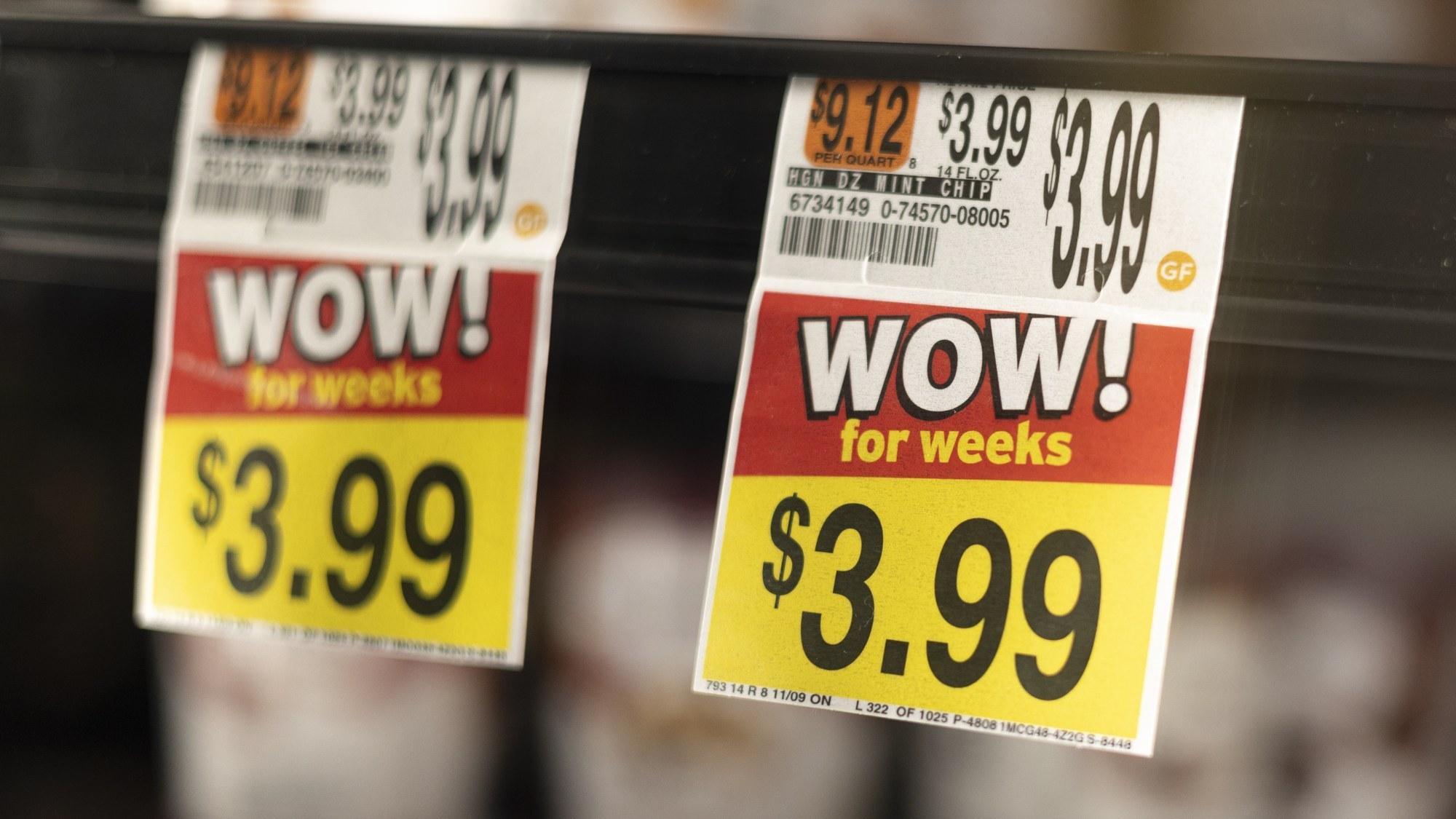
The legal structure of tariff collection explains the gap. Importers pay duties directly to CBP when goods cross the border. Those importers then build the cost into the wholesale price they charge retailers, who fold it into what shoppers see on the shelf. By the time a family buys a set of tires or a child’s toy, the tariff has been absorbed into the sticker price, invisible and untraceable to any single line item on a receipt.
When the Supreme Court ruled the tariffs unlawful, refund law followed the money to its origin: the importers who wrote the checks to CBP. There is no existing legal mechanism for the government to refund consumers for price increases that resulted from duties paid by someone else further up the supply chain. The pass-through happened through thousands of private pricing decisions, not through a government account that can be reversed.
Trade economists have long documented that tariff costs land heavily on consumers. Research on earlier rounds of U.S. tariffs, including a widely cited study by economists at Columbia, Princeton, and the Federal Reserve Bank of New York, found that American buyers bore nearly the full cost of import duties through higher prices. That research examined Section 301 and other tariffs rather than IEEPA duties specifically, but the underlying mechanism is the same: importers pass costs forward, and consumers pay. The pattern strongly suggests households carried a significant share of the IEEPA tariff burden they will never recover.
Have Prices Dropped Since the Ruling?
If companies are getting billions back, a natural question follows: are any of those savings reaching shoppers?
As of June 2026, no major importer or retailer has announced broad price reductions tied to the ruling or to tariff refunds received. That does not mean prices have stayed frozen. Normal competitive dynamics, inventory cycles, and input costs continue to push retail prices in both directions. But there is no documented case of a company publicly linking a price cut to its tariff refund, and no government agency or independent research organization has published data isolating the ruling’s effect on consumer prices.
Until that evidence emerges, the question of whether any refund savings are reaching shoppers remains unanswered.
A Legislative Push With Long Odds
The disparity has drawn attention on Capitol Hill. Senators Ron Wyden, Ed Markey, Jeanne Shaheen, and 19 other Senate Democrats introduced the Tariff Refund Act of 2026, a bill that would require importers receiving refunds to do so “with interest” while imposing reporting and oversight rules to track how the money is used. (The bill number was not available in the public record as of June 2026.) The sponsors laid out their rationale in a public statement emphasizing both legal compliance and consumer fairness.
Notably, the bill does not create a direct refund mechanism for consumers. Its approach is transparency: by requiring importers to report what they do with refund dollars, lawmakers hope to generate public pressure for companies to pass savings along through lower prices, customer credits, or other measures. Whether that pressure would actually change corporate behavior is an open question.
The bigger obstacle is political math. Introduced by Democrats in the Senate minority, the bill would need Republican support to advance, plus a companion measure in the House. As of June 2026, no House version has been introduced, no bipartisan coalition has formed around the proposal, and no committee hearings have been scheduled. Without that forward motion, the legislation reads more as a statement of principle than a likely law.
No Legal Obligation to Share
Nothing in current law requires importers to pass their refunds along to customers. Once the money arrives, companies can use it however they choose: paying down debt, funding capital investments, buying back stock, or simply adding it to the balance sheet. Some may lower prices on affected products, but that would be a business decision, not a legal obligation.
For publicly traded companies, shareholder pressure could push in the opposite direction. Investors may favor refund windfalls flowing to dividends or buybacks rather than price reductions. For privately held importers, the calculus is even less visible. The absence of any disclosure requirement means consumers may never learn whether the companies they bought from received refunds, let alone what those companies did with the money.
The Administration’s Uncertain Path Forward
The available record as of June 2026 does not include a detailed public response from the administration outlining next steps after the Supreme Court ruling. It is not clear from verified sources whether the executive branch is pursuing alternative tariff authority under other statutes, preparing new executive action, or accepting the ruling without further challenge. Any such moves would carry significant implications for trade policy, but until official statements, executive orders, or new legal filings appear in the public record, the administration’s posture remains an open question that readers should watch closely.
A Refund System Built for One Side
The facts as of June 2026 point to a clear but lopsided outcome. The Supreme Court ruled that tariffs collected under IEEPA were unlawful. The government is returning that money to the importers who paid it, under judicial supervision, through an established legal process. Large corporations are already booking the recoveries.
On the other side of the ledger, American consumers who paid higher prices on thousands of imported products have no path to restitution. The tariff costs they absorbed were real, but they flowed through private supply chains in ways that make them legally and practically impossible to reverse. A legislative effort to address the imbalance exists but faces steep odds. The administration has not publicly detailed its next steps. And for now, the refund checks are going in one direction only.