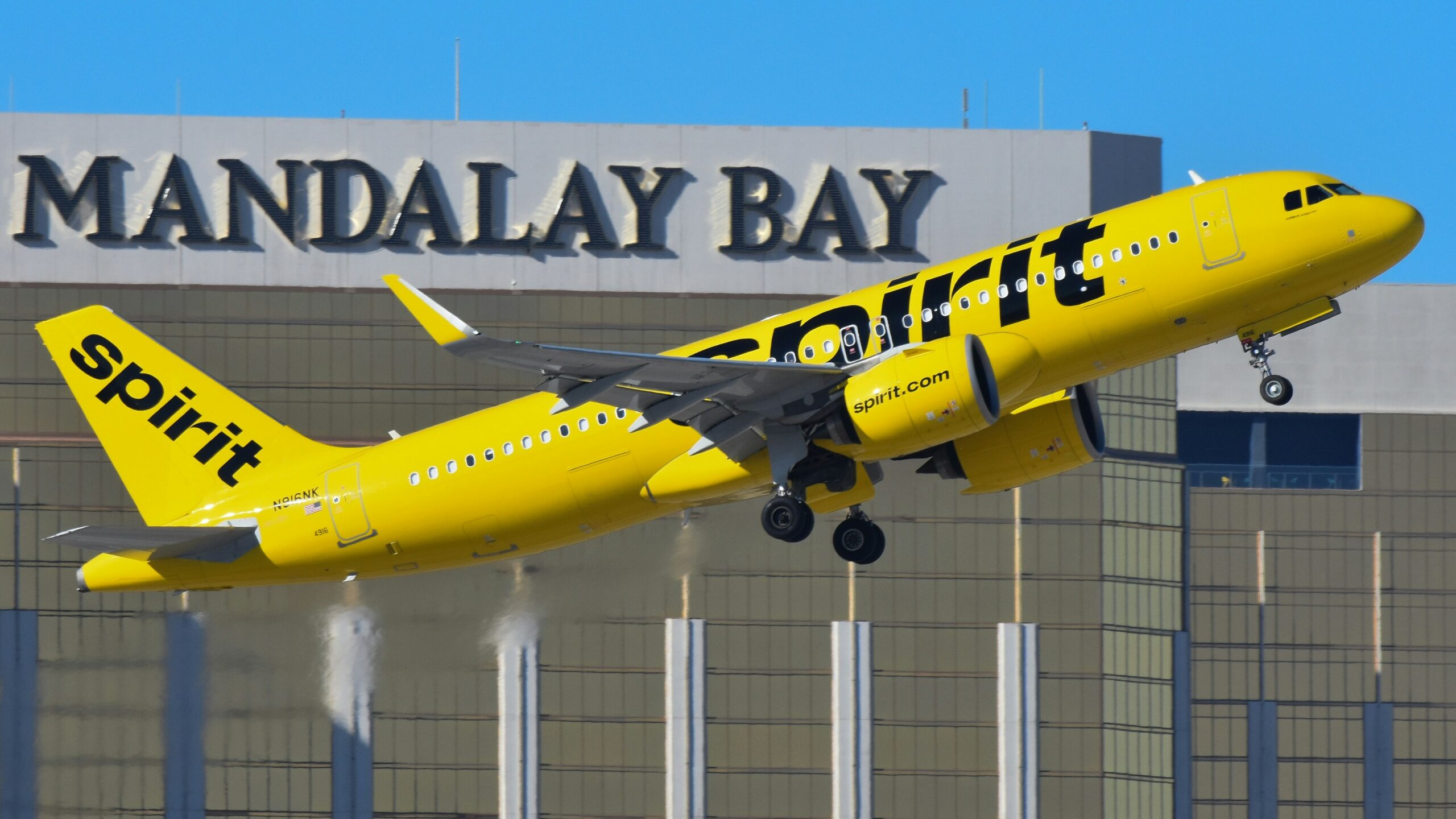
The gate agent at Fort Lauderdale-Hollywood International Airport used to call Spirit Airlines boarding groups every few minutes, funneling bright-yellow-clad travelers onto some of the cheapest flights in the country. That ritual ended for good in early May 2026. Spirit confirmed on May 2, 2026, that it was ceasing all scheduled service, according to Axios, and roughly 300 daily departures vanished from the national schedule.
The shutdown landed on top of an already painful fare environment. A domestic flight in the United States now costs an average of $365, a 24% jump from the same quarter a year earlier, according to fourth-quarter 2025 data from the Bureau of Transportation Statistics. The BTS quarterly fare series historically reports average itinerary fares that can represent one-way or round-trip tickets depending on how the itinerary was purchased, so the $365 figure reflects the agency’s per-ticket average rather than a strict round-trip price. Either way, it marks the sharpest year-over-year increase the series has recorded since the post-pandemic rebound of 2022.
“When a high-frequency, low-fare carrier exits the market, the remaining airlines lose their strongest incentive to keep prices down,” said Savanthi Syth, an airline-industry analyst at Raymond James, in a May 2026 note to clients. That dynamic is now playing out across dozens of routes Spirit once served.
How high fares actually got
The $365 average covers taxes and fees collected at the time of purchase but leaves out extras like checked-bag charges and seat-selection upgrades, meaning the real out-of-pocket cost for many passengers runs higher still. The BTS long-running national fare series places that reading at the upper end of the modern range, above every pre-pandemic quarter on record even after adjusting for inflation.
One caveat worth noting: a methodology update in mid-2025 widened the BTS sample, as documented on the agency’s air fares page. The broader sample means some portion of the 24% gap could reflect the new sampling base rather than a pure price increase. BTS treats the series as continuous, but the agency has not published a reconciliation separating the methodological shift from the market-driven one. Readers should keep that asterisk in mind when comparing the latest number to earlier quarters.
What Spirit’s exit means for routes and competition
Spirit was one of the largest ultra-low-cost carriers in the country by daily departures. The shutdown followed months of declining operations after Spirit filed for Chapter 11 bankruptcy protection in November 2024. BTS operational records through February 2026 already showed the carrier’s flight counts falling steadily, a government-data trail that telegraphed the end.
The disappearance hits hardest on routes where Spirit was the only airline offering nonstop service. Atlantic City’s small airport essentially functioned as a Spirit hub. Niagara Falls International lost its primary commercial link to warm-weather destinations. Several mid-size Florida markets, including Fort Lauderdale, where Spirit was headquartered, saw dozens of budget routes vanish. Without a replacement carrier, passengers on those routes now face layovers, longer travel times, or significantly higher fares on the airlines that remain.
So far, none of Spirit’s closest competitors have publicly detailed plans to absorb the abandoned network. Frontier Airlines, Allegiant Air, and Breeze Airways all operate in overlapping markets, but none has announced large-scale expansion into Spirit’s former routes. Southwest Airlines, which has historically acted as a fare anchor wherever it flies, has not signaled moves into Spirit’s smaller-city slots either. That silence leaves a competitive vacuum travelers are already feeling.
Why the fare spike started before Spirit stopped flying
The timeline matters here. The 24% fare increase recorded by BTS covers October through December 2025, five full months before Spirit’s final flight. The price surge was already well underway while Spirit was still selling tickets, driven by forces that had nothing to do with the carrier’s shutdown.
Jet-fuel prices climbed through the second half of 2025 as global crude benchmarks tightened. Legacy carriers consolidated their schedules after years of pandemic-era experimentation, pulling back on marginal routes and concentrating capacity on high-demand corridors where they could command premium pricing. And travel demand stayed stubbornly strong: TSA checkpoint volumes in late 2025 ran above 2024 levels nearly every week, giving airlines little reason to discount.
Spirit’s closure layers a new pressure on top of those existing ones. Removing a budget carrier that competed aggressively on price tends to give remaining airlines more room to raise fares, a pattern economists have documented after previous airline exits and mergers. But no federal dataset has yet drawn a direct causal line between Spirit’s shutdown and any specific fare increase. The most recent official price data stop at the end of 2025, so the post-shutdown period simply has no government numbers yet.
What the next federal fare report will reveal about Spirit’s wake
The next BTS quarterly fare release, expected to cover early 2026, will be the first to overlap with Spirit’s final months of reduced operations. That report will offer the clearest early signal of whether the national average is still climbing, leveling off, or pulling back as other airlines adjust capacity. Route-level breakdowns from the same dataset will show which communities absorbed the biggest price hits and whether any carrier stepped in with comparable budget fares.
On Capitol Hill, Spirit’s collapse has reopened the debate over airline consolidation. A federal judge blocked Spirit’s proposed merger with JetBlue in January 2024 after the Department of Justice filed an antitrust lawsuit arguing the deal would reduce competition and raise fares. That ruling left Spirit financially weakened and, as it turned out, unable to survive independently. Whether regulators and lawmakers revisit their approach to airline mergers in light of that outcome is an open question heading into the second half of 2026, and one that could reshape how the government weighs competition against carrier viability in future deals.
For travelers booking flights right now, the math is blunt: domestic airfares sit at their highest point in years, the carrier that once undercut everyone else on price no longer exists, and no one has filled the gap. Fare-comparison tools like Google Flights and the BTS fare lookup can still surface routes where enough competition keeps prices reasonable. But on the routes Spirit once dominated, the cheapest seat in the cabin may simply be gone.