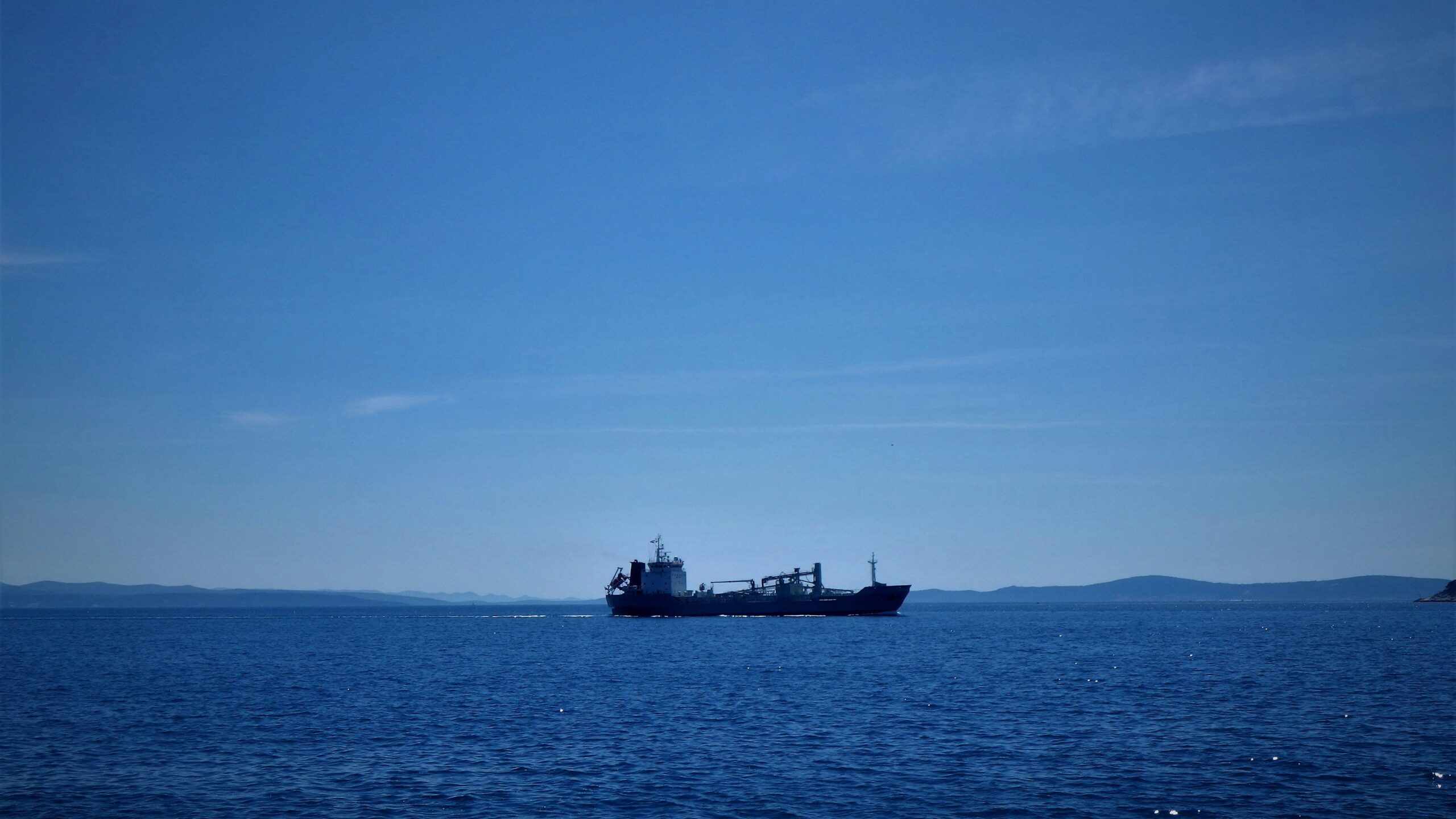
Every day, roughly 21 million barrels of oil pass through a channel barely 21 nautical miles wide at its narrowest point. The Strait of Hormuz connects the Persian Gulf to the open ocean, and through it flows about one-fifth of the world’s petroleum supply and a comparable share of its liquefied natural gas trade. In March 2026, Iran told the world it considers that channel its own.
On March 22, Iran’s permanent representative to the United Nations delivered a letter to the Secretary-General laying out Tehran’s position on “the safety and security of maritime navigation” in and around the strait. The communique, now cataloged in the UN Digital Library, formalized a claim that had been building for years: that no international waters exist in the Strait of Hormuz. Weeks later, Foreign Minister Abbas Araghchi made the implications explicit. In remarks reported by The Guardian in May 2026, Araghchi declared the strait “exclusively Iran-Oman territorial waters” and floated the possibility of tolls, transit fees, and mandatory screening of ships passing through.
If that interpretation held, every tanker carrying crude from Saudi Arabia, Iraq, Kuwait, Qatar, and the UAE would need Tehran’s permission to reach open water.
What Araghchi put on the table
The Guardian’s May 2026 report attributed a specific framework to Araghchi: Iran and Oman would jointly hold authority to vet commercial traffic, inspect cargo, and charge for passage through a route that the global shipping industry currently treats as freely navigable. The phrase “exclusively Iran-Oman territorial waters” is the closest formulation available in English-language reporting. The original remarks were presumably delivered in Farsi, and the newspaper paraphrased rather than publishing a full verbatim transcript, so some nuance may be lost in translation.
Regardless of phrasing, the substance collides directly with the United Nations Convention on the Law of the Sea. Article 38 of UNCLOS establishes the right of “transit passage” through straits used for international navigation. Under that provision, foreign vessels, including warships, may pass without prior authorization from bordering states, provided they proceed continuously and refrain from the threat or use of force. The Strait of Hormuz has operated under this framework for decades.
But there is a legal wrinkle Iran has long exploited: Tehran signed UNCLOS in 1982 and never ratified it. Iran has consistently maintained that its own domestic legislation, not the convention, governs its territorial waters and security zones. Non-ratification does not erase transit passage rights under customary international law, which most legal scholars consider binding on all states. It does, however, give Tehran a rhetorical foothold to argue it is not bound by the convention’s specific terms. The March 2026 UN filing appears designed to plant that argument in the formal international record.
The broader U.S.-Iran standoff as backdrop
Iran’s Hormuz claim does not exist in a vacuum. It arrives during a period of heightened tension between Tehran and Washington. The 2015 nuclear agreement, known as the JCPOA, has remained effectively defunct since the United States withdrew in 2018, and as of mid-2026 no successor deal has been reached. Rounds of sanctions, counter-sanctions, and stalled diplomatic overtures have defined the relationship in the years since. Against that backdrop, Iran’s decision to formalize a maximalist territorial claim over the world’s most important oil chokepoint reads as part of a broader pattern: using leverage over energy transit to strengthen its hand in a standoff where its nuclear program, regional influence, and economic isolation are all on the table.
U.S. officials have not, as of June 2026, issued a detailed public response to the March UN filing or to Araghchi’s May remarks. The U.S. Fifth Fleet, headquartered in Bahrain, maintains a persistent naval presence in the region and has repeatedly conducted freedom-of-navigation operations in and around the strait. Washington’s posture in the coming weeks will signal whether it treats the filing as a provocation requiring a visible military or legal counter, or as rhetoric to be managed through quieter channels.
Oman’s conspicuous silence
Araghchi framed the claim as a matter of joint Iranian-Omani management. But as of June 2026, Muscat has issued no official statement confirming agreement on shared administration, tolls, or vessel screening. Oman’s foreign ministry has a long pattern of declining to comment publicly on Iranian assertions about the strait, and this instance follows that template.
The silence carries weight because Oman occupies a singular diplomatic position in the region. It maintains working relationships with Iran, the Gulf Cooperation Council states, and Western powers simultaneously. Publicly endorsing Tehran’s territorial claim would represent a sharp break from decades of careful neutrality and would put Muscat at odds with its GCC partners, whose oil exports depend on unimpeded passage through the same waterway. Until Oman issues its own detailed position, any assumption of bilateral consensus is speculation.
Why a letter to the UN Secretary-General matters
States do not transmit foreign ministry communiques to the Secretary-General as casual gestures. The filing converts a domestic policy stance into a formal diplomatic document, archived and accessible to every member state. Other governments can now cite it, contest it, or use it as the basis for legal proceedings before the International Court of Justice or the International Tribunal for the Law of the Sea. It also establishes a timestamp: if Iran later moves to enforce its claims at sea, it can point to the March 2026 letter as prior notice.
The full text of the communique, including any specific coordinates or boundary definitions for the expanded “strategic zone,” has not been published in an accessible format. The UN Digital Library entry confirms the letter’s existence and general subject matter, but the precise legal arguments Tehran used to justify eliminating international waters from the strait are not available in the summary record.
The distance between a claim and a blockade
A legal filing and a naval blockade are very different things. Iran has not disclosed plans to deploy additional naval assets to the strait, establish new inspection zones, or begin collecting fees on any fixed timeline. No confirmed schedule exists for when tankers or container ships might be asked to submit documentation, accept pilotage, or pay transit charges.
History, however, suggests the gap between assertion and action can close fast in these waters. In 2019, Iran’s Islamic Revolutionary Guard Corps seized the British-flagged tanker Stena Impero in the strait and held it for more than two months. In 1988, U.S. and Iranian naval forces fought a one-day engagement, Operation Praying Mantis, after an American frigate struck an Iranian mine in the waterway. The strait has never been a place where legal disputes stay theoretical for long.
Gulf states, importers, and the shipping industry weigh their options
Saudi Arabia, Iraq, Kuwait, Qatar, and the UAE collectively depend on the Strait of Hormuz for the vast majority of their seaborne energy exports. For these countries, Iran’s claim is not a legal abstraction but a potential chokehold on their economic lifelines. The Gulf Cooperation Council has historically responded to Iranian maritime provocations with a mix of diplomatic protest and quiet coordination with Western naval partners, though as of June 2026 no coordinated GCC statement on the March filing or Araghchi’s remarks has been made public. The absence of a visible collective response does not signal acceptance; Gulf capitals may be calibrating their reaction while assessing whether Tehran intends to move from words to enforcement.
Major importing nations face the same exposure from the demand side. China, the world’s largest buyer of Gulf crude, along with Japan, South Korea, and India, would feel the impact of any disruption to Hormuz traffic within hours through spiking crude and LNG prices. None of these governments had, as of June 2026, issued public statements specifically addressing Iran’s formalized territorial claim.
For tanker operators and marine insurers, the practical question is already pressing. War-risk premiums for the strait have fluctuated with every escalation cycle in the Gulf over the past decade. Industry groups representing shipowners have historically flagged any change in the legal status of major chokepoints as a trigger for coverage reassessments. A formalized territorial claim, even without enforcement, could push underwriters to reassess terms, raising costs for every barrel of oil that moves through the channel.
Iran’s claim is on the record, and every Gulf navy knows it
Iran has deliberately elevated a long-running territorial sensitivity into a formal, internationally recorded position. The March 2026 UN filing and Araghchi’s public remarks together represent the most explicit assertion Tehran has made over the strait in years. Whether this is the opening move in a sustained legal and naval campaign or a high-profile gambit that gets walked back under diplomatic pressure, the claim is now on the record. Governments, shippers, and insurers are watching to see what comes next. So is every navy with assets in the Gulf.