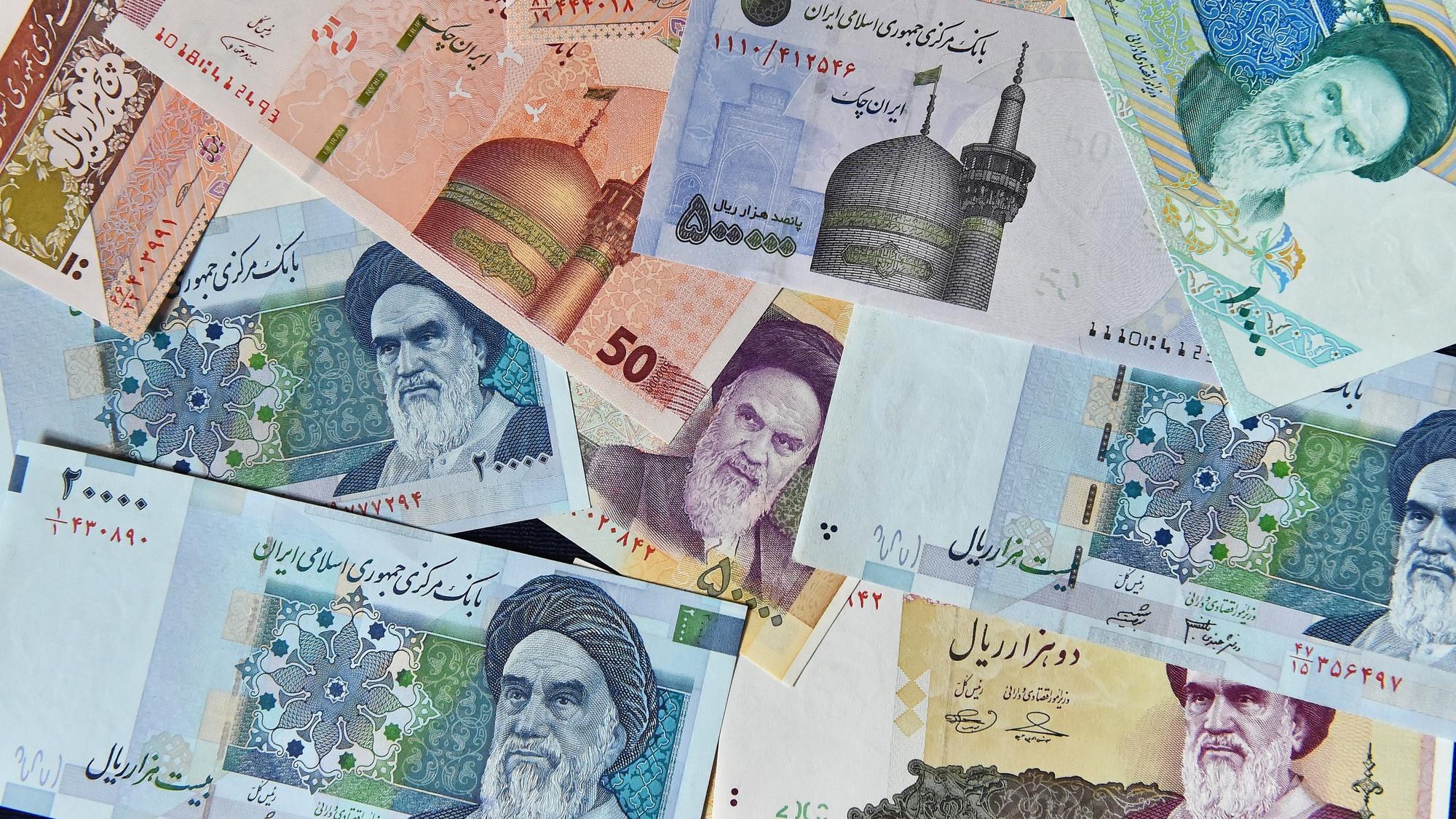
Shopkeepers in Tehran spent the last week of April 2026 re-tagging prices before their doors opened each morning. The reason: Iran’s currency had just crossed a threshold that would have seemed unthinkable a decade ago. On the unofficial exchange market where most Iranians actually buy dollars, the rial fell past 1,000,000 to the dollar, its weakest level ever recorded, according to the Associated Press.
The collapse followed a sweeping new round of American sanctions announced on April 24 that targeted the shipping networks and foreign refineries still purchasing Iranian crude. For a country that imports a significant share of its food, medicine, and household goods, the slide translates directly into higher prices on nearly everything ordinary people buy.
Washington goes after Iran’s last major oil customers
The U.S. Treasury Department’s Office of Foreign Assets Control published a new sanctions list on April 24 naming dozens of entities, individuals, and vessels tied to Iran’s energy exports. The most prominent target was Hengli Petrochemical (Dalian) Refinery Co., Ltd., a major Chinese independent refinery that Washington says has become one of Tehran’s most important crude oil customers.
In an accompanying statement, Treasury described how Chinese “teapot” refineries, smaller independent processors that operate outside state-owned oil giants, have collectively purchased what the U.S. government estimates at billions of dollars’ worth of Iranian oil in recent years. Those purchases represent one of Tehran’s last reliable pipelines for hard currency.
The April 24 action designates roughly 40 shipping entities and vessels alongside Hengli, cutting them off from the U.S. financial system and exposing any company that continues doing business with them to secondary penalties. Hengli Petrochemical has not responded publicly. Chinese regulators have not indicated whether they will pressure domestic refiners to reduce their exposure.
The designations escalate a campaign that has been building for more than a year. Treasury frames the action as part of a maximum economic pressure strategy, codified in a February 2025 national security memorandum, aimed at constraining Iran’s ability to fund armed proxy groups and its missile program.
Earlier rounds targeted Iran’s so-called “shadow fleet”: vessels accused of disguising Iranian crude through flag-switching, falsified paperwork, and ship-to-ship transfers at sea. By now naming a major end-buyer with documented purchases at scale, Washington is signaling that it will pursue not just the middlemen but the customers themselves.
These measures sit atop the longstanding architecture of U.S. Iran sanctions, which already restrict Iran’s access to global banking, insurance, and energy markets. Each new designation raises the legal and reputational risk for any shipping firm, insurer, or trader willing to handle Iranian cargoes.
What the rial’s collapse means on the street
The currency has lost the vast majority of its value since the U.S. reimposed sanctions in 2018, but the latest plunge stands out for its speed. To put the numbers in perspective: the Iranian government once maintained a subsidized exchange rate near 42,000 rials per dollar for essential imports like food and medicine. That rate was never a true market price, but it kept basic goods affordable. Today’s open-market rate is roughly 24 times higher.
The AP reports that traders and shopkeepers in Tehran have been raising prices preemptively, anticipating further depreciation before it arrives. One shopkeeper described watching wholesale costs jump overnight, forcing him to reprice goods on his shelves before customers walked in.
The mechanics are straightforward. Iran imports a significant share of its staple foods, pharmaceuticals, and consumer products. When the rial weakens, the cost of those imports climbs in lockstep, and retailers pass the increase to customers within days. Previous rial crises, notably in 2018 after the U.S. withdrew from the nuclear deal and again in 2020 during peak pandemic disruption, triggered sharp spikes in food prices and waves of public anger.
The current slide risks a repeat, compounded by the fact that Iran’s oil revenues, the government’s primary tool for stabilizing the currency, are under the tightest squeeze yet. Iranians have increasingly turned to gold coins, foreign cash, and in some cases cryptocurrency as hedges against the rial’s decline, a pattern economists have documented during each previous crisis.
What remains unclear
Several important details are still missing. The exchange rate figures circulating in public reporting come from unofficial currency dealers and secondary market trackers like the widely followed Bonbast.com rate board, not from Iran’s central bank. That reliance on informal sources makes it difficult to separate short-term panic selling from a deeper structural break.
Visibility into how the April 24 designations are playing out on the water is also limited. Shipping databases and port records can take weeks or months to reflect changes in vessel ownership, flag status, or routing. Some sanctioned ships may attempt to reflag or transfer ownership on paper; others could sit idle. It is too early to say how many of the newly blacklisted vessels have actually stopped carrying Iranian oil.
The April 24 sanctions date and the specific OFAC designations referenced here are drawn from the Treasury links cited above; readers should verify those links remain active, as the underlying documents have not been independently audited by a third party.
Iran’s government has not publicly outlined any new measures to stabilize the currency. Tehran has historically responded to rial crises with a mix of arrests of currency traders, temporary market closures, and injections of foreign currency reserves, but none of those steps have reversed the long-term trend.
A fragile ceasefire raises the stakes
All of this unfolds against the backdrop of a shaky ceasefire between the United States, Israel, and Iran. No formal economic data to measure the post-sanctions damage has been published. No official Iranian or international body has released post-April 2026 figures on GDP, trade balances, or poverty rates. Economists broadly agree that tighter sanctions on oil exports reduce government revenue, weaken the currency, and raise living costs, but the precise scale of the current shock will only become clear as data filters in over the coming weeks.
Rial’s record low leaves Tehran’s shopkeepers repricing every morning
A renewed military confrontation would risk additional sanctions, disrupted shipping lanes, or accelerated capital flight, all of which would deepen the rial’s decline. A sustained reduction in tensions could, in theory, create room for limited humanitarian carve-outs on some imports, but no such adjustments have been announced as of early May 2026, and no government or international body has signaled that any are under discussion.
For now, the rial’s record low stands as the starkest signal of an economy caught between military uncertainty and deepening financial isolation. The shopkeepers repricing their shelves each morning do not need official data to know the numbers are already real enough.