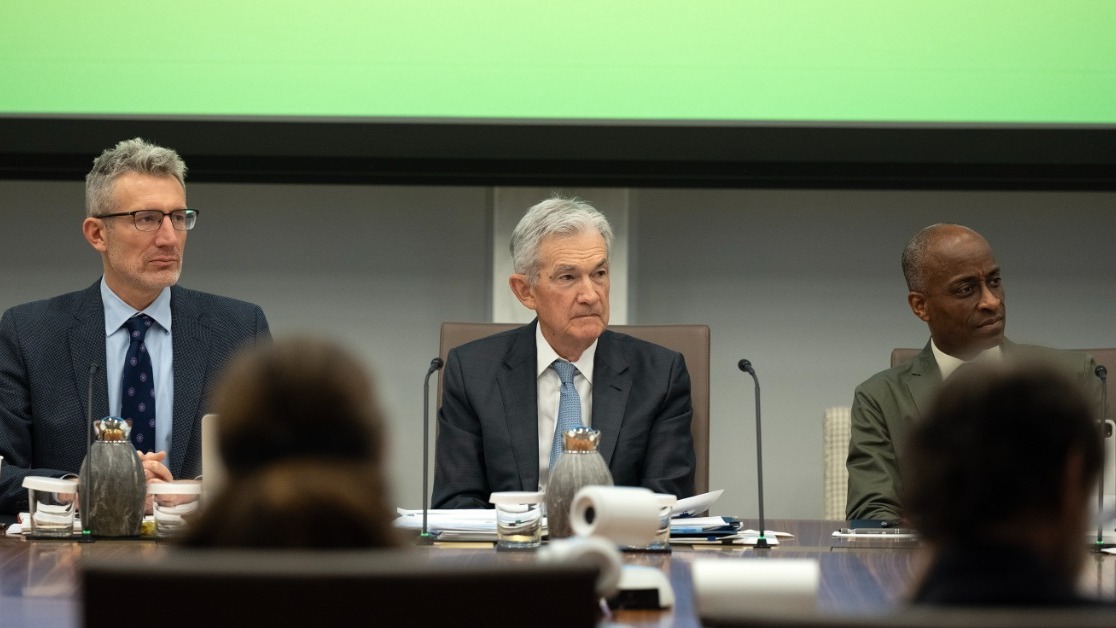
Jerome Powell handed the Federal Reserve chairmanship to Kevin Warsh on May 15, 2026, closing an eight-year tenure that steered the U.S. economy through a pandemic shutdown, the worst inflation spike since the early 1980s, and a bruising cycle of interest-rate increases that reshaped the cost of borrowing for millions of Americans.
Powell is not leaving the building. He plans to remain on the Fed’s Board of Governors, where his separate seat runs through January 31, 2028. The move keeps the seven-member board at full strength and denies the White House an additional vacancy to fill, a point Powell himself acknowledged to reporters, according to The Washington Post. It is a quiet but pointed decision: the outgoing chair will sit across the table from the new one, carrying institutional memory that stretches back to the emergency lending programs of 2020 and the aggressive rate hikes that followed.
Who is Kevin Warsh
Warsh is not new to the Fed. He served as a governor from 2006 to 2011, a period that included the 2008 financial crisis and its aftermath. During those years, he built a reputation as a skeptic of prolonged low interest rates and warned publicly about the risks of asset bubbles, a stance that put him at odds with the more accommodative instincts of some colleagues.
President Trump nominated Warsh in January 2026, with a White House statement describing him as a steady hand for a period of elevated uncertainty. A separate presidential statement highlighted his advisory roles during the 2008 crisis and his background in financial markets, framing the pick as a blend of insider credibility and fresh direction.
The Senate Banking Committee held a confirmation hearing on April 14, 2026, where senators including Tim Scott, Mike Crapo, Mike Rounds, Thom Tillis, and John Kennedy questioned Warsh on his approach to monetary policy. The Associated Press reported that the full Senate subsequently confirmed him, completing the procedural path from nomination to swearing-in before Powell’s chair term expired.
What Powell leaves behind
Powell took the oath as chair in February 2018, appointed by Trump during his first term. Within two years, the COVID-19 pandemic forced the Fed into extraordinary action: near-zero interest rates, massive bond purchases, and emergency lending facilities that kept credit flowing to businesses and municipalities on the brink.
The tradeoff came later. Inflation, fueled by supply-chain disruptions, fiscal stimulus, and surging consumer demand, hit 9.1% in June 2022, the highest reading in more than 40 years. Powell’s Fed responded with the fastest series of rate increases since the early 1980s, pushing the federal funds rate from near zero to a peak range of 5.25% to 5.5% by mid-2023. The campaign drew criticism from both directions: some economists argued the Fed moved too slowly, while the White House and parts of Congress complained that high rates were choking growth.
By early 2026, inflation had cooled significantly from that peak, though it remained a politically charged issue heading into the transition. Powell’s defenders credit him with engineering a rare soft landing, bringing price growth closer to the Fed’s 2% target without triggering a deep recession. His critics, including allies of the current administration, argue that the rate-hike cycle lasted too long and that the Fed’s communication was muddled at key moments.
What Warsh inherits
The new chair steps into a policy environment that is calmer than the one Powell navigated at his most pressured, but far from settled. The federal funds rate remains elevated by the standards of the past 15 years, and markets are closely watching for signals about the pace and timing of any further cuts. Warsh has not laid out a detailed rate path in any publicly released testimony or policy document, leaving investors and economists to parse his earlier writings and public comments for clues.
His hawkish instincts suggest he may be in no rush to ease. During his previous time on the board, Warsh consistently argued that keeping rates too low for too long invited financial instability. Whether he applies that same framework now, with inflation lower but growth uncertain, will be the defining question of his early tenure.
There is also the matter of Fed independence. Trump clashed publicly with Powell over rate decisions during both of his presidential terms, at times suggesting the chair should be fired, a step that would have tested legal boundaries the Fed has never had to defend in court. Warsh’s nomination was widely interpreted as an effort to install a more sympathetic voice at the top of the central bank. How he navigates that perception, particularly with Powell still sitting on the board, will shape whether markets and foreign governments continue to treat the Fed as an institution that operates at arm’s length from the Oval Office.
Powell’s seat at the table
By staying on as a governor, Powell retains a vote on every rate decision and a voice in every policy debate. He will no longer set the agenda, call the meetings, or speak for the institution at press conferences. But his presence ensures that the board includes someone who lived through the full arc of pandemic-era policymaking, from the emergency measures of 2020 to the tightening campaign that followed.
The arrangement is unusual but not unprecedented in structure. The Federal Reserve Act has always allowed a chair whose leadership term expires to continue serving out a separate governor term. What makes this case notable is the political context: Powell is staying in a seat that the current administration would almost certainly fill with someone more aligned with its economic priorities.
For now, the transition is complete. Warsh holds the gavel. Powell holds a vote. And the Federal Reserve enters a new chapter with both men in the room, carrying different instincts about how aggressively the central bank should act and how closely it should listen to the political winds outside its doors.