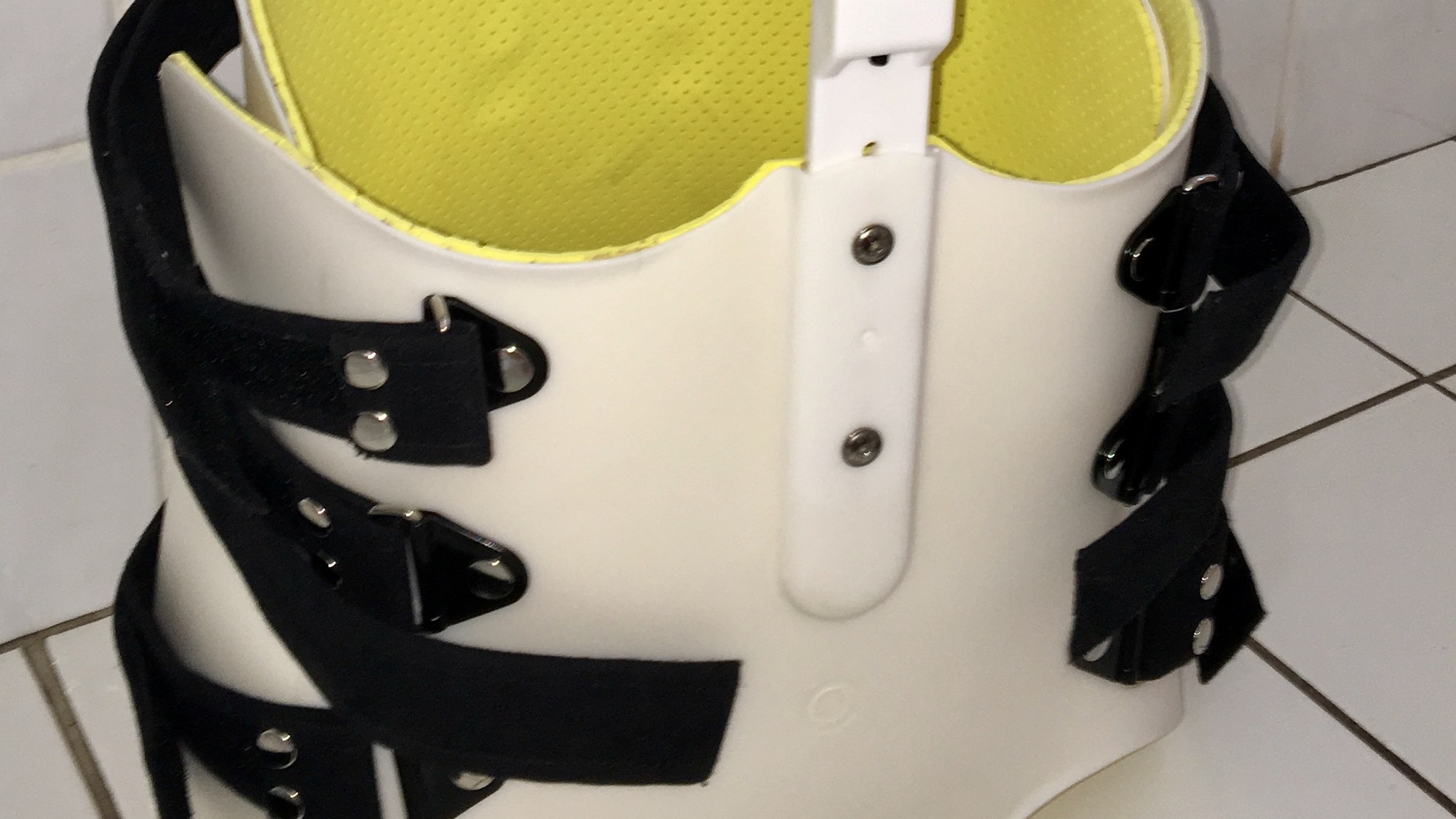
Brett Blackman, the 43-year-old chief executive of a Kansas internet company, was sentenced on October 14 to 19 years in prison. A jury had found that his company’s website generated false doctors’ orders for equipment, mainly orthotic braces. Medicare and other insurers paid more than $450 million on the resulting claims, out of more than $1 billion billed, the Justice Department says.
A doctor-order website that produced the claims
Blackman owned and ran HealthSplash, which bought an existing online business, Power Mobility Doctor Rx, known as DMERx, in September 2017. DMERx was a platform for durable medical equipment orders, the wheelchairs, braces and other gear Medicare covers. Prosecutors say it was turned into a machine for false orders.
The platform connected pharmacies, equipment suppliers and marketers with telemedicine companies that took kickbacks in exchange for signed orders, the release says. Blackman and his co-conspirators took a cut for the referrals. Marketers allegedly targeted Medicare beneficiaries and pushed them to accept orthotic braces they did not need. Telemedicine doctors were paid to sign, often with little or no contact with the patient.
Medicare.gov‘s own advice runs counter to the sales pitch described in the case: Medicare will not call to sell anything or visit a home, the site says, and people should not share a Medicare number with anyone but their doctor or others who should have it. A call that pushes braces to a beneficiary fits neither rule.
Retirement deadlines, in your inbox: Miss an enrollment or claim deadline and the money can be gone. The Retirement Money Brief keeps you ahead of the ones that matter, every weekday.
Get the Retirement Money Brief →
We may earn a commission from links on this page.
An undercover agent posing as a beneficiary was pressed by a call center abroad to accept several braces. The doctor’s order for the agent claimed in-person tests had been done, though the doctor never spoke to the supposed patient. The conspirators also used sham contracts and edited orders to strip out references to telemedicine, so Medicare audits would not catch them.
The numbers behind the sentence
The release says the scheme targeted hundreds of thousands of Medicare beneficiaries and billed Medicare for orthotic braces for more than 346,000 of them. On average, Medicare was billed for four braces per beneficiary. Over 1,200 beneficiaries had at least 21 orthotics prescribed through DMERx.
Billing topped $1 billion, and payment topped $450 million. The Justice Department gives both as minimums. Restitution and forfeiture will be set by the court later, so no amounts have been announced.
Blackman was convicted after a 23-day jury trial that ended in April 2026 on conspiracy to commit health care fraud and wire fraud, conspiracy to pay and receive kickbacks, and conspiracy to defraud the United States and make false statements in connection with health care matters. His co-defendant, Gary Cox, was sentenced in December 2025 to 15 years in prison.
The doctor’s order was the product. The release says the platform generated those orders by routing them to telemedicine doctors who were paid to sign, in some cases with no interaction at all. Prosecutors charged kickbacks and false statements alongside fraud.
Who was in the room, and who said what
Assistant Attorney General Colin M. McDonald of the National Fraud Enforcement Division said the scheme “lured hundreds of thousands of elderly and disabled Americans” into a telemarketing system with “one goal: stealing as much as possible from the Medicare trust fund.”
The investigation drew four agencies: HHS-OIG, the FBI, the inspector general of the Department of Veterans Affairs and the Defense Criminal Investigative Service. VA Inspector General Cheryl L. Mason said anyone who exploits VA programs for personal profit will be found and held fully accountable.
Nakia Martin Alexander, the acting special agent in charge of the Defense Criminal Investigative Service’s Southeast Field Office, said fraud schemes that divert TRICARE resources erode the support promised to service members and their families. TRICARE is the military health plan. The release does not break out what VA or TRICARE paid.
Brett D. Skiles, the FBI Miami special agent in charge, said the scheme undermined the integrity of the health care system. HHS-OIG’s Miranda L. Bennett said those who exploit federal health care programs for personal enrichment will face serious consequences. HHS-OIG lists the case among its criminal and civil enforcement actions.
The Health Care Fraud Strike Force Program that brings cases like this one has charged more than 6,200 defendants since 2007, the Justice Department says, and they collectively billed federal health care programs and private insurers over $45 billion. The department created its Fraud Division on April 7 to go after fraud against taxpayer programs.
Assistant Deputy Chief Darren C. Halverson and Trial Attorney Reginald Cuyler Jr. of the Fraud Division’s Health Care Fraud Section prosecuted the case.
Where Medicare costs can still come down
For beneficiaries, the money question is the one the case never touches: what they themselves pay. Extra Help, the Part D low-income subsidy, goes to some people automatically, including those with full Medicaid or Supplemental Security Income, and others must apply through Social Security. The 2026 limits are $23,940 in income for one person and $18,090 in resources.
Medicare.gov says people can apply for Extra Help and a Medicare Savings Program at the same time, and that a State Health Insurance Assistance Program counselor can help with the application at no charge.
Which Medicare drug costs could Extra Help trim?
A billing scheme that took $450 million from Medicare shows how the program’s dollars move, but the dollars a household controls are premiums, deductibles and drug copays. Programs that cut those costs have to be applied for, and many eligible households never apply.
The Medicare Cost & Coverage Protection Kit includes the new Part D out-of-pocket cap and 51 state Medicare cost-help packs. Part 2 covers the cap and Part 3, Get Help Paying, covers the programs that pay Medicare premiums and cut drug bills.
Get the Part D cap guide and state help-pack kit →
More Financial Reading
- 21 Ways to Stretch a $2,087 Social Security Check
- 15 Places to Find Your Share of the $4.25 Billion States Give Back
- The New $6,000 Senior Deduction and 14 More Tax Moves for Retirees
This article was produced with AI assistance and edited for accuracy against the sources linked above.