Brent crude has not dipped below $108 a barrel in six consecutive trading sessions, held there by a fact that no amount of emergency oil can fully offset: the Strait of Hormuz, the 21-mile-wide passage between Iran and Oman that normally carries roughly one-fifth of the world’s seaborne crude, remains closed to commercial tanker traffic. The largest coordinated drawdown of government oil stockpiles ever attempted is underway, and it is not enough to calm the futures market. Options pricing on ICE Futures Europe now reflects a scenario in which Brent touches $200 before autumn, based on the rising cost of far out-of-the-money call options at strike prices well above current levels.
A chokepoint with no substitute
The Strait of Hormuz is the only sea route connecting the Persian Gulf to the open ocean. Saudi Arabia, Iraq, the United Arab Emirates, Kuwait, and Qatar all depend on it as their primary crude export corridor. When escalating naval hostilities between Iran and a U.S.-led coalition forced commercial shipping to halt in late February 2026, those five producers collectively lost access to roughly 10.5 million barrels per day of export capacity, a figure consistent with the U.S. Energy Information Administration’s chokepoint analysis in its May 2026 Short-Term Energy Outlook.
Two pipeline alternatives exist, but neither comes close to replacing what tankers carried. Saudi Arabia’s East-West Pipeline can move crude to the Red Sea port of Yanbu, bypassing the Strait entirely. The UAE operates the Habshan-Fujairah pipeline to its Indian Ocean coast. Together, their maximum throughput is roughly 6.5 million barrels per day, according to EIA infrastructure assessments. Neither line was running at full capacity when the closure began, and ramping up takes weeks. The daily shortfall, measured in millions of barrels, is the largest sustained supply disruption since the 1990 Iraqi invasion of Kuwait.
Qatar’s liquefied natural gas exports, the world’s largest, also transit the Strait. That dimension of the crisis is hammering Asian gas markets separately, though crude oil has dominated the headline price moves so far.
The emergency response and its limits
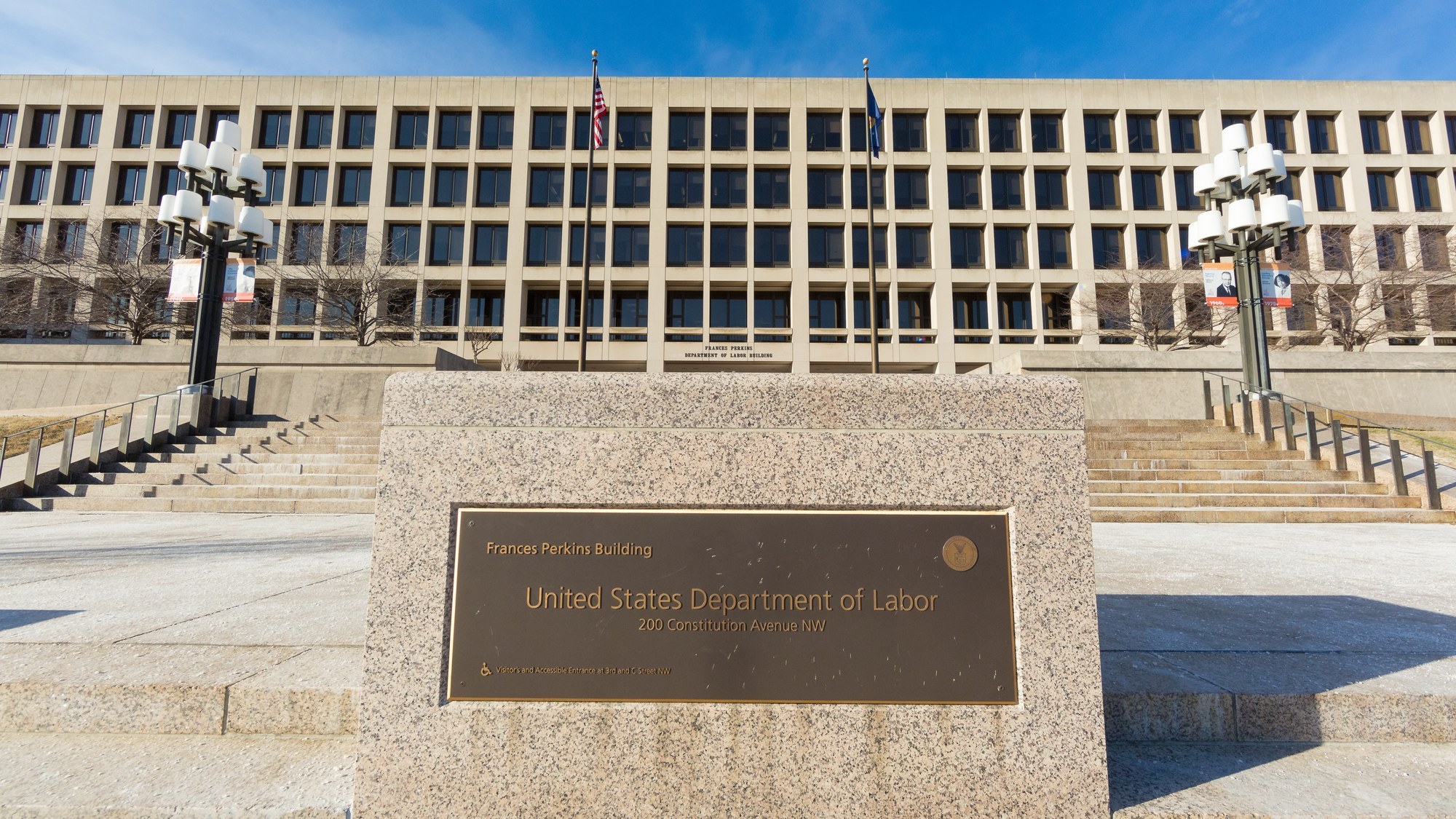
On March 11, the International Energy Agency activated a coordinated stockpile release across its 31 member countries, committing a total of 400 million barrels. That figure dwarfs the previous record: the 240 million barrels released collectively after Russia’s full-scale invasion of Ukraine in 2022. The United States pledged the largest single share at 172 million barrels, drawn from the Strategic Petroleum Reserve under emergency authority and managed through the Department of Energy’s formal directive and auction process. Japan, South Korea, and European IEA members committed the rest.
The math, however, is unforgiving. At the current rate of shut-in production, 400 million barrels covers fewer than 38 days of lost supply. And the oil does not arrive all at once. SPR crude must be pumped from underground salt caverns along the U.S. Gulf Coast, auctioned to commercial buyers, and loaded onto tankers or fed into domestic pipelines. The Department of Energy has indicated the full 172 million barrel U.S. contribution will take approximately 120 days to deliver, meaning the final barrels will not reach refineries until midsummer at the earliest.
That timeline creates a stark fork. If the Strait reopens by June, as the EIA’s baseline scenario assumes, the emergency drawdown will have worked as intended: a bridge across a temporary gap. If the closure extends into July or August, the bridge runs out before the road is rebuilt, and the market will have to find a new equilibrium at much higher prices.
Why $200 is no longer a fringe number
No major forecasting agency has published $200 as a base-case projection. The number instead lives in the derivatives market, where it functions as a measure of tail risk. When traders buy Brent call options at strike prices of $150, $175, or $200, they are not necessarily predicting those levels. They are paying a premium to hedge against them or to position for a windfall if the crisis deepens. The volume and cost of those contracts tell you how seriously the market takes the possibility.
Several forces are feeding that anxiety. The EIA’s assumption that the Strait reopens in June is exactly that: an assumption, not a forecast grounded in confirmed diplomatic progress. Global commercial crude inventories were already below their five-year seasonal average before the crisis began, according to EIA weekly petroleum supply data. And demand has not collapsed the way textbook models might predict at triple-digit oil. Chinese refinery throughput remains elevated, and U.S. gasoline consumption, while softening, has not cratered.
OPEC+ has not announced any formal increase in output targets to compensate for the disruption, in part because the producers most able to raise production, Saudi Arabia and the UAE, are the same ones whose exports are physically blocked. Spare capacity that cannot reach the market is not spare capacity at all.
Layer those factors together and the picture sharpens: a thin supply cushion, a massive disruption, no confirmed end date, and a demand base that refuses to buckle. That is the environment in which $200 stops being a thought experiment and becomes a hedging target.
What consumers and businesses are already feeling
The pain is not confined to trading floors. U.S. retail gasoline prices have climbed above $5 a gallon in multiple states, according to AAA’s daily fuel gauge report, with West Coast markets pushing past $6. Diesel, which powers freight trucks and agricultural equipment, is running even higher on a per-gallon basis, feeding directly into food prices and shipping surcharges that consumers see at the grocery store and the checkout page.
Asian refiners face the sharpest squeeze. Japan and South Korea import the vast majority of their crude from the Persian Gulf. With the Strait closed, they are bidding against European buyers for cargoes from West Africa, the North Sea, and the Americas, paying spot premiums of $8 to $12 a barrel above benchmark prices to secure supply. Those premiums cascade through to jet fuel, petrochemical feedstocks, and plastics.
Central banks are watching but not intervening with rate cuts. Both the Federal Reserve and the European Central Bank flagged energy-driven inflation as a top-tier risk in their May 2026 policy communications. Neither signaled monetary easing in response, a posture consistent with the view that a supply shock of this nature cannot be solved with cheaper credit.
What reopens the Strait, and what happens until it does
Diplomatic efforts to restore commercial transit have not produced a public timeline. U.S. Central Command continues to report elevated naval activity in and around the Strait, and Iran has not signaled conditions under which it would allow unrestricted shipping to resume. Until those conditions materialize, the physical reality is unchanged: the world is short millions of barrels a day, the emergency buffer is finite and depleting, and every week the closure persists compresses the margin between managed shortage and genuine crisis.
The next data points to watch are the EIA’s weekly petroleum status reports, any mid-cycle revision to the agency’s Short-Term Energy Outlook, and the IEA’s monthly Oil Market Report, expected in mid-June 2026. That IEA report will offer the most comprehensive accounting yet of how global trade flows have rerouted, whether emergency stocks are depleting faster than planned, and how much demand destruction, if any, has begun to take hold.
Until tankers are moving through the Strait again, the price of oil will keep reflecting a simple, uncomfortable calculation: the gap between what the world needs and what it can get is growing wider, not narrower, with each passing day.