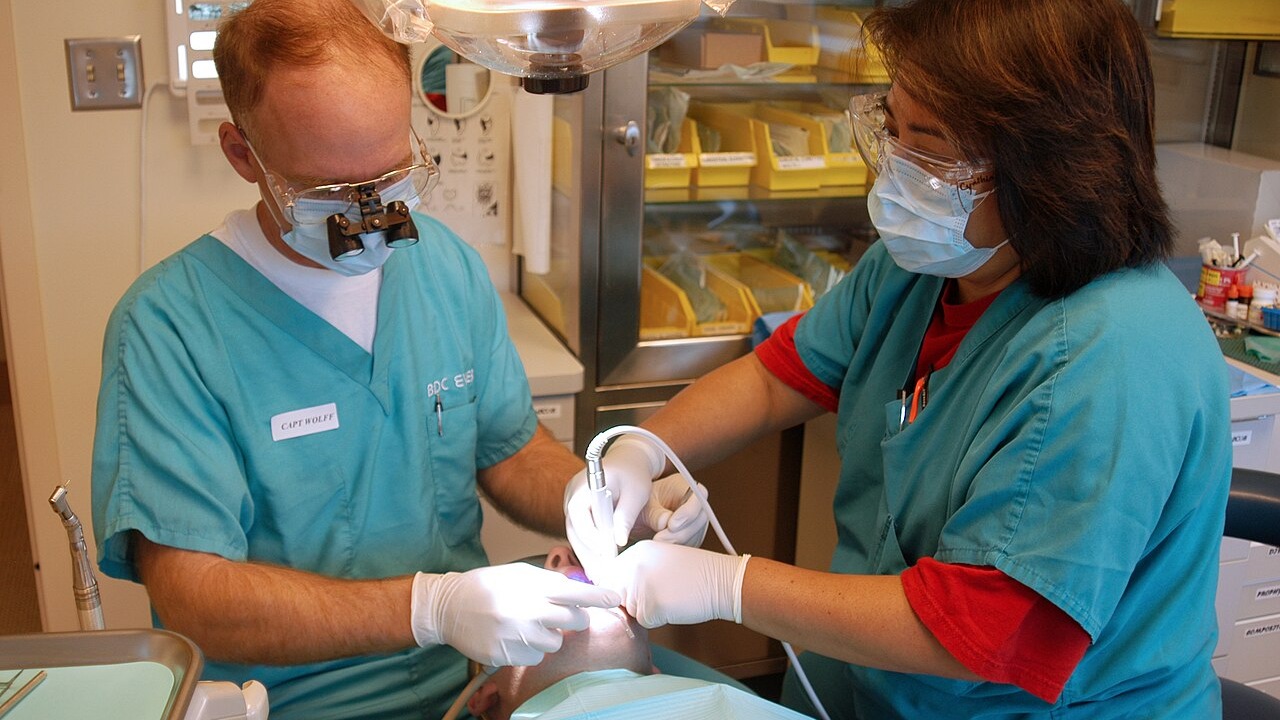
For all the ground Medicare covers, three of the most predictable expenses of growing older sit almost entirely outside it. Teeth still need cleaning and repair, eyes still need exams and glasses, and hearing still fades with age. Yet Original Medicare, the traditional government program that anchors coverage for tens of millions of retirees, generally pays for none of that routine care. The result is a set of recurring bills that many people do not see coming until the first invoice lands, and that can add up to thousands of dollars a year on a fixed income.
Dental care lands almost entirely on the retiree
Routine dental work is the clearest example of the gap. Cleanings, exams, fillings, extractions, dentures, and the rest of ordinary dental care fall outside what Original Medicare will pay. For a retiree who once had employer dental coverage, the shift can be jarring, because the same checkups and procedures that were partly covered during working years now arrive as full-price bills.
There is a narrow exception. As Medicare’s coverage guidance on dental services explains, the program may pay for certain dental work when it is a necessary part of a broader covered medical procedure, such as dental care connected to a hospital stay or a surgery. That carve-out is limited and situational, and it does not change the basic rule: the everyday dentistry that keeps teeth healthy is treated as the beneficiary’s responsibility, not Medicare’s.
Free for readers: Social Security and Medicare change every year, and nobody sends a memo. The free Retirement Shield newsletter breaks down what changed and what to do. Get it free in your inbox.
Vision: exams and eyeglasses mostly excluded
Vision care follows a similar pattern. Original Medicare does not cover routine eye exams for prescriptions, and it does not pay for the eyeglasses or contact lenses that most older adults eventually need. For a population where vision naturally changes with age, that leaves a standard, recurring expense entirely out of pocket for anyone relying on the traditional program alone.
The line, once again, is drawn between routine and medical. Medicare’s rules on eye exams make clear that the program does cover certain medically necessary eye care, such as testing and treatment for conditions like glaucoma, diabetic eye disease, and cataracts. What it will not cover is the ordinary refraction exam to update a glasses prescription and the glasses themselves. A retiree can have a serious eye disease treated and still pay full freight for the reading glasses picked up on the way home.
Hearing aids and fitting exams are not covered
Hearing rounds out the trio. Original Medicare does not cover hearing aids or the routine exams needed to fit them, even though age-related hearing loss is one of the most common conditions among older adults. Hearing aids frequently cost thousands of dollars per pair and are typically replaced every few years, so the absence of coverage turns a health need into a substantial and repeating personal expense.
Taken together, dental, vision, and hearing form a predictable cluster of costs that grow more likely with age at exactly the point when income is often fixed. That combination is what makes the gap so consequential. These are not rare or exotic services; they are the ordinary maintenance of getting older, and the traditional program leaves the bill on the kitchen table.
The timing of these expenses often makes them worse than they first appear. Dental problems left untreated because of cost tend to become more serious and more expensive procedures later, so a skipped cleaning can eventually turn into a crown, a root canal, or a full set of dentures. Hearing that goes uncorrected because the aids are unaffordable carries its own quiet toll, straining conversation, driving safety, and connection with family. What looks like a discretionary expense in a tight month is frequently deferred maintenance that grows costlier the longer it waits, which is one reason financial counselors urge retirees to treat dental, vision, and hearing as predictable line items rather than surprises.
The coverage options that fill the gaps
There are ways to soften the blow, though each carries trade-offs. Many Medicare Advantage plans, the private alternative to Original Medicare, bundle in some dental, vision, and hearing benefits. Those extras are a major reason retirees choose Advantage plans, but the coverage is often capped at modest annual limits and comes with the plan’s own networks and rules, so it pays to read exactly what a given plan includes before counting on it.
Outside of Advantage, some retirees buy standalone dental or vision policies, use discount plans, or simply budget for these costs as a fixed annual expense and shop aggressively for lower prices. Community health centers, dental schools, and hearing-aid programs can also lower the out-of-pocket hit. The essential step is to plan ahead rather than be surprised: knowing in advance that Original Medicare will not pay for routine teeth, eyes, or ears lets a household set money aside or choose coverage on purpose, instead of scrambling when the first bill arrives.
Comparing the true annual cost is what separates a sound decision from a hopeful one. A Medicare Advantage plan’s dental benefit can sound generous until its yearly cap is measured against the price of a single crown or a set of dentures, and a standalone dental policy may impose waiting periods before it covers major work. Pricing local dentists, optometrists, and audiologists directly, and asking about cash discounts, often reveals that shopping aggressively beats a mediocre insurance add-on. Retirees near a dental school or a community health center may find substantially lower prices there, and some hearing-aid manufacturers and retailers now sell directly at a fraction of the traditional cost. The common thread is that these are shoppable expenses, and a household that treats them that way tends to keep more of its money than one that assumes the first option offered is the only one.
Free for readers: For plain-English help keeping more money in retirement, the free Retirement Shield newsletter covers scams, benefits, and money owed, a couple times a week. Subscribe free.
This article was researched and drafted with AI assistance and reviewed against the linked primary sources.