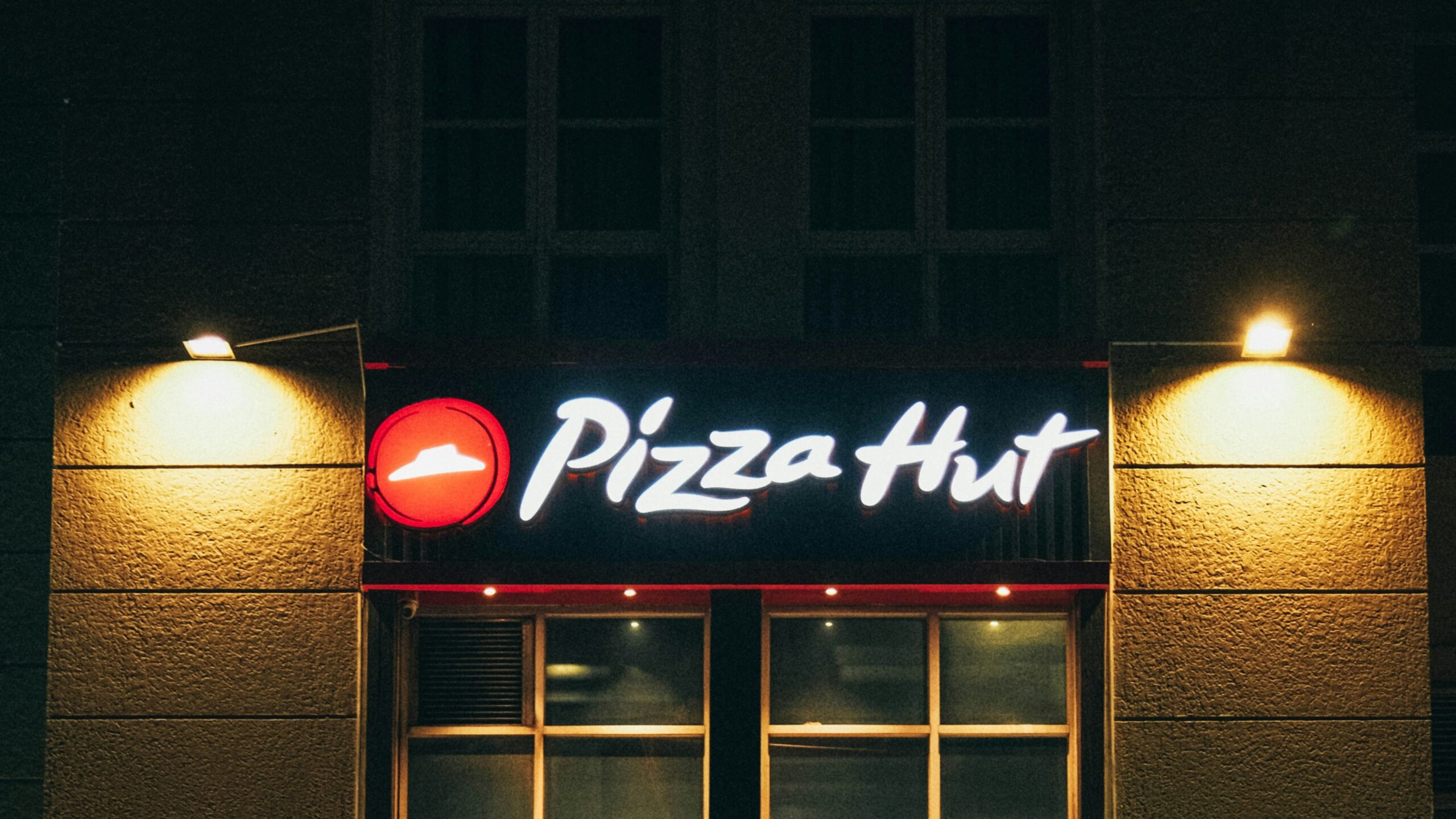
For decades, the red-roofed Pizza Hut on the corner was a fixture of American suburban life, the place where Little League teams celebrated and families gathered on Friday nights. Now, 250 of those restaurants are set to go dark. Pizza Hut is preparing to shut down 250 U.S. locations during the first half of 2026, slicing roughly 4 percent from its domestic footprint as parent company Yum! Brands weighs whether to sell the chain entirely.
The planned closures, first reported by the Associated Press in early 2026, follow a difficult stretch for the brand. U.S. same-store sales fell 4 percent during fiscal year 2025, according to Yum’s earnings disclosures. It is worth noting that while the AP cited the 250 figure, Yum! Brands has not independently confirmed that exact number outside the context of its earnings materials. In a move that signals deeper concerns at the corporate level, Yum revealed in its Form 10-K for fiscal year 2025 that it launched a formal strategic options review for Pizza Hut during the fourth quarter of 2025, a process that explicitly includes the possibility of divesting the brand.
A shrinking footprint gets smaller
Pizza Hut currently operates more than 6,000 locations in the United States, per the AP, though the precise domestic unit count in Yum’s FY2025 10-K filing may differ slightly from that approximation. Internationally, Pizza Hut’s footprint is far larger, with roughly 12,000 additional restaurants outside the U.S., and Yum has not indicated that the strategic review extends to global operations. Losing 250 domestic locations is a targeted reduction, not a freefall, but it extends a contraction that has been underway for years.
That contraction has a long history. In 2020, NPC International, then Pizza Hut’s largest U.S. franchisee with roughly 1,200 locations, filed for bankruptcy and closed about 300 underperforming stores. Flynn Restaurant Group eventually acquired NPC’s remaining Pizza Hut restaurants, but the episode underscored how fragile the chain’s franchise base had become. Consumer habits had already been shifting toward delivery and carryout, and the pandemic accelerated that move, leaving Pizza Hut’s aging dine-in locations increasingly out of step with how people actually order pizza.
Yum has not publicly identified which stores are slated for closure in 2026 or disclosed which markets will be affected. The company has not said whether decisions are being driven by lease expirations, sales volume, delivery overlap, or some combination. That lack of detail leaves workers and franchise operators across the country guessing.
Why Yum is weighing a sale
The closures are significant, but the strategic review may matter more. Yum’s portfolio also includes Taco Bell, KFC, and The Habit Burger Grill. Of those, Taco Bell has been the standout performer domestically, posting consistent same-store sales growth in recent years while Pizza Hut’s numbers moved in the opposite direction. That widening gap appears to have forced a harder conversation inside Yum’s Louisville, Kentucky, headquarters about whether Pizza Hut still belongs in the family.
“We are committed to maximizing value for our shareholders and ensuring each of our brands is positioned for long-term success,” Yum stated in its 10-K filing, describing the review as covering “a full range of strategic options” for Pizza Hut. That language is broad enough to encompass a management overhaul, a franchise restructuring, or an outright sale. No buyer has been named. No timeline for a decision has been disclosed. No valuation range has surfaced publicly. The filing was prepared under penalty of securities law, making it the most authoritative source available for gauging how seriously Yum is treating the question.
For Pizza Hut’s U.S. franchisees, the review introduces a layer of uncertainty that goes well beyond any single store closing. A change in ownership could reshape royalty structures, marketing fund contributions, supply-chain agreements, and technology investments. Franchise contracts typically transfer to a new owner in an acquisition, but the specific terms depend on deal structure and negotiation. Until Yum announces a path forward, franchisees are making investment decisions without knowing who will be running the brand a year from now.
The competitive pressure behind the numbers
Pizza Hut’s domestic decline has played out against a backdrop of aggressive moves by its rivals. Domino’s, its closest national competitor, spent the past decade pouring resources into digital ordering, delivery logistics, and carryout promotions. That strategy paid off: Domino’s reported positive U.S. same-store sales growth in most recent fiscal years, building a technology-forward reputation that resonated with younger consumers. Papa John’s, meanwhile, has leaned into value promotions and menu innovation to protect its market share.
At the same time, regional chains and independent pizzerias have gained reach through third-party delivery platforms like DoorDash and Uber Eats, which gave smaller operators access to the same convenience that national chains once monopolized. The result is a U.S. pizza market where Pizza Hut’s brand recognition, still massive, has not translated into the sales growth Yum needs to justify the investment the chain requires.
Pizza Hut has cycled through menu overhauls, pricing experiments, and marketing refreshes without reversing the trend. Closing 250 locations may sharpen the financial profile of the remaining network by cutting the weakest performers, but it does not solve the competitive problem that put the brand here.
What workers and customers should watch
Neither Yum nor the AP reporting has provided estimates of how many jobs the closures will affect. A typical Pizza Hut location employs a mix of full-time managers and part-time crew members, so 250 closures could displace several thousand workers nationwide. Whether affected employees will receive severance, transfer offers to nearby locations, or other support remains unclear.
For customers, the most immediate change will be the disappearance of nearby stores in certain markets, which could mean longer delivery times or fewer carryout options. Broader shifts to the menu, the mobile app, or the loyalty program would more likely follow from the outcome of the strategic review than from the closures alone.
Unanswered questions hanging over Pizza Hut’s future
The core facts are established: 250 U.S. Pizza Hut locations will close in the first half of 2026, domestic same-store sales dropped 4 percent last year, and Yum! Brands is formally evaluating the chain’s future. But the biggest questions are still open. Which stores will go dark? How many people will lose their jobs? Will Pizza Hut have a new owner by the end of the year? Yum has not set a public deadline for completing its review, and until it does, the chain’s workers, franchisees, and customers are left waiting for answers that could reshape one of America’s most recognizable restaurant brands.