Jerome Powell is not leaving the Federal Reserve. Not in May, when his term as chair expires. Not voluntarily, and not quietly.
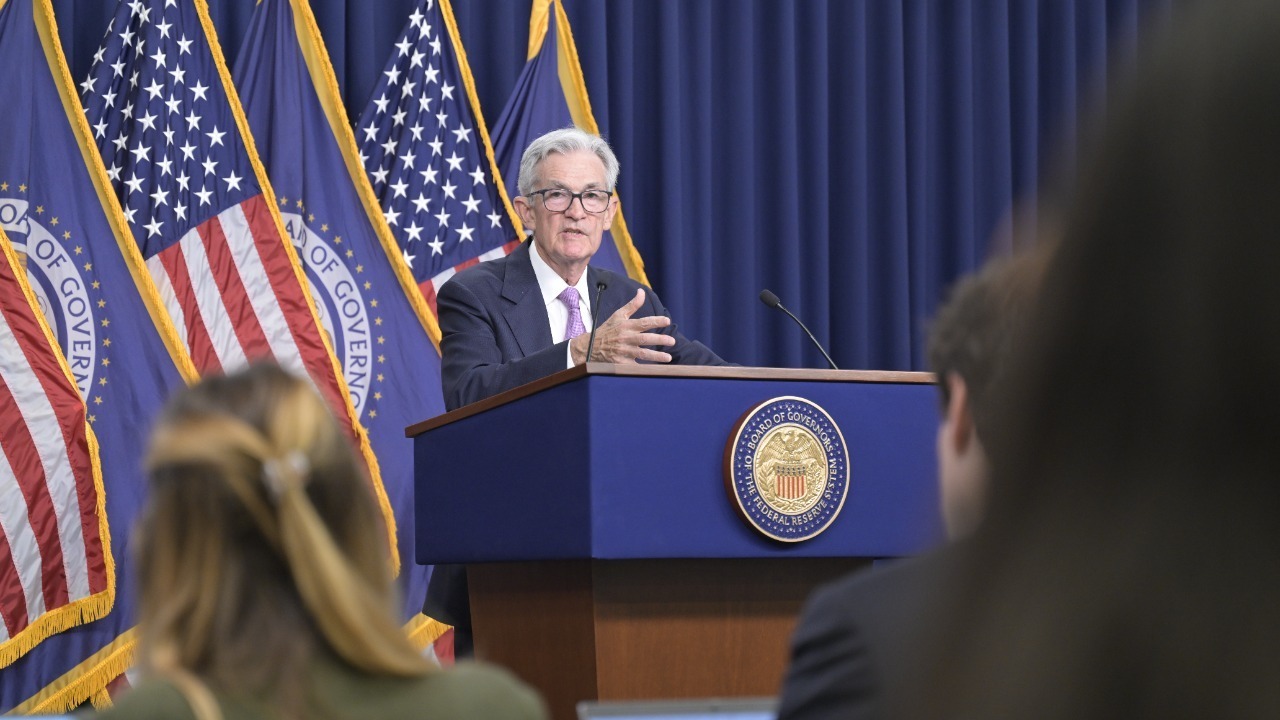
Standing at the lectern in the Fed’s press briefing room on April 29, 2026, Powell told reporters he will remain on the Board of Governors as a sitting member after handing over the chairmanship on May 15. His governor seat, a legally separate appointment, does not expire until January 31, 2028, according to his official Fed biography. By staying, Powell blocks the White House from filling his seat and extends a bitter standoff over the central bank’s independence deep into the second half of President Trump’s term.
The decision carries real consequences for anyone with a mortgage, a car loan, or a retirement account. The Fed sets the benchmark interest rate that ripples through all of those, and Powell is signaling that he intends to keep voting on rate decisions and participating in board deliberations even after Kevin Warsh, Trump’s nominee to replace him as chair, takes the gavel.
Powell told reporters that continuity on the board matters now more than usual. He pointed to two simultaneous pressures: persistent inflation risks that demand steady policy judgment, and what he described as a legal campaign by the Justice Department aimed at undermining the Fed’s ability to set interest rates free from political interference, according to Associated Press coverage of the post-FOMC press conference.
Markets appeared to take the announcement in stride. Treasury yields and major equity indexes moved only modestly in the hours after Powell’s remarks, according to the AP, suggesting that traders had already priced in the possibility that Powell would stay on the board past his chairmanship.
Grand jury subpoenas and what Powell calls “pretexts”
The legal clash did not begin at the April press conference. Back in January 2026, Powell published a formal statement on the Fed’s website disclosing that the DOJ had issued grand jury subpoenas to the central bank. The subpoenas targeted two areas: Powell’s June 2025 testimony before the Senate Banking Committee, chaired by Sen. Tim Scott (R-SC), and a building-renovation project at the Fed’s Washington headquarters.
Powell called both lines of inquiry “pretexts” and tied them directly to broader pressure over monetary policy. The Fed said it had cooperated with document requests but would resist any effort it viewed as harassment of staff or interference with internal deliberations. Powell added that the board had retained outside counsel and was prepared to defend its institutional authority in court. He revisited and reinforced those points during his April 29 remarks.
The administration has not issued a detailed public response to Powell’s characterization. The Justice Department has not commented on the scope or intent of the investigation. Without charging documents, court filings, or on-the-record statements from DOJ officials, the competing interpretations of the subpoenas remain unresolved.
Peter Conti-Brown, a Fed historian at the University of Pennsylvania’s Wharton School, told the Associated Press that Powell’s decision to stay on the board “transforms a personnel transition into a constitutional confrontation,” adding that there is no close modern precedent for a departing chair remaining as a governor under these circumstances.
A new chair, an old rival on the board
The practical dynamics are unusual, bordering on unprecedented in modern Fed history. Warsh, whose confirmation is reportedly being considered by the Senate Banking Committee, would take over a board that still includes the man he is replacing. That means a new chair chosen by the White House would be leading alongside a holdover governor who has publicly accused the executive branch of trying to intimidate the institution.
Under the Federal Reserve Act, a governor confirmed by the Senate can serve out the remainder of a full 14-year term regardless of whether that person also holds the chair title. Powell’s governor term and his chair term are legally distinct. Losing the chairmanship strips him of agenda-setting power and the public megaphone of post-meeting press conferences, but it does not remove his vote on rate decisions or his voice in closed-door deliberations.
Removing a Fed governor before the term expires requires clearing a high legal bar. The statute allows removal only “for cause,” a standard the Supreme Court has historically read to mean serious malfeasance, not policy disagreement. Landmark cases including Humphrey’s Executor v. United States (1935) and the more recent Seila Law v. CFPB (2020) have shaped the boundaries of presidential removal power over independent-agency officials, though neither case involved a Fed governor directly. The White House has not publicly signaled any attempt to force Powell off the board.
What remains unknown about the DOJ probe
Much about the investigation is still opaque. The subpoena documents have not been made public. It is unclear whether the Senate testimony track and the renovation track are part of a single investigation or separate matters. The two subjects involve different potential legal theories: testimony before Congress raises questions about whether Powell misled lawmakers, while a renovation contract could implicate procurement rules or misuse of federal funds.
Grand jury subpoenas can signal anything from an early, exploratory phase to a near-ready indictment. Without more information, outside observers cannot reliably gauge how aggressively prosecutors intend to press the case. There is also no public indication of how other Fed governors view the legal risks or Powell’s choice to stay on the board while under scrutiny. Warsh, if confirmed, has not commented.
One question the public record does not yet answer: what exactly Powell said in his June 2025 Senate testimony that drew prosecutorial interest. The hearing transcript is available through the Senate Banking Committee, but neither the DOJ nor the Fed has identified which statements, if any, are at issue.
Powell’s governor seat as a shield for Fed independence
Powell’s decision ensures that the confrontation over Fed independence will not end when he hands over the gavel in mid-May. By occupying his governor seat through January 2028, he guarantees himself a platform inside the institution for nearly two more years, a stretch that covers the remainder of Trump’s current term and the run-up to the next presidential election.
It is worth being direct about something: Powell’s framing of the subpoenas as politically motivated is exactly that, his framing. He is the target of the investigation and has a clear institutional interest in casting it as an attack on the Fed rather than a legitimate law-enforcement inquiry. That does not make him wrong, but it means his account carries the weight of an interested party’s public defense, not a neutral finding.
What is not in dispute is the legal structure that lets him stay. The statute is unambiguous, and Powell has now made his intentions explicit. The result is a slow-burning institutional crisis with no obvious off-ramp: a former chair sitting on the board of the central bank, a new chair navigating that presence, and a Justice Department investigation whose scope and seriousness remain a matter of competing narratives.