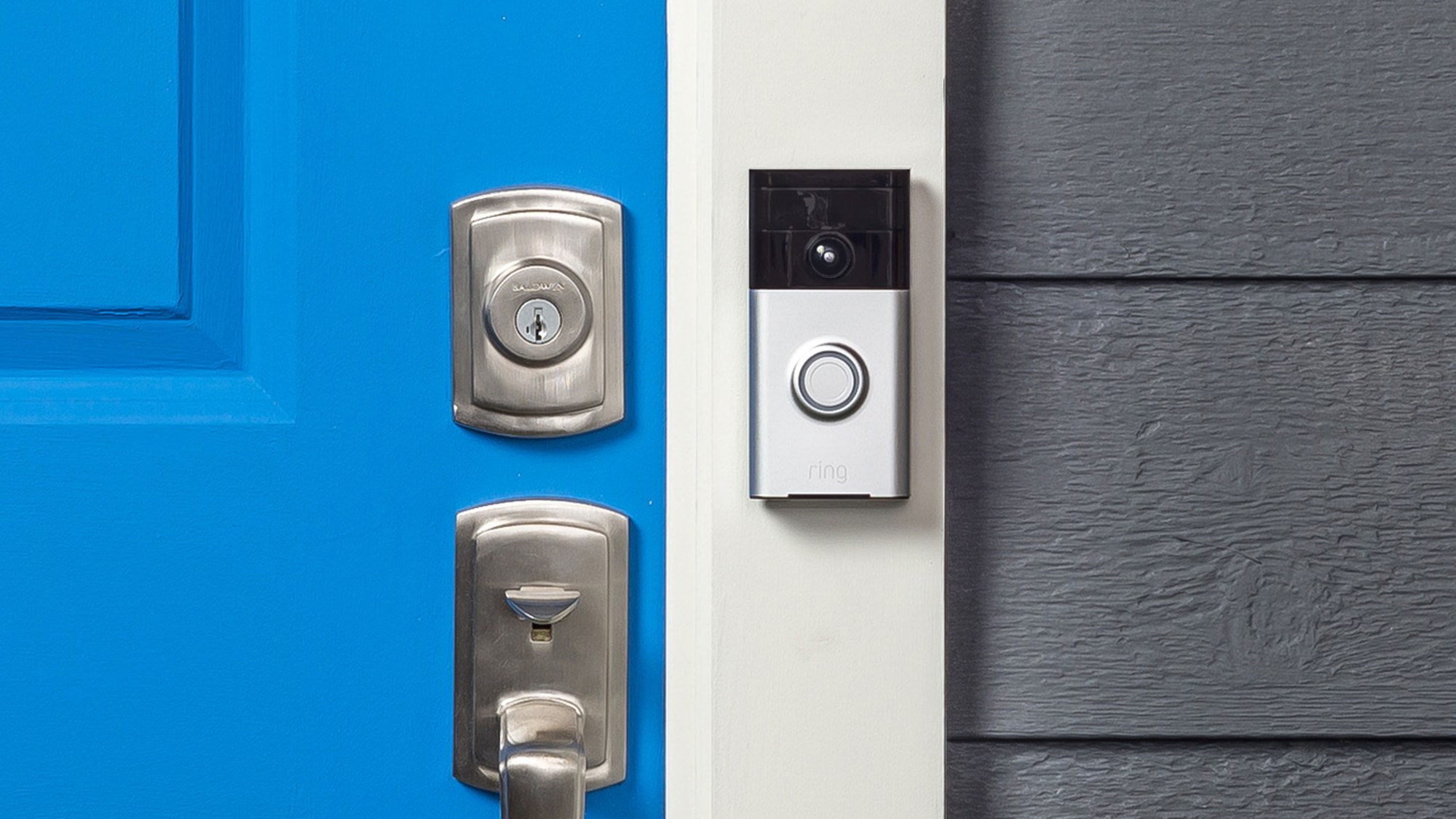
The Federal Trade Commission is sending Zelle payments to people who owned a Ring security camera or video doorbell during the years the company let employees browse customer footage and left accounts open to takeover. The payments are going specifically to Ring customers who never cashed an earlier refund check or accepted a PayPal payment from two prior distribution rounds. More than $5.4 million has already reached Ring customers across those two rounds, and the agency’s own refund page shows the Zelle payments going out now, not a closed or historical case. For an older camera owner who missed a check months or years ago, the money has not disappeared; it has simply changed delivery method. Ring, owned by Amazon since 2018, markets its cameras and doorbells on the promise of watching a home from anywhere, which is part of why the underlying privacy failures drew so much attention when regulators first laid them out.
Ring’s Privacy Failures Behind the Refund
The refunds trace back to a case the FTC filed in May 2023, when the agency accused Ring of letting virtually any employee or contractor view customers’ private video without adequate limits, then failing to secure customer accounts against outside attackers. One employee spent months viewing thousands of recordings from female users’ cameras placed in bathrooms and bedrooms before another employee caught the conduct, according to the complaint. Separately, hackers exploited weak account security to take over the accounts, live video feeds and stored footage of roughly 55,000 U.S. customers, in some cases using the camera’s two-way audio to harass children and threaten families. The resulting order required Ring to pay $5.8 million, delete video and face-recognition data it had improperly obtained, and build a privacy and security program with mandatory multi-factor authentication.
Free settlements tracker: Open settlements have claim deadlines, and fake settlement sites copy real ones. See the current list with the free tracker.
Two Rounds of Checks and PayPal, Then Zelle
The FTC first sent refunds in April 2024, issuing 117,044 PayPal payments to consumers who owned certain camera models, such as indoor cameras, during the window when unauthorized users could reach customer video, according to the agency’s April 2024 announcement. That release told recipients to redeem the PayPal payment within 30 days, a deadline that helps explain why a slice of that group is only being paid now, in 2026, instead of two years ago. A second distribution followed in August 2025, this time by mailed check. Combined, the two rounds moved more than $5.4 million to affected customers, and the current round is neither PayPal nor a fresh check: it is Zelle, aimed narrowly at people who let one of those two earlier windows close without acting on it.
How the Zelle Payment Reaches a Bank Account
According to the FTC’s Ring refund page, a Zelle payment arrives by depositing directly into the recipient’s bank account, carrying a note identifying it as tied to the Ring settlement. There is no claim form to complete and no email link to click; the deposit itself is the notice. The same page states plainly that the FTC never asks a consumer to pay money to receive a refund, a detail worth remembering for an older account holder who might otherwise treat an unfamiliar deposit as a banking error or assume any follow-up call asking to “verify” it is legitimate.
Confirming a Notice Is Really From the FTC
Because refund scams often mimic real settlements, the FTC’s refund program FAQ lays out how to check a notice before acting on it. Every legitimate case is listed at ftc.gov/refunds along with the name of the company handling payments and a phone number for questions; for Ring, that administrator is Rust Consulting, reachable at 1-833-637-4884. The agency contracts with only five refund administrators nationwide — Analytics Consulting, Epiq Systems, JND Legal Administration, Rust Consulting, and Simpluris — and none of them, nor the FTC itself, will ever require an upfront fee, a Social Security number, or bank account details to release a payment. A caller who asks for any of that on a Ring refund call is not calling from the FTC. The safest check for an older recipient is the same one the FTC recommends for any of its cases: type ftc.gov/refunds directly into a browser rather than clicking a link in an email or text, then match the case name, administrator and phone number against what arrived in the mail or a bank notification before responding to anyone.
What Happens When a Check Expires Unused
A check from an FTC settlement carries its own expiration date printed on it, and the agency’s guidance confirms that once one lapses, the money does not vanish from the settlement fund. A consumer who lets a check expire can request a reissue as long as funds remain, though asking for a paper check instead of a PayPal payment takes at least 45 days, since the agency has to wait for PayPal to return the original funds first. Zelle sidesteps that lag for the Ring case: rather than mailing another round of paper checks that could again sit uncashed in a drawer, the FTC is pushing the outstanding balance straight into a bank account. It is the same mechanism the agency’s own refund data points to for its broader record — more than 95 percent of the money it collects for consumers over the past five years has actually reached them, rather than reverting to the U.S. Treasury.
Reading a Refund Notice After the Case Is Old News
The Ring case is now three years past its original complaint, and the payment method has shifted twice — from PayPal, to mailed checks, to Zelle — with no single notice most recipients ever see more than once. A camera owner who missed the first two rounds has no easy way to tell whether a similar letter about an entirely different settlement is still an open, payable claim or an already-closed one being impersonated by a scammer. That gap between an aging settlement and a live payment is exactly where a fake notice and a legitimate late one start to look identical.
The Settlement & Refund Recovery System is a 36-page guide paired with a 5-tab Excel tracker pre-filled with all 51 state unclaimed-property offices, built around the four-date rule for reading a settlement notice.
Compare a new refund notice against the scam-proof rules in The Settlement & Refund Recovery System.
This article was researched and drafted with the assistance of AI and reviewed by an editor.