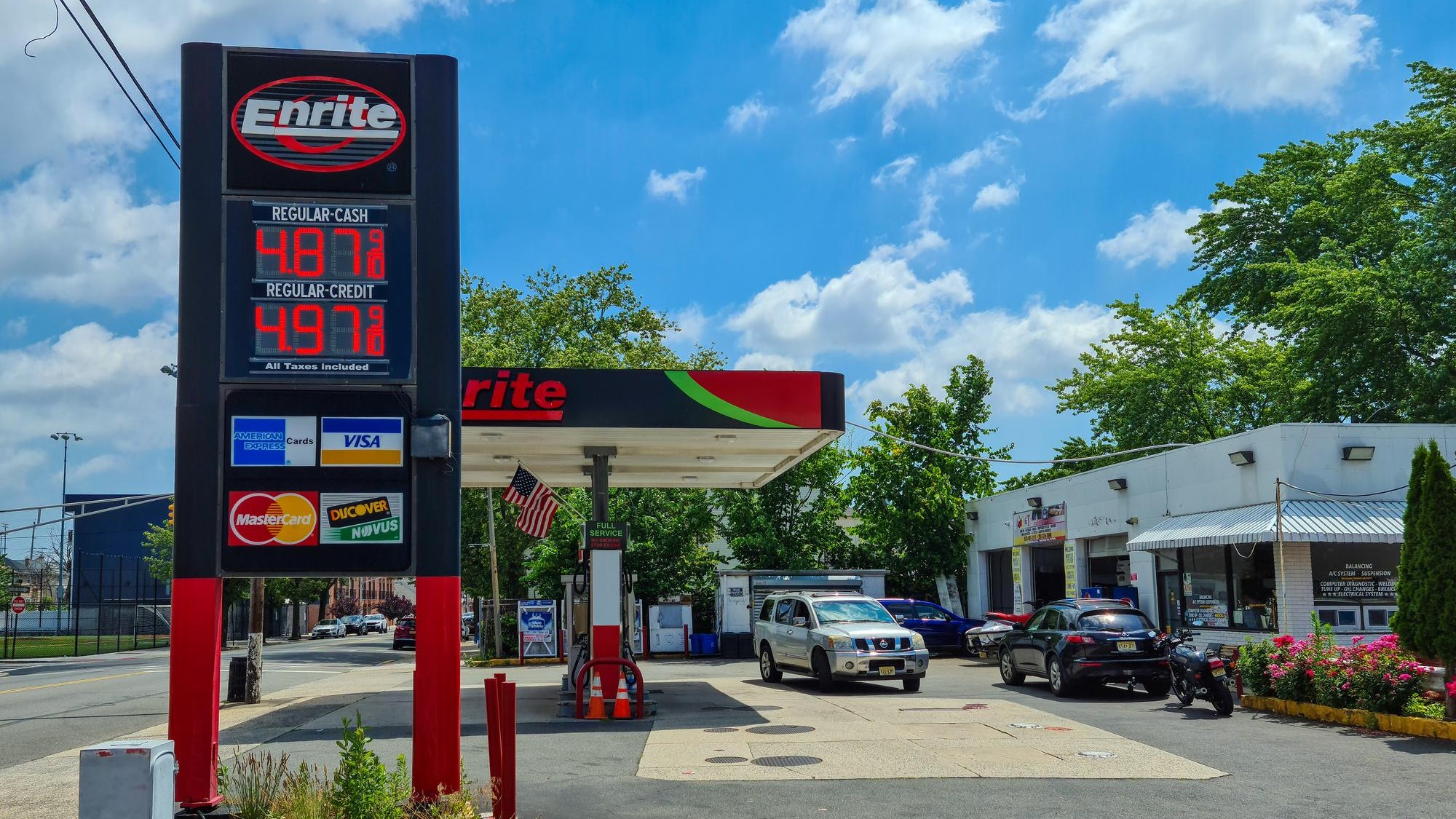
Filling up a midsize SUV in Los Angeles now costs north of $90. In Houston, the same tank runs about $55. That gap tells you almost everything about where American gas prices stand in late May 2026: painful everywhere, brutal in certain states, and getting worse heading into summer.
The national average for a gallon of regular gasoline has climbed to $4.52, according to AAA, putting the country within spitting distance of the all-time record of $5.02 set in June 2022. Six states have already blown past $5, and California leads the pack at a staggering $6.16 per gallon. The trigger was a diplomatic failure that markets had been betting against: U.S.-Iran nuclear talks collapsed in mid-April, and the oil supply relief that traders had been counting on evaporated overnight.
“People are making choices between groceries and gas right now,” said Devin Gladden, a spokesperson for AAA, describing the calls the organization has been fielding from drivers across the Sun Belt. “When you are spending $70 or $80 to fill up a vehicle you need for work, that is money that is not going to rent or food.”
How the Islamabad talks fell apart
Pakistan hosted what was billed as a breakthrough round of negotiations between American and Iranian officials. On April 13, those talks ended without an agreement, according to the Associated Press. President Trump rejected Iran’s latest counterproposal to a framework deal, effectively slamming the door on any near-term return of Iranian crude to global markets.
The fallout was immediate because traders had spent weeks pricing in the possibility of a deal. Iran holds the world’s third-largest proven oil reserves, and even a partial lifting of sanctions could have added roughly 1 million to 1.5 million barrels per day to global supply, a range consistent with scenarios outlined in the EIA’s Short-Term Energy Outlook, which models the effect of Iranian production returning to pre-sanctions levels. When that supply failed to materialize, Brent crude surged above $90 a barrel within days of the breakdown, based on Reuters-tracked front-month futures, and wholesale gasoline margins widened in tandem. Retailers passed those costs straight to the pump.
Neither side has announced a timeline for resuming talks. The United Nations has urged continued dialogue, but with Trump traveling to Beijing and Iranian officials publicly hardening their negotiating stance, there is no obvious next date on the diplomatic calendar.
The six states above $5 a gallon
As of late May 2026, six states have crossed the $5 threshold, according to AAA’s state-by-state tracker:
- California – $6.16 (highest in the nation)
- Hawaii – $5.74
- Washington – $5.38
- Nevada – $5.21
- Oregon – $5.14
- Illinois – $5.03
Every one of these states combines above-average fuel taxes or environmental surcharges with supply-chain quirks that amplify global price swings. Hawaii imports virtually all of its fuel by tanker. Washington and Oregon layer clean-fuel mandates on top of already steep West Coast refining costs. Illinois carries one of the highest combined state and local fuel tax burdens east of the Rockies, a product of a 2019 infrastructure funding law that doubled the state’s motor fuel tax and indexed it to inflation.
For context, drivers in states like Texas, Mississippi, and Alabama are still paying in the $3.80 to $4.10 range, where combined fuel taxes run below 40 cents a gallon and there are no cap-and-trade programs layered on top.
Why California always pays the most
California’s price premium is not just about geopolitics. The state stacks costs that most of the country simply does not have.
Start with the excise tax: $0.612 per gallon for the period from July 2025 through June 2026, according to the California Department of Tax and Fee Administration. County-level sales taxes pile on another 10 to 15 cents depending on where you fill up.
Then come the environmental programs. The California Energy Commission’s price breakdown shows that the Low Carbon Fuel Standard and cap-and-trade pass-through charges together add roughly 40 to 55 cents per gallon, depending on credit market conditions. Distribution and marketing margins take another slice.
Stack it all up and a gallon of gas in California carries well over a dollar in costs that do not exist in most other states. For a driver filling a 15-gallon tank at $6.16, excise tax alone accounts for about $9.18 of the total bill. The full suite of state-specific charges can push the policy-driven portion past $20 per fill-up. And because the excise tax is fixed by statute and does not move with oil markets, Californians absorb the full force of any crude price spike on top of an already elevated baseline.
What OPEC+ and refiners are doing
The Iran situation is playing out against a backdrop of cautious production policy from OPEC+. Saudi Arabia and its allies have been gradually unwinding voluntary output cuts through 2026, but the pace has been deliberate enough that the lost Iranian barrels are not being fully offset. The EIA’s Short-Term Energy Outlook projected global oil inventories would tighten through the summer even before the Islamabad talks collapsed. The diplomatic failure only deepened that supply risk.
On the refining side, U.S. capacity utilization was already running above 90% heading into the summer driving season, according to the EIA’s Weekly Petroleum Status Report. Planned maintenance at several Gulf Coast and West Coast facilities in April and May temporarily cut output at the worst possible moment.
California is especially exposed. The state depends on a handful of in-state refineries and limited marine imports, with no pipeline connections to Gulf Coast fuel hubs. When a refinery outage coincides with a global crude disruption, prices can spike faster and harder than in regions with more diversified supply networks. That dynamic has repeated itself multiple times over the past decade, and it is playing out again now.
Has the White House responded?
So far, the Biden-era playbook of tapping the Strategic Petroleum Reserve has not been repeated. The SPR sits near historically low levels after the massive drawdowns of 2022, and the administration has not signaled any plans for a new release. President Trump has instead pointed to his push for expanded domestic drilling permits as the longer-term answer, though new production takes months or years to reach the market and would not affect prices at the pump this summer.
There has been no announcement of federal fuel-tax holidays or emergency waivers on summer-blend gasoline requirements, two measures that Congress debated during the 2022 price spike but never enacted at the federal level. For now, the White House appears to be betting that diplomatic pressure and domestic energy policy will eventually bring relief, but “eventually” is not a timeline that helps drivers filling up today.
How drivers can soften the hit to their household budgets
At $4.52 a gallon, a household driving 1,000 miles a month in a vehicle averaging 25 miles per gallon is spending roughly $181 on gas alone. That is about $45 more per month than the same household paid in January 2026, when the national average hovered near $3.40. Over a full summer, the increase adds up to roughly $135 in extra fuel costs, money that for many families comes directly out of the grocery or savings budget.
Patrick De Haan, head of petroleum analysis at GasBuddy, has recommended that drivers use price-comparison apps to find the cheapest station in their area, noting that price spreads of 30 to 50 cents per gallon between stations just a few miles apart are common in metro areas. Filling up early in the week, when wholesale price adjustments have not yet reached all retailers, can also shave a few cents.
Beyond the pump, drivers can reduce consumption by combining errands, checking tire pressure (underinflated tires lower fuel economy by up to 3%, according to the Department of Energy), and avoiding aggressive acceleration. None of these steps will offset a $1-per-gallon surge, but together they can trim a monthly fuel bill by $15 to $25, a margin that matters when budgets are already stretched.
Why the next round of Iran talks will set the price at the pump
Forecasting fuel prices in the middle of a geopolitical standoff is inherently uncertain. No official EIA projection has been published tying the Iran impasse directly to specific future gasoline price targets. But the seasonal math works against drivers: demand typically peaks between Memorial Day and Labor Day, and refiners switch to more expensive summer-blend formulations that add a few cents per gallon on their own.
The most plausible paths to relief would be a sustained pullback in global crude prices or a diplomatic breakthrough that brings Iranian barrels back to market. A surprise increase in OPEC+ output could also help, though Saudi Arabia has shown little appetite for flooding the market while it tries to fund its own massive domestic spending plans.
Absent any of those developments, prices are likely to stay elevated through the summer. California’s layered policy framework virtually guarantees its drivers will remain at the top of the national price charts no matter what happens internationally. For the rest of the country, $4.52 may not be the ceiling. Whether it becomes one depends largely on negotiations that nobody has scheduled yet.