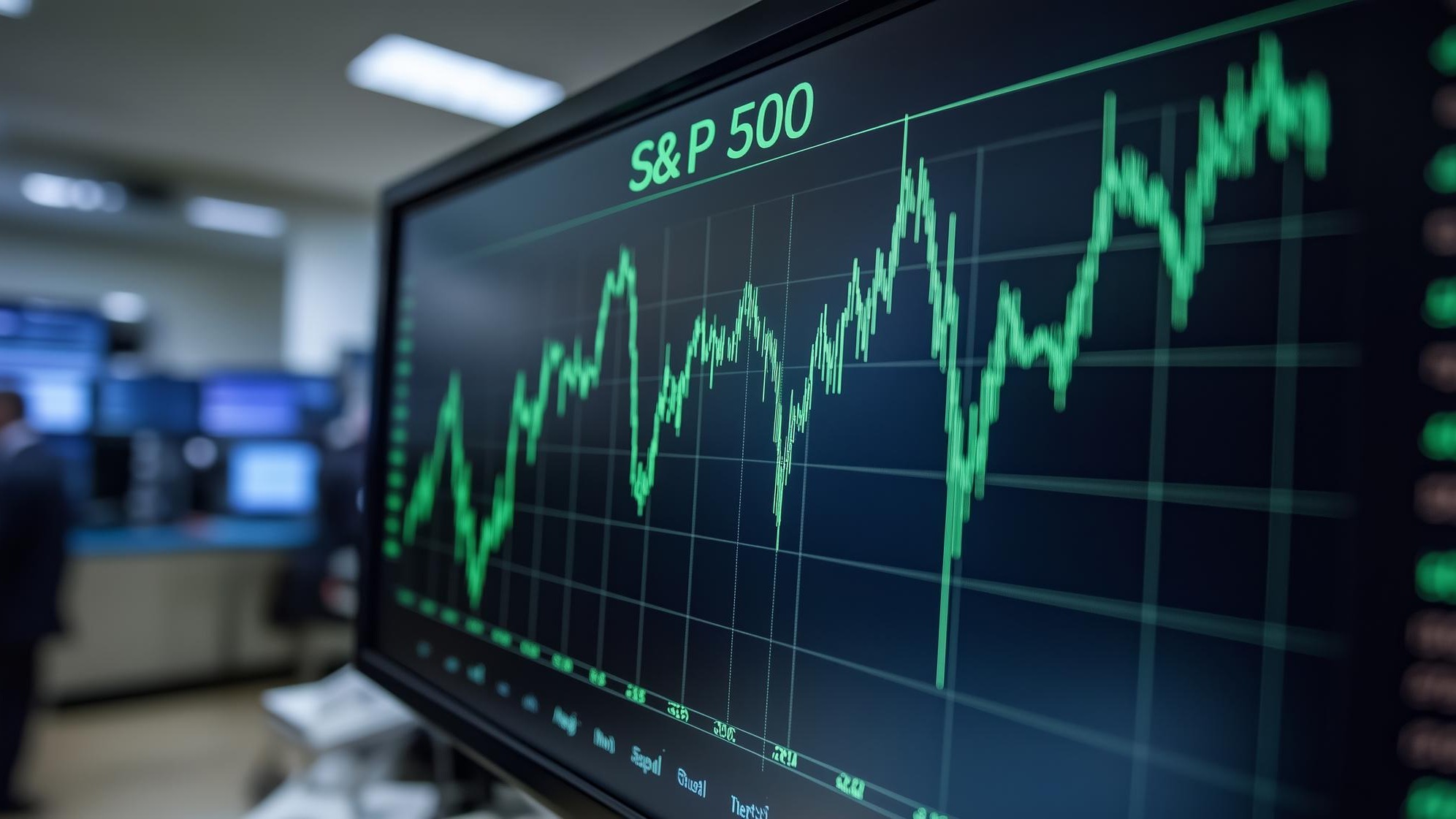
Between early April and mid-May 2026, the S&P 500 climbed roughly 10%, a surge that in calmer times would have felt like vindication for the bulls. Instead it landed like a headline from a parallel universe. At the same moment, the national average price of gasoline sat at $4.52 a gallon according to AAA as of mid-May 2026. The 30-year fixed mortgage rate, per Freddie Mac’s weekly survey for the week ending May 15, 2026, was 6.37%. And real wage growth, after adjusting for inflation, had effectively flatlined. Wall Street threw a party. Most American households were not invited.
A market rally that most Americans cannot spend
That 10% gain is a price-index move: it reflects share-price appreciation, not dividends, not reinvested returns, and certainly not cash in anyone’s checking account. It only converts to real money for people who own stocks and are actively selling them. According to the Federal Reserve’s Distributional Financial Accounts, the wealthiest 10% of American households hold roughly 87% of all corporate equities and mutual fund shares. For the median worker whose retirement savings sit untouched inside a 401(k), a six-week rally does nothing to cover this week’s grocery run or next month’s rent.
The disconnect between portfolio returns and lived costs is not new, but its scale in spring 2026 is hard to ignore. Markets have rallied partly on expectations that the Federal Reserve may begin cutting rates later this year and partly on optimism that ongoing trade negotiations could ease tariff pressures. Those are forward-looking bets. Household expenses are stubbornly present-tense.
At the pump and at the closing table
Gasoline near $4.52 a gallon functions as a regressive tax. Consider a two-car household where each driver commutes 30 miles each way in a vehicle averaging 27 miles per gallon. That is roughly 2.2 gallons per car per day, or about 44 gallons a week for the household. At $4.52, the monthly fuel bill lands around $400 before anyone factors in weekend errands or a kid’s soccer practice across town. Regional variation sharpens the pain: drivers in California and parts of the Northeast are paying well above $5, while some Southern and Midwestern states hover closer to $4. Even at the national average, fuel costs claim a chunk of the paycheck before any other bill gets paid.
Housing offers no relief. At 6.37%, a buyer financing $350,000 on a 30-year fixed mortgage faces a monthly principal-and-interest payment of roughly $2,185. Run the same loan at the sub-3% rates available in 2021 and the payment drops to about $1,460, a difference of more than $700 a month. Freddie Mac noted the rate dipped slightly after five consecutive weeks of increases, but one week of modest relief is not a trend. Until the Fed signals a decisive shift in monetary policy, borrowing costs are likely to hover in this range, keeping homeownership out of reach for many first-time buyers and discouraging existing owners from trading up.
Paychecks that are running in place
The Bureau of Labor Statistics’ Real Earnings Summary distills the problem into a single figure: in its April 2026 release covering March 2026 data, real average hourly earnings for all employees rose just 0.1% year over year, a gain that rounds to zero in any household budget. Workers are getting nominal raises, but inflation, driven in large part by energy and shelter costs, is swallowing nearly every dollar of those gains.
The compounding effect is straightforward but punishing. Gasoline is a direct component of CPI-U, the broadest consumer inflation measure the BLS publishes. When pump prices climb, they push the Consumer Price Index deflator higher, which in turn erases more of the nominal wage increase captured by the Current Employment Statistics survey. High gas prices hit workers twice: once at the pump and again when the inflation adjustment wipes out their raise on paper.
Household-level surveys will eventually show how families are absorbing the pressure. Are they cutting back on dining out? Leaning harder on credit cards? Drawing down the emergency savings many built during the pandemic? The Fed’s next Survey of Household Economics and Decisionmaking and the Census Bureau’s Household Pulse Survey should fill in that picture. For now, the macro signal is blunt: most workers are earning just enough to stay even.
A strong job market does not tell the whole story
One counterargument deserves acknowledgment. The labor market, by most conventional measures, remains solid. Unemployment has stayed below 4.5%, job openings still outnumber unemployed workers, and layoff rates are historically low. Those are real positives, and they explain part of why consumer spending has not collapsed despite the cost pressures described above.
But a job is a necessary condition for financial stability, not a sufficient one. A worker who is employed, getting a 3% raise, and watching 2.9% of it vanish to inflation is technically better off. In practice, that 0.1% real gain buys almost nothing. And for hourly workers in sectors like retail, food service, and transportation, where schedules fluctuate and benefits are thinner, the margin between getting by and falling behind is razor-thin even in a “good” labor market.
Why the gap matters beyond the numbers
A stock rally built on rate-cut expectations and trade optimism can reverse fast if either bet sours. Households with heavy equity exposure ride that volatility in both directions. Households without meaningful stock holdings, which is the majority, never captured the upside. They are left with the fixed costs: fuel, food, shelter, and debt service that do not fluctuate with the Nasdaq.
The policy backdrop adds another layer of uncertainty. Tariffs imposed or threatened over the past year have contributed to elevated goods prices, and any escalation could push inflation higher just as the Fed weighs whether conditions justify a cut. A rate reduction would eventually ease mortgage costs and could support wage growth by stimulating hiring, but the lag between a policy shift and tangible household relief is measured in quarters, not weeks.
Three indicators that will show whether Wall Street’s rally reaches Main Street
Three data series will determine whether the current split between portfolio returns and purchasing power narrows or widens through the rest of spring and into June 2026.
First, the monthly CPI report. If inflation decelerates meaningfully, real wages will start growing again even without larger nominal raises. The June release, covering May prices, will be especially telling because it will capture the full effect of current energy costs.
Second, the Fed’s rate decisions and forward guidance. Markets are pricing in at least one cut before year-end, but the Fed has repeatedly emphasized that it will wait for sustained evidence of cooling inflation. Any hawkish surprise could send mortgage rates higher and take the air out of the equity rally simultaneously.
Third, the EIA’s weekly gasoline price updates. Energy costs remain the most visible and emotionally charged line item in any family budget. A sustained drop below $4 would do more for consumer sentiment than any Fed speech.
Until those indicators shift, the spring 2026 economy will keep producing the same split screen: index funds climbing while the bills that land on kitchen tables barely budge.