Somewhere around 2.8 million people will take off their shoes, empty their pockets, and shuffle through a TSA checkpoint this Memorial Day Sunday. If that number holds, it will be the highest single-day screening total for any Memorial Day weekend in the agency’s history, according to projections posted on TSA’s checkpoint volume tracker.
They will also be paying substantially more for the privilege. Domestic airfares are running roughly 24 percent higher than they were at this point in 2025, based on the most recently published quarters in the Bureau of Transportation Statistics’ national average fare series and corroborated by first-quarter 2026 revenue figures from Delta, United, and American. And one of the airlines that used to keep those fares in check, Spirit Airlines, no longer exists.
Higher prices. Fewer carriers. Record crowds. The combination defies the textbook, and it is defining what summer air travel looks like in 2026.
A new ceiling for Memorial Day travel
TSA has tracked daily passenger throughput since before the pandemic, and the trajectory has pointed in one direction. The agency screened a then-record 2.95 million travelers on a single day during the 2024 summer surge, as Reuters reported. In its 2024 summer outlook, the agency projected nearly 3 million screenings on the peak day of that Memorial Day stretch alone and called it the busiest travel season on record.
The 2.8 million figure for this Sunday is still a projection; TSA had not posted the confirmed count as of late May 2026. But the broader pattern is not in question. Checkpoint volumes have climbed during each of the last three Memorial Day weekends, and 2026 is on track to extend that streak. TSA has responded by deploying additional officers at the 30 busiest airports and expanding its CT scanner rollout to speed bag screening, according to the agency’s pre-holiday operational briefing.
Where the cheap seats went
To understand why fares have jumped, start with the airline that is no longer around to undercut them.
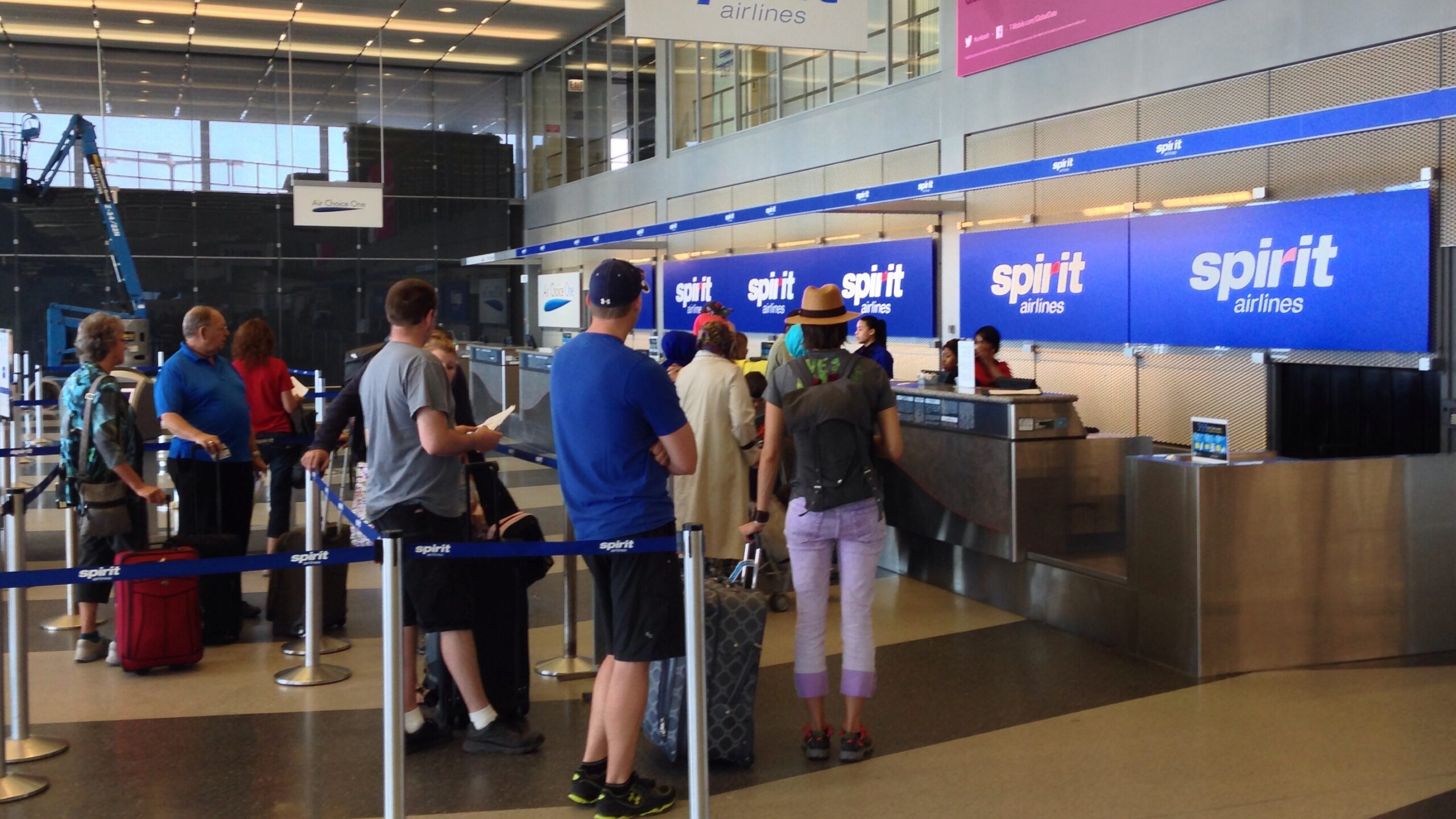
Spirit Airlines filed for Chapter 11 bankruptcy protection in November 2024 after years of mounting losses, then announced what it called an “orderly wind-down” of operations, according to the Associated Press. By early 2025, Spirit had ceased flying entirely, pulling roughly 200 daily departures off the domestic schedule.
Before its collapse, Spirit operated dozens of routes linking mid-size cities to leisure destinations at fares that routinely undercut competitors by $30 to $50 per leg. More importantly, Spirit’s mere presence on a route forced legacy carriers and other low-cost airlines to match or at least approach those rock-bottom prices. Researchers at the Government Accountability Office have documented this dynamic, sometimes called the “Spirit effect,” in studies of fare competition on overlapping routes. With Spirit gone, that downward pressure has evaporated, and the impact has been sharpest on heavily leisure-focused corridors between cities like Fort Lauderdale, Orlando, Las Vegas, and San Juan.
Other budget-oriented carriers have tried to fill the gap. Frontier Airlines and Breeze Airways have expanded into some former Spirit markets, but neither matches the scale or route density Spirit once offered. Southwest Airlines, historically a fare anchor on many domestic routes, has been focused on its own operational restructuring, including the rollout of assigned seating and premium cabin options, and has not aggressively backfilled Spirit’s network.
The result, visible in booking data from platforms like Hopper and Google Flights, is that travelers on routes Spirit once dominated are seeing fewer options and paying more for the ones that remain. Round-trip tickets on several Florida and Caribbean corridors sampled through those platforms in May 2026 were running $75 to $150 higher than comparable bookings a year earlier.
Why demand keeps climbing anyway
If fares are up and options are down, why are more people flying than ever? Three forces are pushing in the same direction.
The job market is holding. The U.S. unemployment rate sat at 4.2 percent as of the most recent Bureau of Labor Statistics release, and consumer spending on travel has remained elevated. The Conference Board’s consumer confidence index, while off its highs, still reflects a preference for spending on experiences over goods, a behavioral shift that took hold during the pandemic and has not reversed.
Airlines are keeping schedules tight on purpose. Rather than flooding the market with seats to chase volume, major carriers have held domestic capacity relatively flat, which supports both higher load factors and higher fares. Delta, United, and American all signaled in their most recent earnings calls that they intend to prioritize revenue per available seat mile over raw passenger growth through the summer.
International travel is still a harder sell for many families. Overseas trips remain more expensive and logistically complex, from passport backlogs to foreign currency swings. That keeps a large share of leisure demand concentrated on U.S. routes, particularly to beach and theme-park destinations that Spirit once served at the lowest price points in the market.
What travelers are actually paying and feeling
The aggregate numbers tell one story. The experience at the gate tells another.
At major hubs like Atlanta, Denver, and Dallas-Fort Worth, travelers this spring have encountered longer security lines, fuller cabins, and fewer last-minute fare deals compared with the same period in 2025. Walk-up fares on popular leisure routes have been particularly steep. A spot check of round-trip fares on Google Flights for the first two weeks of June 2026 showed Orlando-bound tickets from New York and Chicago averaging $80 to $130 more than the same routes a year earlier, with nonstop options on some corridors cut by a third.
No federal agency has yet quantified how many passengers who previously flew Spirit have shifted to remaining carriers, or how that redistribution is affecting load factors and on-time performance on specific routes. Route-level traffic and punctuality data for the current period will not be available until later this summer, when BTS publishes its T-100 domestic segment tables. But the direction is consistent across every available signal: flights are fuller, fares are higher, and the ultra-cheap option that once anchored the bottom of the market is gone.
The Department of Transportation has not issued any formal assessment of reduced competition on former Spirit routes, though consumer advocacy groups including the U.S. Public Interest Research Group have called on the agency to monitor fare trends on corridors where Spirit was the sole ultra-low-cost option.
What the rest of summer 2026 is shaping up to be
If Memorial Day is the opening act, the main event could be louder. TSA’s own projections for the full summer period suggest multiple days above 2.8 million screenings, with the Fourth of July weekend expected to challenge or surpass the all-time single-day record set in 2024.
For fares, the outlook hinges on whether airlines add capacity in response to sustained demand or continue holding the line. Jet fuel prices, volatile but not at crisis levels, will also play a role. If crude oil stays in its current range, carriers have little incentive to discount aggressively, particularly on routes where Spirit’s exit has already thinned the competitive field.
The most useful data point for travelers planning summer trips will arrive when BTS publishes its quarterly fare report and T-100 traffic tables for the spring period. Those numbers will show whether the fare increases visible in airline earnings and booking platforms are as steep as they appear, and whether former Spirit routes are experiencing measurably higher load factors and worse punctuality than comparable corridors.
Until then, the picture is clear enough: Americans are flying in record numbers, paying more to do it, and absorbing the loss of a carrier that once made air travel accessible at the lowest price tier. The open question is not whether summer 2026 will be expensive and crowded. It is whether the crowds will finally start to thin at the prices airlines are now charging, or whether travelers will keep showing up regardless.