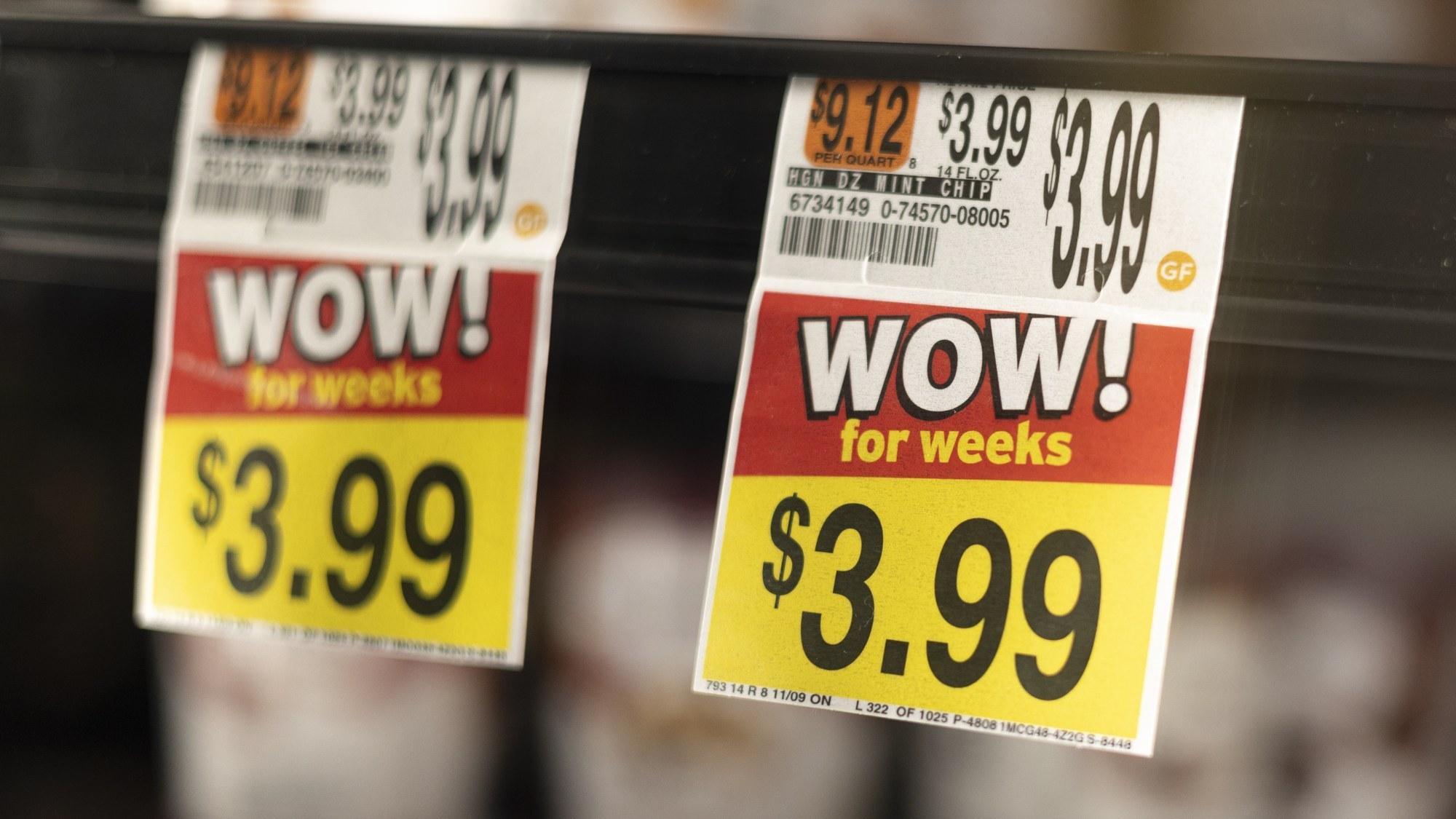
A family of four grilling burgers this Memorial Day weekend will spend roughly $6.70 for every pound of ground beef they toss on the grate. Driving to the store to buy it costs $4.43 a gallon. And the house they pull into afterward? If they bought it recently with a 30-year fixed mortgage, they’re likely paying around 6.21% interest, a rate that adds hundreds of dollars a month compared with what the same loan would have cost just a few years ago.
These aren’t abstract economic indicators. They are the three budget lines that hit hardest and most often: food, fuel, and housing. For a household earning near the national median of about $80,610, according to the most recent U.S. Census Bureau estimate (based on 2023 data), the convergence of all three at elevated levels is what makes the current moment feel so relentless.
Why ground beef costs what it does
The $6.70-per-pound figure comes from the Bureau of Labor Statistics’ average-price program, which tracks item-level costs at thousands of retail outlets nationwide. The reading reflects prices collected during the March or April 2026 survey period, the most recent available. Because BLS field staff pull quotes from a broad sample of stores, the figure smooths out regional sales and chain promotions, making it one of the most reliable consumer-cost benchmarks in existence. (The BLS details its methodology in its average-price fact sheet.)
The price is not a blip. America’s cattle herd has been shrinking since 2019, battered by persistent drought and high feed costs, and now sits at its smallest size since the early 1960s, according to USDA inventory data. The USDA Economic Research Service’s food price outlook projects that beef and veal prices will stay elevated through 2026. Rebuilding a cattle herd is slow, biological work: ranchers must hold back heifers rather than send them to slaughter, and it typically takes two to three breeding cycles before increased supply reaches grocery shelves.
“Consumers should not expect meaningful relief at the beef counter until late 2027 at the earliest,” said Derrell Peel, an agricultural economist at Oklahoma State University who tracks cattle markets. “The biological lag in herd rebuilding is real, and drought risk has not disappeared.”
Trade policy adds another layer. Tariffs on imports from key agricultural partners can ripple through feed costs, equipment prices, and competing protein markets, all of which factor into what shoppers ultimately pay. Many families are already adapting: grocery-store scanner data over the past year show unit sales of ground beef declining even as dollar sales hold steady or rise, a pattern consistent with consumers buying less meat at higher prices or trading down to chicken and pork.
What drivers are paying at the pump
The $4.43-per-gallon national average for regular gasoline comes from the U.S. Energy Information Administration’s weekly retail price survey, the same upstream dataset that feeds AAA’s widely quoted pump-price tracker. That figure represents the all-formulations national average as of recent weeks in May 2026.
National averages, of course, mask wide regional swings. Drivers in California routinely pay well above $5.00 per gallon because of state taxes and fuel-blend requirements, while motorists along the Gulf Coast often see prices 50 to 70 cents below the national figure. But the direction is consistent: gasoline has climbed from the sub-$3.50 range seen during stretches of 2024, squeezing commuters and delivery-dependent small businesses alike.
Here’s what that looks like in a real budget: a two-car household driving a combined 2,000 miles per month at 27 miles per gallon (roughly the fleet average for light-duty vehicles, per the Department of Transportation) faces a monthly fuel bill near $328. That’s real money competing with groceries, childcare, and debt payments for space in a paycheck. And summer driving season historically pushes prices higher still between Memorial Day and Labor Day, meaning the current $4.43 may not be the 2026 peak.
The mortgage rate reality
The 6.21% figure for a 30-year fixed mortgage reflects recent readings from Freddie Mac’s Primary Mortgage Market Survey, the most widely cited weekly benchmark for U.S. home-loan rates. Individual borrowers will see higher or lower offers depending on credit score, down payment size, loan type, and whether they pay discount points upfront. But the survey captures the broad borrowing environment, and that environment has been punishing.
Rates have hovered in the 6% to 7% corridor for much of the past two years, a sharp departure from the 2.65% to 3.25% range that prevailed through late 2021. For prospective buyers, that gap translates directly into purchasing power. A household that could comfortably afford a $400,000 home at 3% may now qualify for closer to $310,000 at 6.21%, assuming the same income and debt load. On a $350,000 loan, the monthly principal-and-interest payment at 6.21% lands near $2,150, roughly $400 more per month than the same loan at a sub-3% rate.
“The affordability math has fundamentally changed for first-time buyers,” said Jessica Lautz, deputy chief economist at the National Association of Realtors. “Even households with solid incomes are being priced out of markets they could have entered comfortably a few years ago.”
Existing homeowners locked into lower rates face a different bind: the so-called “lock-in effect” that discourages selling and moving. That reluctance constrains housing supply and keeps home prices elevated even as buyer demand softens at the margins, creating a market that feels stuck for almost everyone involved.
What a median household’s monthly budget actually looks like
No single federal dataset combines food, fuel, and housing into a tidy May 2026 spending total. The BLS Consumer Expenditure Survey, the closest thing to a comprehensive household-budget snapshot, runs on a significant lag; the most recent complete annual data covers 2023. But combining that framework with current price benchmarks offers a useful picture.
According to the 2023 Consumer Expenditure Survey, the average American household spent roughly 12.8% of pre-tax income on food and about 33% on housing (mortgage or rent, utilities, and related costs). Transportation, including fuel, insurance, maintenance, and vehicle payments, accounted for nearly 17%. Applying those proportions to a median household income near $80,000 yields approximate monthly outlays of around $850 for food, $2,200 for housing, and $1,130 for total transportation costs.
That leaves roughly $2,500 a month for everything else: health care, childcare, student loans, savings, and the occasional dinner out. When individual line items within the big three categories rise faster than wages, the budget absorbs the hit in predictable ways. Families trade down from beef to chicken. They consolidate errands to save gas. They delay home purchases altogether, or stretch into adjustable-rate mortgages, betting that rates will eventually fall.
That squeeze shows up across the data: in the growing share of ARM applications tracked by the Mortgage Bankers Association, in grocery-store unit sales that are flat or declining even as dollar totals rise, and in consumer-sentiment surveys that consistently rank inflation as a top household concern.
What could shift these numbers through the rest of 2026
Several forces will determine whether these costs ease, hold, or climb further in the months ahead.
Cattle supply: USDA inventory reports, published semi-annually, will signal whether ranchers are rebuilding herds in earnest. A sustained rebuilding cycle would eventually increase beef supply and moderate retail prices, but that relief is measured in years, not months.
Oil markets: Global crude prices, OPEC+ production decisions, and U.S. refinery utilization rates will shape where gasoline goes next. Summer demand typically pushes prices higher through Labor Day, so the current $4.43 average could still climb.
Trade policy: Ongoing tariff actions and trade negotiations can affect fuel costs, agricultural inputs, and consumer goods prices simultaneously. Any escalation or de-escalation in trade disputes could move multiple budget lines at once.
The Federal Reserve: The Fed’s decisions on the federal funds rate influence mortgage rates indirectly through their effect on Treasury yields and investor expectations. If inflation data continue to moderate, rate cuts could eventually pull mortgage rates below 6%. But the Fed has signaled patience, and bond markets are not pricing in aggressive easing in the near term.
Wages: The BLS real earnings series will show whether paychecks are growing fast enough to offset rising costs. Through early 2026, real average hourly earnings growth has been positive but modest, meaning workers are barely staying ahead of inflation in aggregate and falling behind in high-cost metro areas.
The trade-offs families are making right now
Strip away the data series and survey methodology, and the story is straightforward. Ground beef, gasoline, and mortgage rates are all sitting at levels that force daily trade-offs for tens of millions of households. A parent deciding between the beef and the chicken thighs. A commuter calculating whether the drive is worth it. A young couple running the numbers on a starter home and realizing the math doesn’t work the way it did four years ago.
The cost of feeding a family, fueling a car, and financing a home remains stubbornly high heading into summer 2026. The relief that many households have been waiting for has not arrived. And for the families making these calculations at the register, the pump, and the closing table, the question isn’t whether the economy is growing. It’s whether their paycheck is keeping up. For most, the honest answer is: barely.