The S&P 500 hit a new all-time high at 7,230, but your grocery bill, gas tank, and mortgage rate all went up this week too.
Somewhere between the closing bell and the grocery checkout, the American economy split in two again this week. The S&P 500 closed above 7,230, a fresh all-time high that fattened 401(k) balances and validated anyone who white-knuckled through years of market swings. At the same time, the national average price of gasoline crept higher, grocery staples kept getting more expensive, and the 30-year fixed mortgage rate stayed north of 7%. If you own a diversified portfolio, it was a great week. If you mostly own a car, a refrigerator, and a dream of buying a house, it was not.
Gas prices keep grinding higher
The U.S. Energy Information Administration, which publishes weekly retail gasoline data every Monday, has tracked a steady climb at the pump since early spring 2026. In its most recent weekly reading, regular-grade gasoline nationally averaged $3.61 a gallon, roughly 18 cents above the same week last year. Seasonal refinery maintenance, resilient consumer demand, and firm global crude benchmarks have all played a role.
For a two-car household filling up once a week per vehicle, that gap adds up to $20 or more per month compared with a year ago. And with summer driving season approaching, the EIA’s own Short-Term Energy Outlook suggests prices are more likely to drift up than down through August.
Grocery bills reflect a stubborn trend
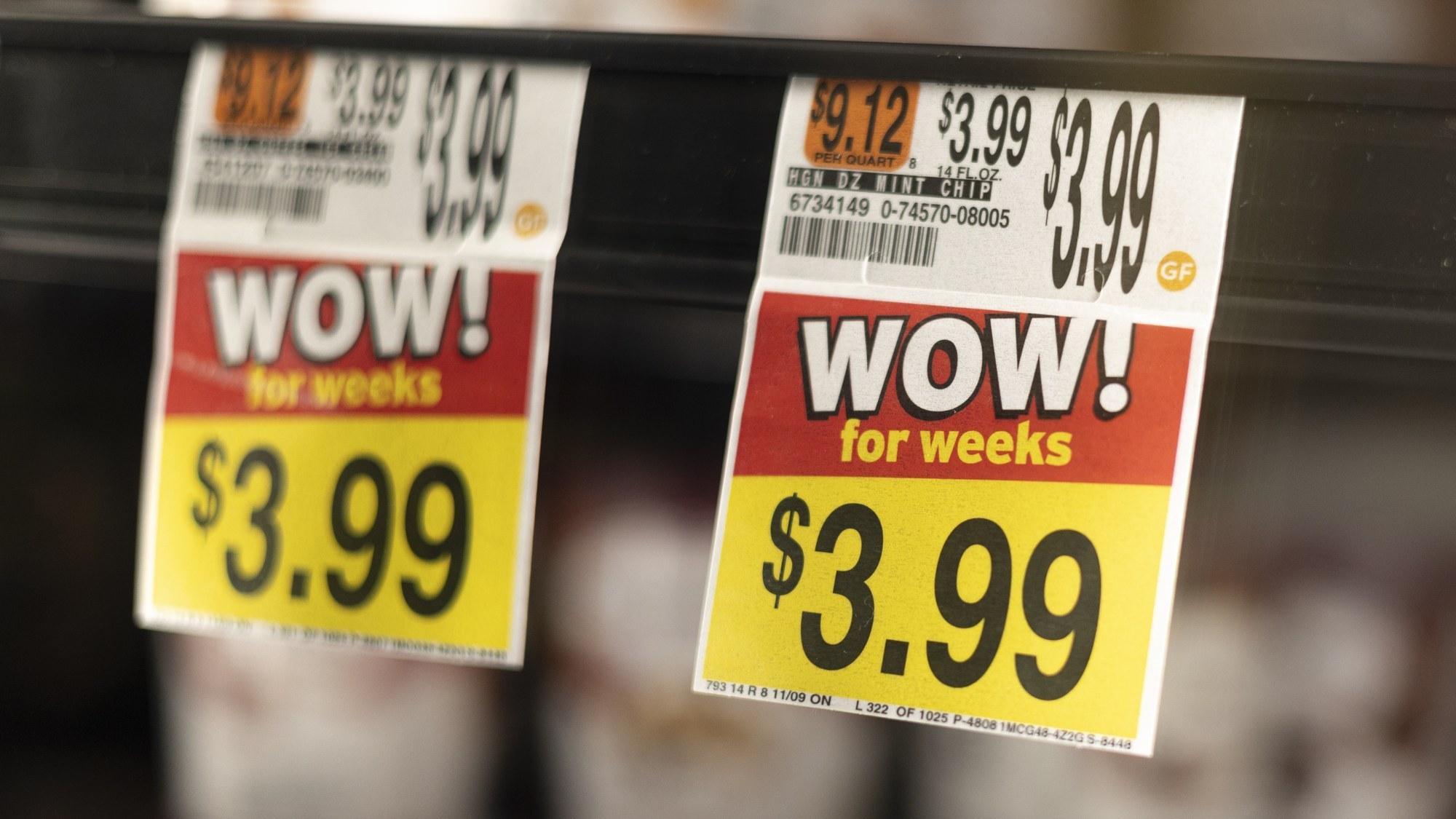
The Bureau of Labor Statistics has been documenting the squeeze at the supermarket for months. The April 2026 Consumer Price Index, released in mid-May, showed the food-at-home category still rising on a year-over-year basis. Eggs, ground beef, and dairy products remained among the sharpest climbers, driven by a combination of avian-flu-related supply constraints, elevated feed costs, and tariff-related pressures on imported ingredients that have rippled through supply chains since early 2025.
“Every trip to the store feels like a gut punch,” said Maria Delgado, a home health aide in Phoenix who spends roughly a third of her take-home pay on groceries for her family of four. “I see the stock market headlines on my phone, and it might as well be news from another planet.”
The U.S. Department of Agriculture’s Economic Research Service reinforces that picture in its Food Price Outlook, which projects food-at-home inflation will stay elevated through mid-2026. Those forecasts draw directly from BLS survey data, giving them a solid statistical backbone, though they are projections, not guarantees.
Worth noting: the CPI is a monthly snapshot, not a weekly one. When shoppers say groceries cost more “this week,” they are describing something real at the register, but the official data confirming or quantifying it arrives with a lag. That delay can make the conversation feel like it is always one step behind lived experience.
Mortgage rates add pressure on housing
The average rate on a 30-year fixed mortgage came in at 7.09% in Freddie Mac’s Primary Mortgage Market Survey for the week ending May 22, 2026, marking several consecutive weeks above the 7% line. That is not a new cycle peak, but it is a persistent wall for first-time buyers and homeowners who locked in sub-4% rates during the pandemic and now feel trapped in place.
Run the numbers on a $400,000 loan: the jump from 6.5% to 7.1% adds roughly $160 a month to the principal-and-interest payment, or close to $2,000 a year. For a young couple stretching to qualify, that margin is the difference between getting approved and getting declined.
“We are in a holding pattern where inflation is too sticky for the Fed to cut and too mild for the bond market to panic,” said Mark Zandi, chief economist at Moody’s Analytics. “That leaves mortgage rates parked in a zone that is painful for buyers but not dramatic enough to force a policy response.”
The link between grocery-aisle inflation and mortgage costs is real, if indirect. When CPI reports land hotter than Wall Street expected, bond investors demand higher yields to protect against purchasing-power erosion. Because mortgage rates track the 10-year Treasury yield closely, that repricing reaches homebuyers within days. Recent CPI prints showing sticky inflation have reinforced expectations that the Federal Reserve will hold its benchmark rate steady longer than many borrowers had hoped, keeping mortgage relief on the back burner.
A record that not everyone can spend
The S&P 500 crossing 7,230 is a genuine milestone, but its rewards land unevenly. The Federal Reserve’s most recent Survey of Consumer Finances (2022 data, the latest available) found that the wealthiest 10% of U.S. households hold roughly 87% of all individually owned equities. For the median family, whose net worth is tied up in home equity and modest savings, a stock-market record does not put cheaper eggs in the cart.
Wage growth tells a similarly split story. Nominal pay has been rising, but the Bureau of Labor Statistics’ real earnings data, which adjusts paychecks for inflation, has been more uneven. In any month where CPI growth outpaces hourly earnings growth, workers effectively absorb a pay cut even as the dollar figure on their stub goes up. That math is part of why a week like this one can feel so contradictory: the stock ticker is celebrating while the receipt tape is not.
May and June data releases that will sharpen the picture
Several reports due in the coming weeks will determine whether these pressures are peaking or still building. The May 2026 CPI, expected in mid-June, will reveal whether grocery and energy inflation from April carried forward or started to cool. The EIA’s weekly gasoline updates will show whether the summer driving season is pushing pump prices toward $4 in high-cost states, as some analysts expect. And Freddie Mac’s Thursday mortgage surveys will signal whether rates are finally stabilizing or still inching up.
For now, the clearest takeaway is that asset prices and living costs are both elevated, and the Americans cheering one group of numbers are often not the same Americans absorbing the other. The S&P 500’s record is real. So is the extra $20 a family spent on gas and groceries this month compared with last year. Both facts sit side by side on the same economic ledger, and neither erases the other.