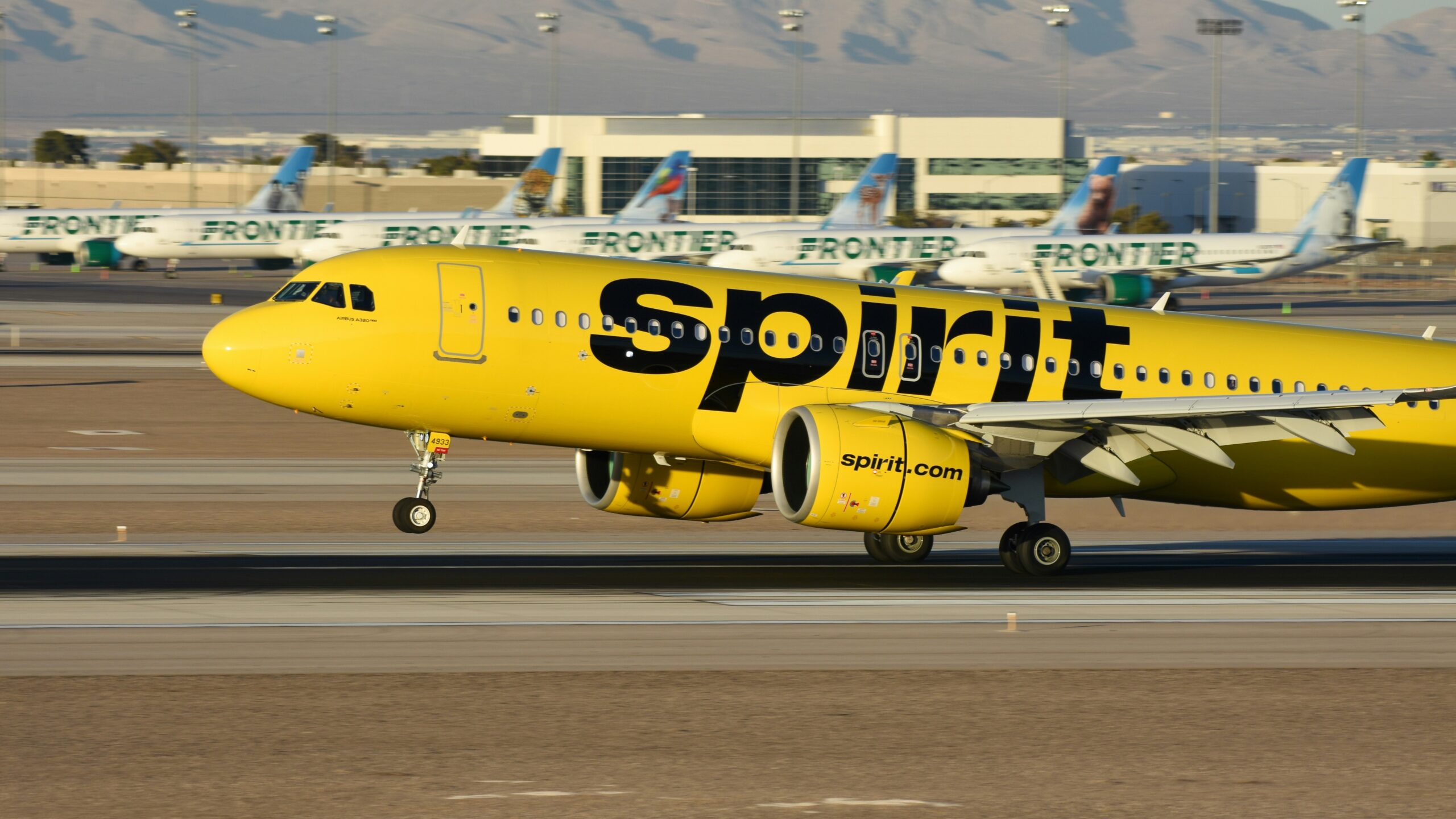
On May 1, 2026, a round-trip flight from Las Vegas to Dallas on Spirit Airlines cost $39. By May 3, Spirit no longer existed, and the cheapest seat on that same route had jumped to $124. That 218% spike, captured through fare checks on Kayak and Google Flights, is the sharpest documented price swing on any single route since Spirit abruptly liquidated. But it is not an outlier. Across the carrier’s former network, average fares have climbed roughly 23%, or about $60 per round trip, while passenger volume on those corridors has dropped 20%, according to Cirium aviation data reported by CBS News.
The people absorbing those increases are overwhelmingly budget travelers, the exact customers Spirit built its business around, and they are getting hit just as summer demand accelerates and remaining airlines face zero competitive pressure to match Spirit’s old prices.
How Spirit’s shutdown unfolded
Spirit Aviation Holdings filed a Form 8-K with the SEC on May 2, 2026, attaching a press release that confirmed an “orderly wind-down effective immediately.” Every scheduled flight was canceled the same day. Customer service lines went dark. The company directed passengers to a restructuring website for refund claims.
According to court records referenced in the SEC filing, Bankruptcy Judge Sean Lane authorized the rapid liquidation rather than a conventional Chapter 11 reorganization that might have kept planes flying while the airline restructured its debt. The shutdown also left Spirit’s remaining workforce without jobs; the restructuring website indicated that affected employees would receive information about WARN Act notifications and severance claims through the bankruptcy process.
“I had a flight booked for May 4 and found out it was canceled through a news alert, not from Spirit,” one displaced passenger told CBS News. “By the time I went to rebook, the same route was almost triple the price.”
In its SEC disclosure, Spirit’s management pointed to rising oil prices as the tipping point, framing fuel costs as unsustainable for a business model built on selling the cheapest seats in the domestic market. That explanation deserves scrutiny: every U.S. carrier faces the same fuel environment. Whether the airline’s demise was driven primarily by fuel, by its debt load and fleet commitments, or by some combination remains an open question the SEC filing does not fully answer.
Where fares spiked and by how much
The Las Vegas-to-Dallas corridor is the most extreme documented case. That $39-to-$124 jump within 48 hours of the shutdown was captured through publicly available metasearch tools and reported by 247 Wall St., which cited Kayak and Google Flights listings. It reflects the real sticker shock a traveler would have faced trying to rebook a canceled Spirit itinerary, though it represents a single-route snapshot rather than a comprehensive audit of every former Spirit market.
The wider picture comes from Cirium, an aviation analytics firm whose data underpins much of the airline industry’s internal benchmarking. Cirium’s analysis, reported by CBS News in early May 2026, found that average fares rose 23% across routes Spirit had previously served. That figure blends high-traffic leisure corridors like Fort Lauderdale to New York and Orlando to Atlanta with smaller markets where other low-cost carriers such as Frontier or Allegiant still compete. The simultaneous 20% drop in passenger volume on those routes suggests that higher prices are already pushing cost-conscious travelers to drive, take buses, or cancel trips entirely.
“We are seeing the predictable result of removing a major low-fare competitor from the market,” airline industry analyst Savanthi Syth of Raymond James told CBS News. “Fares go up, and the passengers who could least afford it are the ones who get priced out.”
A full route-level breakdown has not been published by Cirium or any metasearch platform as of late May 2026, so the scope of triple-digit fare increases beyond Las Vegas-Dallas is unclear. Markets where Frontier, Allegiant, or Southwest maintain significant presence may see smaller jumps or faster price normalization. Routes where Spirit was the dominant or sole low-fare option are most exposed to sustained increases.
Temporary relief for stranded passengers, but nothing for summer bookings
Several airlines offered capped or reduced rebooking fares for passengers holding Spirit tickets at the time of the shutdown. Airlines for America, the industry trade group, coordinated the effort alongside the U.S. Department of Transportation. The caps generally applied to same-day or next-day travel and were framed as a one-time accommodation for people caught mid-trip or holding near-term reservations.
Those measures do nothing for the millions of travelers now shopping for summer flights on routes Spirit once served. No airline executive has publicly committed to holding fares steady on former Spirit corridors, and the DOT has not announced any long-term fare monitoring initiative or regulatory response. For someone booking a June weekend in San Juan or a flight from Fort Lauderdale to LaGuardia, the temporary rebooking caps are irrelevant. The prices on screen today reflect a market with one fewer competitor and no mechanism forcing the remaining carriers to fill that gap at similar price points.
Passengers who purchased Spirit tickets with credit cards may have recourse through chargeback disputes with their card issuers, a faster path to a refund than the bankruptcy claims process. But loyalty program members who accumulated Free Spirit points face a murkier situation; the restructuring website has not clarified whether those balances carry any residual value or are simply wiped out.
What will determine whether higher fares stick
The durability of these price increases depends on several factors still playing out as of late May 2026. The most consequential is whether another carrier moves aggressively to absorb Spirit’s former capacity. Frontier Airlines, which nearly merged with Spirit in 2022 before that deal fell apart, operates a similar ultra-low-cost model and overlaps on many of the same routes. Allegiant and Southwest also serve several Spirit markets, though their cost structures and pricing strategies differ significantly. If any of these airlines add flights and seats on high-demand corridors quickly, fare pressure could ease within weeks. If they hold back and wait to see how demand settles, elevated prices could persist through the summer peak and beyond.
Oil prices add another variable. Spirit’s management cited fuel costs as the reason it could not survive, but the same jet fuel prices affect every carrier’s cost base. If crude stays elevated, airlines absorbing Spirit’s passengers have less incentive to discount aggressively because their own margins are under pressure. A meaningful drop in oil prices, on the other hand, could give competitors room to chase market share with lower fares.
Congressional attention could also play a role. After past airline failures, lawmakers have pushed the DOT to scrutinize fare behavior on affected routes, though those efforts have rarely produced binding action. As of late May 2026, no formal congressional inquiry into post-Spirit pricing has been announced.
A pricing gap no one is racing to fill
Spirit built its reputation on fares that legacy carriers and even other budget airlines rarely matched. That $39 Las Vegas-to-Dallas round trip was not an accident or a loss leader; it was the product of a specific cost structure, a specific fleet strategy, and a willingness to strip the flying experience down to a seat and a seatbelt. Replicating those prices requires an airline willing to operate the same way, and right now, no carrier has signaled that kind of commitment on Spirit’s old routes. For budget travelers heading into the busiest flying season of the year, the math has changed, and it may not change back quickly.