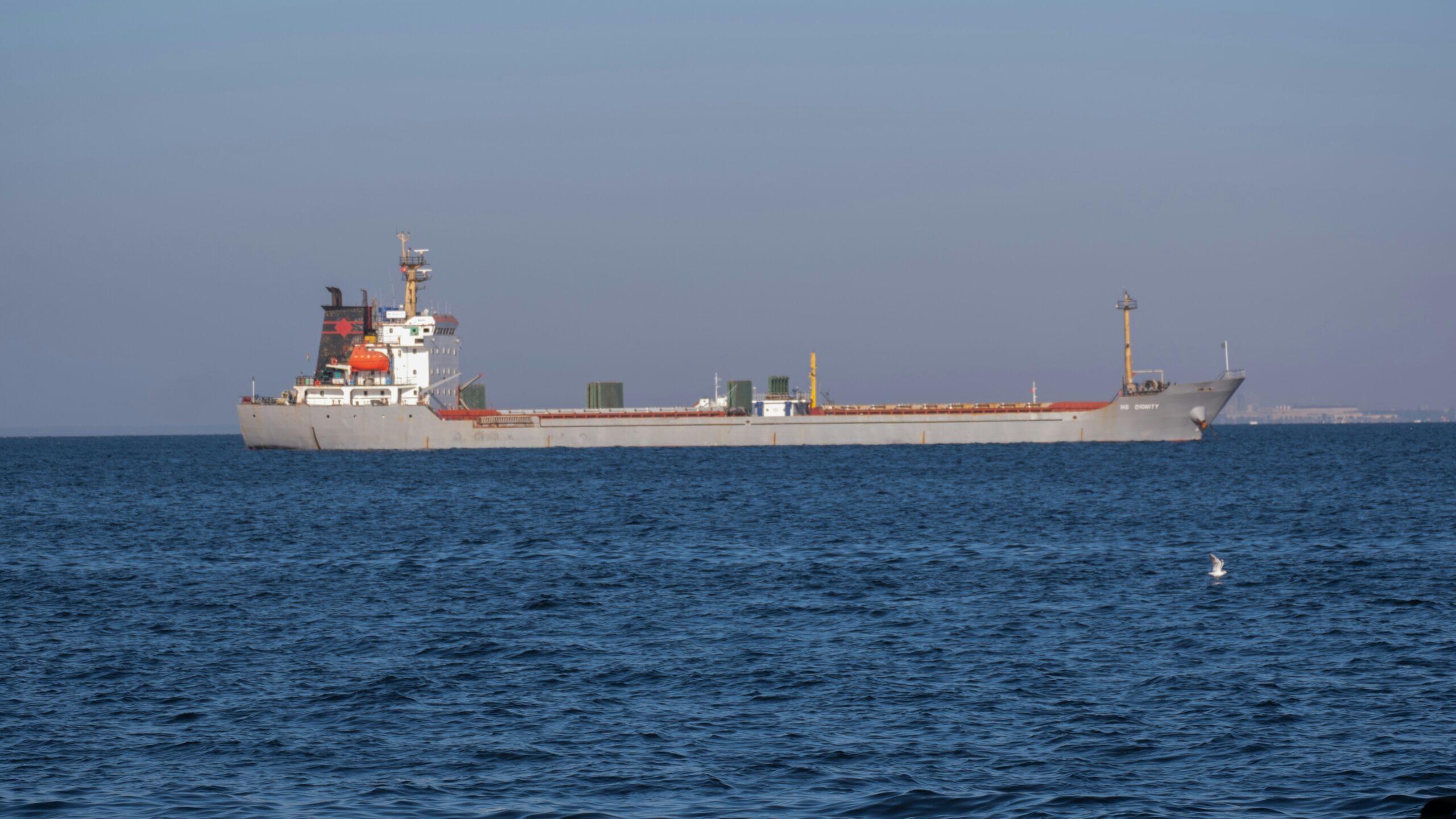
Iran’s judiciary spokesperson Asghar Jahangir declared in late May 2026 that Tehran holds the “legal and judicial right” to seize oil tankers connected to the United States in the Strait of Hormuz, the narrow passage between Iran and Oman that carries roughly one-fifth of the world’s traded oil each day, according to a 2019 U.S. Energy Information Administration analysis based on 2018 data. The proportion may have shifted since that estimate, but the strait remains one of the world’s most critical oil chokepoints.
Speaking to the state-owned Iran Daily, Jahangir directly accused Washington of piracy and framed any future Iranian seizure as a lawful response to years of American enforcement actions targeting Iranian crude shipments. Wire-service reporting attributed to the Associated Press confirmed the remarks and indicated that a vessel seized near the coast of the United Arab Emirates was already transiting toward Iranian-controlled waters as the statement was made. The AP did not name the vessel or provide its flag state, tonnage, or cargo details. A precise AP citation, including dateline, reporter, or article URL, has not been located for this account, and readers should treat the AP attribution with that caveat.
The threat, if acted upon, could send war-risk insurance premiums surging for tankers in the Gulf, push global oil prices higher, and force military planners at the U.S. Fifth Fleet headquarters in Bahrain into a rapid reassessment of escort operations. No second Iranian official has publicly repeated the claim, and no Iranian court filing, statute, or formal judicial opinion has been released to support it. But the declaration landed at a moment of escalating confrontation over oil shipments in the Persian Gulf, and it has drawn immediate attention from shipping companies, insurers, and defense officials monitoring the corridor.
The American enforcement trail
Jahangir’s accusation of piracy did not emerge from thin air. Over the past several years, the United States has built a documented legal and financial apparatus to intercept Iranian oil flows, seize cargoes, and confiscate proceeds tied to sanctioned entities.
A forfeiture case filed in July 2020 in the U.S. District Court for the District of Columbia sought to confiscate an oil tanker and 1.8 million barrels of crude oil that prosecutors said supported Iran and Venezuela, with revenue allegedly flowing to the Islamic Revolutionary Guard Corps. In a separate action that same year, the Justice Department filed civil forfeiture complaints against $1.5 million in funds linked to an Iranian oil-shipping network, invoking the International Emergency Economic Powers Act and terrorism-related statutes. Earlier enforcement actions described by U.S. authorities included what officials called the largest-ever seizure of Iranian fuel, involving multiple tankers interdicted on the high seas.
The U.S. Treasury Department has reinforced those court actions with sanctions targeting IRGC-linked oil operations. Measures announced as part of a broader economic pressure campaign designated shipping companies, front firms, and individual actors accused of helping Tehran move sanctioned crude.
The American side of this confrontation is extensively documented: named vessels, specified cargo volumes, dollar figures, statutory authorities, and federal court dockets. That paper trail is precisely what Tehran now frames as justification for retaliation.
What Iran has actually said, and what it has not
The Iranian side is far thinner on specifics. Jahangir’s remarks were delivered through state media and reported secondhand. The full interview transcript has not been independently released. Without that text, it is unclear whether the judiciary’s claim rests on a domestic Iranian statute, an interpretation of international maritime law, or a broader assertion of sovereignty over the strait.
No primary Iranian court document or legislative text has been made public to explain the legal mechanism Jahangir referenced. The phrase “connected to the United States” is broad enough to cover U.S.-flagged tankers, U.S.-owned vessels sailing under foreign flags, or ships carrying cargo previously subject to American forfeiture orders. Each category carries vastly different legal and military implications.
Seizing a U.S.-flagged vessel would almost certainly provoke a direct military response. Intercepting a foreign-flagged ship carrying previously sanctioned cargo occupies a grayer zone, particularly if the vessel is registered to a country with limited naval capacity to respond. Iran has not disclosed which vessels it intends to target, nor has it released any ship names, International Maritime Organization numbers, or cargo details.
That ambiguity may be the point. By leaving the scope undefined, Tehran preserves maximum flexibility while forcing every tanker operator in the Gulf to recalculate risk.
A pattern of past seizures
Iran has seized foreign tankers before, and those incidents offer a partial guide to how a new confrontation might unfold.
In July 2019, IRGC Navy fast boats seized the British-flagged tanker Stena Impero in the strait, holding it for more than two months. Tehran described the action as a response to British Royal Marines detaining the Iranian tanker Grace 1 near Gibraltar weeks earlier. In April 2023, Iran seized the Marshall Islands-flagged Advantage Sweet, a crude oil tanker, claiming it had collided with an Iranian vessel. U.S. officials called the seizure unjustified. No direct source link for the collision claim or the U.S. response has been included here; the account is based on widely available public reporting from the time of the incident.
Both incidents involved specific disputes and specific ships. What Jahangir appeared to describe in his May 2026 remarks is something broader: a blanket legal doctrine authorizing retaliatory seizures against an entire category of vessels. Whether Tehran intends to institutionalize a systematic program of interceptions or is preserving ambiguity as a deterrent remains an open question.
The legal fault line beneath the strait
Under the United Nations Convention on the Law of the Sea, the Strait of Hormuz is classified as an international strait subject to transit passage rights, meaning vessels of all nations are entitled to continuous and expeditious passage. Iran is a signatory to UNCLOS but has historically asserted that its domestic laws take precedence in its territorial waters within the strait.
That legal tension has never been resolved in an international tribunal. It forms the unstable foundation beneath the current standoff and every previous one. Any Iranian seizure of a transiting vessel would almost certainly be challenged as a violation of transit passage rights, but enforcement of those rights depends on naval power, not courtroom rulings.
Who else is watching
The ripple effects of even a single seizure would extend well beyond the two governments trading accusations. China and India are among the largest buyers of Iranian crude, and tankers serving those trade routes frequently transit the strait. If Iran’s definition of “connected to the United States” sweeps broadly enough to include vessels that have previously carried sanctioned cargo or that are insured by U.S.-linked underwriters, the disruption could touch trade flows far removed from the American market.
War-risk insurance premiums for tankers transiting the strait spiked during previous confrontations, and a new round of Iranian interceptions could push those costs sharply higher. Higher insurance and rerouting costs ultimately feed into global energy prices, which remain sensitive to any disruption in the Hormuz corridor. Specific current oil price levels and shipping rate data have not been included because independently verified figures for early June 2026 were not available at the time of publication.
The U.S. Fifth Fleet maintains a persistent naval presence in the region, and the Pentagon has historically responded to Iranian tanker seizures with increased patrols and, in some cases, direct escort operations for commercial vessels. As of early June 2026, the Defense Department has not publicly commented on Jahangir’s statement. Neither has the State Department.
A statement without a legal framework
The public record as of early June 2026 supports three cautious conclusions. First, the United States has clearly escalated legal and economic pressure on Iranian oil shipments through a combination of federal court forfeitures and Treasury sanctions. Second, Iran is signaling through its judiciary that it views those moves as piracy warranting reciprocal action. Third, the detailed legal foundations of Tehran’s threatened response remain undisclosed, untested, and unverified by any independent body.
Until primary material emerges from Iranian courts or ministries, Jahangir’s assertion of a “legal and judicial right” to seize U.S.-linked tankers should be treated as politically significant but legally opaque. The gap between the statement and any documented legal framework is where the real risk lives: not in a formal policy shift, but in the potential for miscalculation when one side’s rules of engagement remain invisible to the other.
Several sourcing limitations apply to this account. It draws primarily on U.S. Department of Justice and Treasury press releases and wire-service reporting attributed to the AP confirming Jahangir’s remarks; a precise AP citation has not been located. The vessel seized near the UAE coast has not been named in any available reporting, and its flag state, owner, and cargo remain unidentified. No shipping industry representatives, maritime law experts, or Pentagon officials have been quoted. The article contains no original quotes, interviews, or independently obtained documents. The story’s Iranian dimension rests almost entirely on a single official’s statement filtered through state media, and readers should weigh the analysis accordingly.