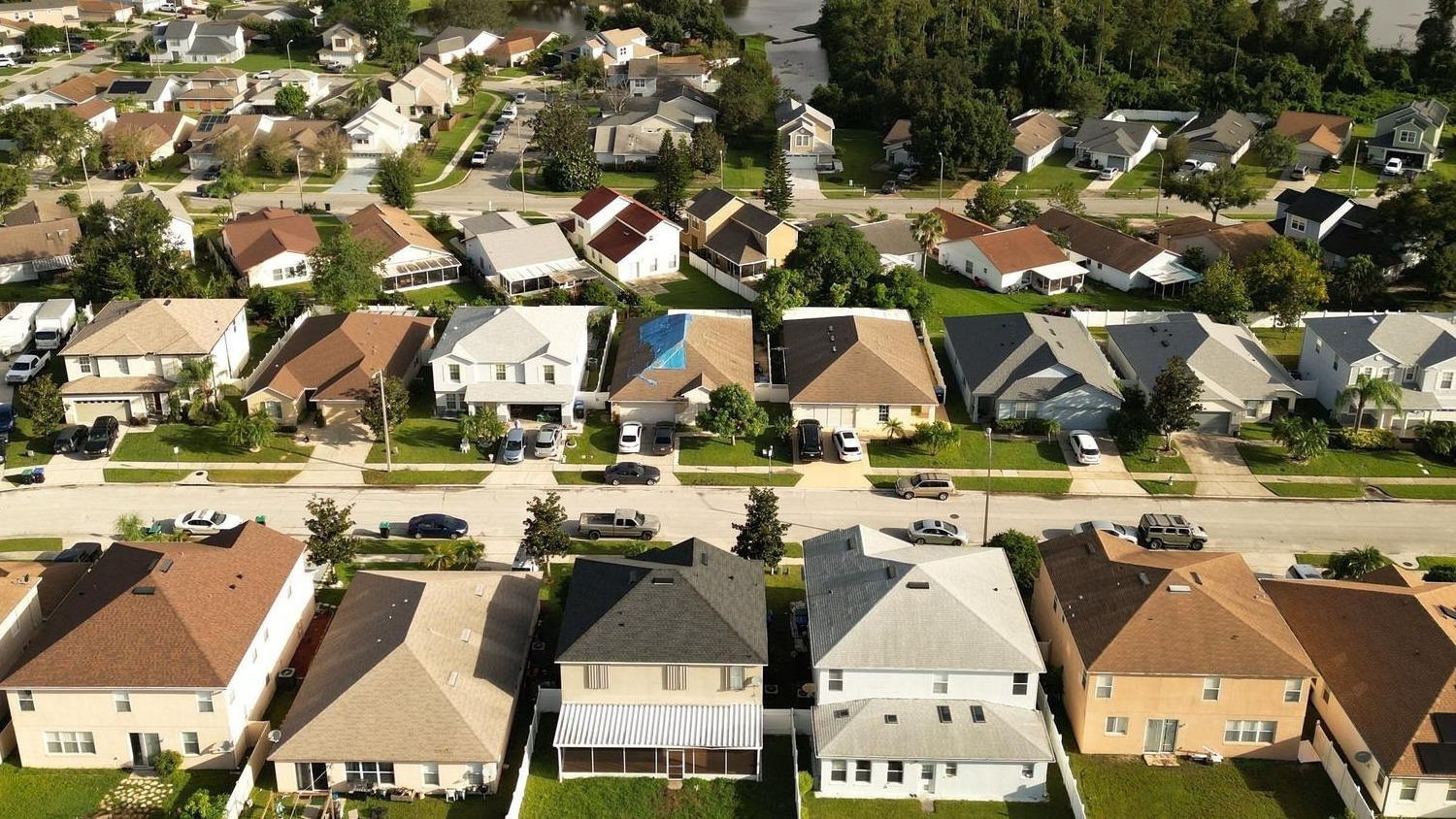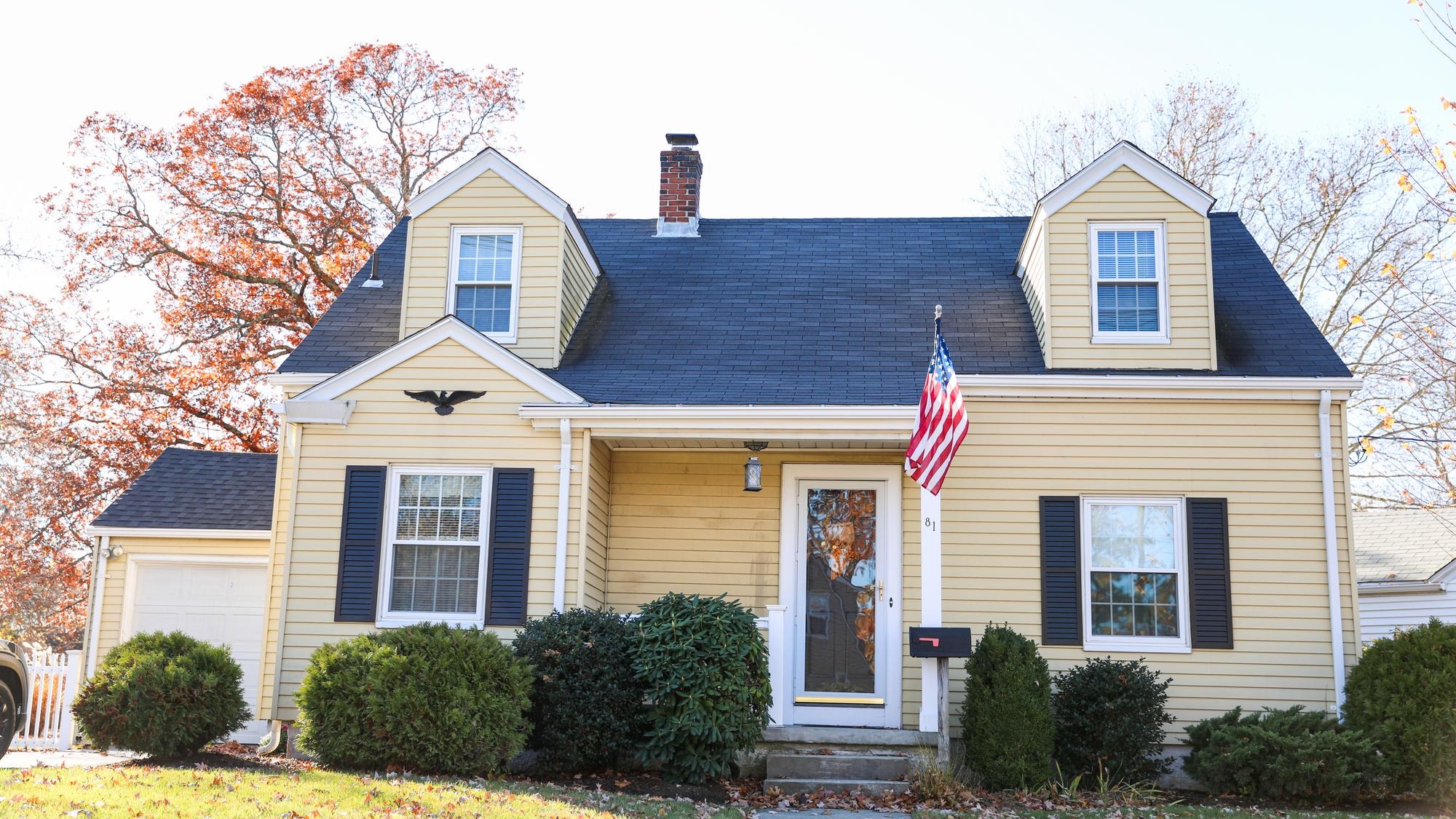
A household earning $80,000 a year, right at the national median, can comfortably afford a monthly mortgage payment of roughly $1,870 under standard lending rules that cap housing costs at 28 percent of gross income. The problem: the actual payment on a median-priced U.S. home now runs closer to $2,960 a month, assuming a 20 percent down payment, current tax and insurance costs, and a 30-year fixed rate in the mid-6-percent range. To close that gap, a buyer would need a household income of approximately $127,000, according to National Association of Realtors affordability data. Before the pandemic, the qualifying threshold sat near $79,000. That $48,000 jump in barely five years has locked roughly half of American households out of homeownership at the national median price.
There is a small but meaningful shift buried in the data, though. After four consecutive years in which affordability deteriorated, the bleeding stopped. The Federal Reserve Bank of Atlanta’s Home Ownership Affordability Monitor shows that 2024 was the first full calendar year since 2020 in which its index did not decline further, and preliminary 2025 readings suggest the plateau has held into early this year. Stabilization is not the same as relief, but after the worst affordability collapse in modern records, it counts for something.
How the gap grew so fast
In late 2019, the math was straightforward. The median existing home sold for roughly $270,000. A 30-year fixed mortgage carried a rate near 3.5 percent. A household earning $79,000 could qualify without stretching. Three forces blew that equation apart in rapid succession.
First, home prices surged. Pandemic-era remote work, rock-bottom interest rates, and a wave of millennial household formation sent the national median sale price above $400,000 by 2022, according to NAR transaction data. Second, the Federal Reserve’s inflation-fighting rate hikes pushed the benchmark 30-year mortgage from below 3 percent to above 7 percent by late 2023. On a $320,000 loan (80 percent of a $400,000 home), that rate swing alone added more than $800 to the monthly payment. Third, existing homeowners refused to sell. Trading a locked-in rate below 4 percent for a new loan above 6 percent made no financial sense, so listings dried up. Existing-home sales fell to roughly 4.06 million units in 2024, their lowest level since 1995, NAR reported, strangling inventory and preventing the price correction that weaker demand would normally trigger.
The result is a market frozen in an uncomfortable position: prices near record highs, mortgage rates well above their pre-pandemic floor, and a qualifying-income bar that keeps climbing even as wage growth has been solid by historical standards.
A decade of underbuilding still haunts the market
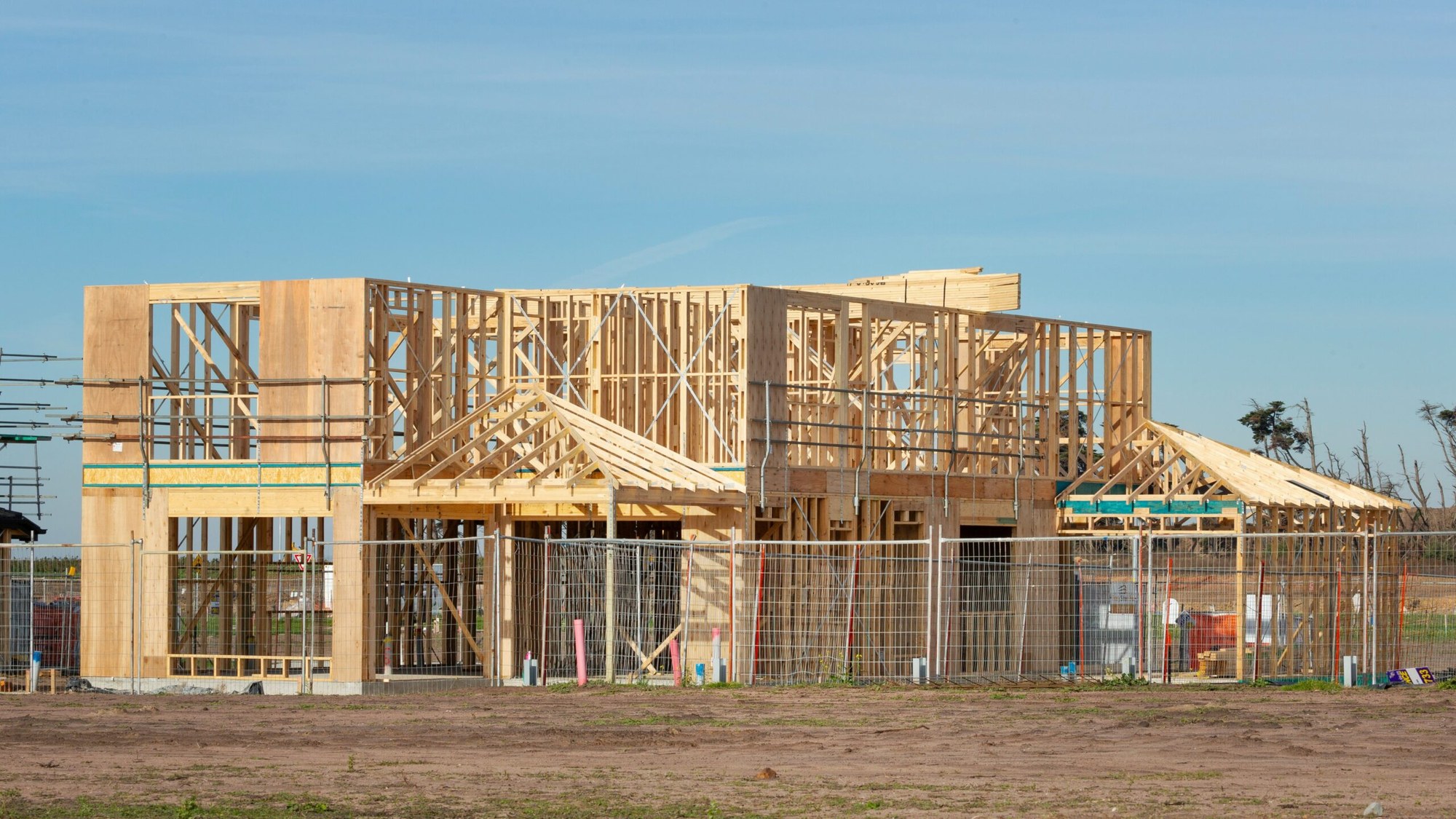
Underneath the rate and price story sits a structural problem that predates the pandemic by years. After the 2008 housing crash, homebuilders pulled back sharply and never fully recovered. Census Bureau building-permit data show that annual housing starts remained below the long-run average for most of the 2010s, creating a cumulative deficit that researchers at Freddie Mac and the National Association of Home Builders have estimated at between 1.5 million and 4 million units, depending on methodology.
New construction has picked up in some fast-growing Sun Belt metros, and multifamily building hit a cycle peak in 2023, which has begun to ease rents in apartment-heavy markets like Austin, Texas, and Jacksonville, Florida. But single-family construction, the segment most relevant to the homeownership gap, has not kept pace with household formation nationally. Elevated lumber and material costs, compounded by tariff uncertainty on Canadian softwood and other imported building supplies, have squeezed builder margins and slowed the pace of new starts. The NAHB/Wells Fargo Housing Market Index, which tracks builder confidence, has remained below its historical average for much of the past two years. Until the supply deficit narrows meaningfully, even modest upticks in buyer demand can translate into sharp price gains, keeping the qualifying-income bar high.
What the plateau does and does not mean
The fact that affordability stopped deteriorating in 2024 matters after four brutal years, but it should not be confused with improvement. Mortgage rates stabilized in the mid-6-percent range rather than continuing to climb, and wages grew faster than home prices in several quarters, slightly compressing the gap. The Atlanta Fed’s index reflects that pause clearly.
Whether the plateau becomes a turning point depends on three variables that remain unresolved as of mid-2026:
- Mortgage rates. If inflation continues to cool and the Federal Reserve eases policy further, rates could drift toward 5.5 percent, meaningfully reducing monthly payments. On a $320,000 loan, the difference between 6.5 percent and 5.5 percent saves a borrower roughly $220 a month. But persistent federal deficits and heavy Treasury issuance could keep long-term rates elevated regardless of what the Fed does with short-term benchmarks.
- Wage growth. Bureau of Labor Statistics data show that nominal wages have been rising at roughly 4 percent annually. If that pace holds while home-price appreciation slows, the income gap will continue to narrow, potentially shaving thousands off the qualifying threshold each year. A recession, however, would reverse wage gains and likely tighten lending standards at the same time.
- Inventory. The lock-in effect keeping existing homeowners in place will weaken gradually as more households move for jobs, family changes, or retirement. Every percentage-point drop in mortgage rates unlocks a new cohort of potential sellers. But the pace of that thaw remains one of the housing market’s biggest open questions.
What buyers and renters are actually facing
For the roughly 50 percent of households priced out at the national level, the practical consequences vary enormously by geography. In metros like San Jose, San Francisco, and New York, the qualifying income for a median home exceeds $200,000, according to NAR metro-level data. In markets like Pittsburgh, Cleveland, and Memphis, the bar is far lower, sometimes below $60,000, though wages in those areas tend to be lower as well.
Consider a dual-income couple in the Denver suburbs earning a combined $105,000, solidly above the national median. In 2019, that income would have qualified them for a median-priced home in the metro area with room to spare. Today, with Denver-area median prices above $550,000 and rates in the mid-6-percent range, the same couple falls tens of thousands of dollars short of the qualifying threshold. Their options have narrowed to waiting, moving to a less expensive market, or competing for the shrinking pool of homes priced well below the metro median. That arithmetic, repeated in different dollar amounts across hundreds of metro areas, is the lived reality behind the national statistics.
Many would-be buyers have adapted by extending their timelines, relocating to cheaper metros, or turning to adjustable-rate mortgages and builder rate-buydown programs that reduce the effective rate for the first few years of a loan. Others have simply stayed renters longer than they planned. The national homeownership rate still sits above 65 percent, buoyed by existing owners aging in place, but that headline figure masks a generational divide: younger households that missed the window of sub-4-percent rates face a fundamentally different calculus than those who locked in before 2022.
Policy responses remain fragmented. Some states have expanded down-payment assistance programs, and a handful of cities have moved to relax zoning restrictions that limit new construction. At the federal level, proposals to subsidize first-time buyers or expand housing tax credits have circulated in Congress but have not produced major legislation. The supply deficit that underpins the crisis is, by nature, slow to fix. Even an aggressive building boom would take years to close a gap measured in millions of units.
What it takes to break the stalemate
The housing market has moved past the acute crisis phase of 2021 through 2023, when affordability collapsed at a pace not seen in modern records. What replaced it is not relief but a grinding stalemate: prices too high for half the country, rates too elevated to unlock inventory, and construction too slow to close the gap from below.
The next major data points to watch are the Census Bureau’s updated income estimates later this year (the current $80,000 median figure is drawn from 2023 survey data, the most recent vintage available) and the trajectory of the 10-year Treasury yield, which heavily influences mortgage pricing. If wages keep outpacing home prices and rates edge lower, the $30,000 gap between what families earn and what lenders demand will continue to shrink. If any of those trends stall, the plateau could harden into a new normal, one in which six-figure household income is simply the price of entry for owning a home in the United States.