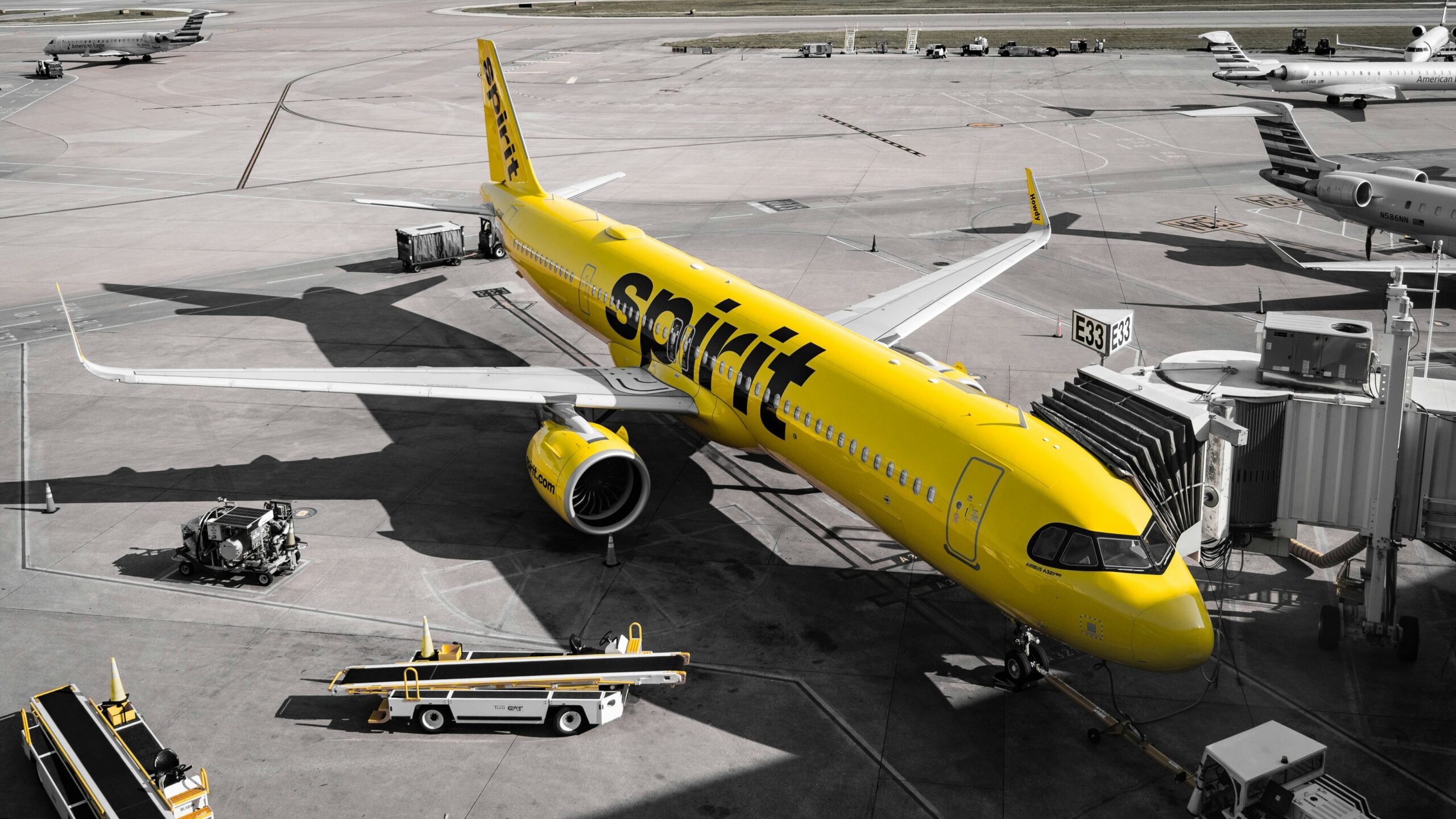
Spirit Airlines pulled every flight from its schedule at 3 a.m. on Saturday, June 14, 2026, told passengers not to come to the airport, and began shutting down permanently. After 34 years of ultra-low-cost flying, the carrier’s collapse has eliminated roughly 17,000 jobs and left a potentially enormous number of travelers holding tickets that may never be honored.
It is the largest U.S. airline failure by workforce size since the string of carrier shutdowns that followed the September 11 attacks.
In a statement released early Saturday, Spirit Aviation Holdings said it had begun “an orderly wind-down of operations effective immediately.” The company pointed to two forces it could not survive: a failure to close on new funding and a sharp rise in oil prices that overwhelmed its bare-bones fare model.
“All flights are canceled,” the company said. Spirit urged passengers to stay home and directed them to a claims process for refund requests, though it offered no timeline and no guarantees about how much money customers would recover.
From 30 million passengers a year to zero
Spirit’s unraveling stretched across more than two years. The steepest drop began in January 2024, when a federal judge blocked the airline’s proposed $3.8 billion merger with JetBlue Airways, calling the deal anticompetitive. That merger had been Spirit’s clearest lifeline. Without it, the carrier bled cash while legacy airlines copied its playbook of unbundled pricing and basic-economy fares, eroding the cost advantage that had defined Spirit’s brand.
By November 2024, Spirit filed for Chapter 11 bankruptcy protection, disclosing billions in debt and a fleet of Airbus narrowbodies burdened by costly Pratt & Whitney engine overhauls that had grounded planes across the industry. Over the next 18 months, the airline cycled through restructuring plans: trimming routes, returning leased jets, renegotiating labor contracts, and courting new investors. At several points, executives told the bankruptcy court they believed a leaner Spirit could emerge and resume flying.
Those hopes rested on a rescue package of roughly $500 million, a figure first reported by the Associated Press based on people familiar with the negotiations. According to that reporting, last-ditch talks among Spirit’s leadership, prospective investors, and federal officials broke down in the final hours before Saturday’s shutdown. No public term sheet, government filing, or court document has surfaced to confirm the exact structure of the proposed deal or the specific sticking points that killed it.
17,000 workers blindsided
Spirit’s bankruptcy counsel, Marshall Huebner, told the court that approximately 17,000 employees would lose their jobs, a figure consistent with the airline’s known payroll. The cuts span pilots, flight attendants, gate agents, mechanics, ramp workers, and corporate staff at bases in Fort Lauderdale, Detroit, Las Vegas, Atlantic City, and other cities.
Many workers said they received almost no warning. In interviews with local television stations in South Florida and Detroit, several employees described learning about the shutdown from news alerts or group text messages rather than from management. Under the federal WARN Act, employers with 100 or more workers are generally required to provide 60 days’ written notice before a mass layoff, though bankruptcy proceedings can create exceptions. Whether Spirit satisfied that requirement, or will face legal challenges from employees who say it did not, is an open question.
The Air Line Pilots Association and the Association of Flight Attendants, which represent crews at other carriers, have called on Congress and the Department of Transportation to ensure Spirit’s workers receive severance protections and fast-tracked access to unemployment benefits. Neither union represents Spirit employees directly, but both said they are working to connect displaced workers with hiring carriers.
What passengers should do right now
If you hold a Spirit Airlines ticket for a future flight, the airline says you can submit a refund request through its claims portal. But consumer advocates and federal regulators warn that recovering money from a bankrupt airline is neither simple nor fast.
The U.S. Department of Transportation has issued a consumer advisory confirming that Spirit is no longer operating. The department’s standing guidance on airline bankruptcies and service cessations lays out the options passengers face:
- Credit card chargebacks are likely your fastest path to a refund. If you bought your ticket with a credit card, contact your card issuer immediately to dispute the charge. Under the Fair Credit Billing Act and card-network rules, consumers have chargeback rights for services not rendered. This route is almost always faster than waiting on a bankrupt carrier’s claims process.
- Debit card and cash purchases are far harder to recover. Passengers who paid with a debit card or cash will likely need to file a claim as an unsecured creditor in Spirit’s bankruptcy case. In past airline bankruptcies, unsecured creditors have recovered only pennies on the dollar, if anything at all.
- Travel insurance may cover you, but read the fine print. Check whether your policy explicitly covers carrier bankruptcy or cessation of operations. Many basic plans exclude it; some comprehensive policies do not.
- Do not expect other airlines to honor Spirit tickets. No carrier has announced any agreement to accommodate Spirit passengers on existing bookings. If you still need to travel, you will have to buy a new ticket on another airline.
- Free Spirit loyalty miles are almost certainly worthless. Spirit has not announced any plan to transfer or honor accrued miles. In previous airline liquidations, loyalty program balances have been treated as unsecured claims with little to no recovery.
DOT has reminded passengers that refund obligations do not vanish in bankruptcy, but the agency also acknowledges that consumers may end up competing with aircraft lessors, fuel suppliers, and other creditors for a shrinking pool of assets.
A scramble for Spirit’s gates, slots, and planes
Spirit operated a fleet of Airbus A320-family jets that once numbered more than 200, though the airline had returned dozens of leased aircraft during bankruptcy. The remaining planes, along with gate assignments and takeoff-and-landing slots at congested airports, will be sold or reassigned as part of the wind-down proceedings.
Competitors are already positioning themselves. Frontier Airlines, another ultra-low-cost carrier that pursued its own merger with Spirit before the JetBlue deal, is widely seen as a likely bidder for routes and crew. Larger carriers, including Southwest, JetBlue, and the three major legacy airlines, may target airport assets at Spirit’s Fort Lauderdale hub and at slot-controlled airports in New York and the Northeast.
For travelers in cities where Spirit was a significant presence, the disappearance of the airline could translate directly into fewer options and higher fares. Research from the DOT and academic economists has consistently found that ultra-low-cost carriers push down ticket prices across every market they serve, a phenomenon the industry calls the “Spirit effect.” With Spirit gone, that downward pressure vanishes on dozens of domestic and international routes.
How a yellow plane became a cautionary tale
Spirit’s bright yellow livery and its reputation for rock-bottom fares with fees for nearly everything, from carry-on bags to bottled water, made it one of the most polarizing and most recognized brands in American aviation. At its peak, the airline carried roughly 30 million passengers a year and served more than 90 destinations across the United States, Latin America, and the Caribbean.
Its shutdown raises uncomfortable questions for the rest of the industry. If the ultra-low-cost model cannot survive volatile fuel prices, rising labor costs, and legacy carriers willing to match on price in economy cabins, the competitive landscape that kept fares in check for millions of budget travelers may not survive either.
The legal and financial aftermath will grind through bankruptcy court for months or years. For the 17,000 employees who clocked in for their final shifts before dawn on Saturday, and for the passengers now scrambling to rebook trips they thought were settled, the wreckage is already real.