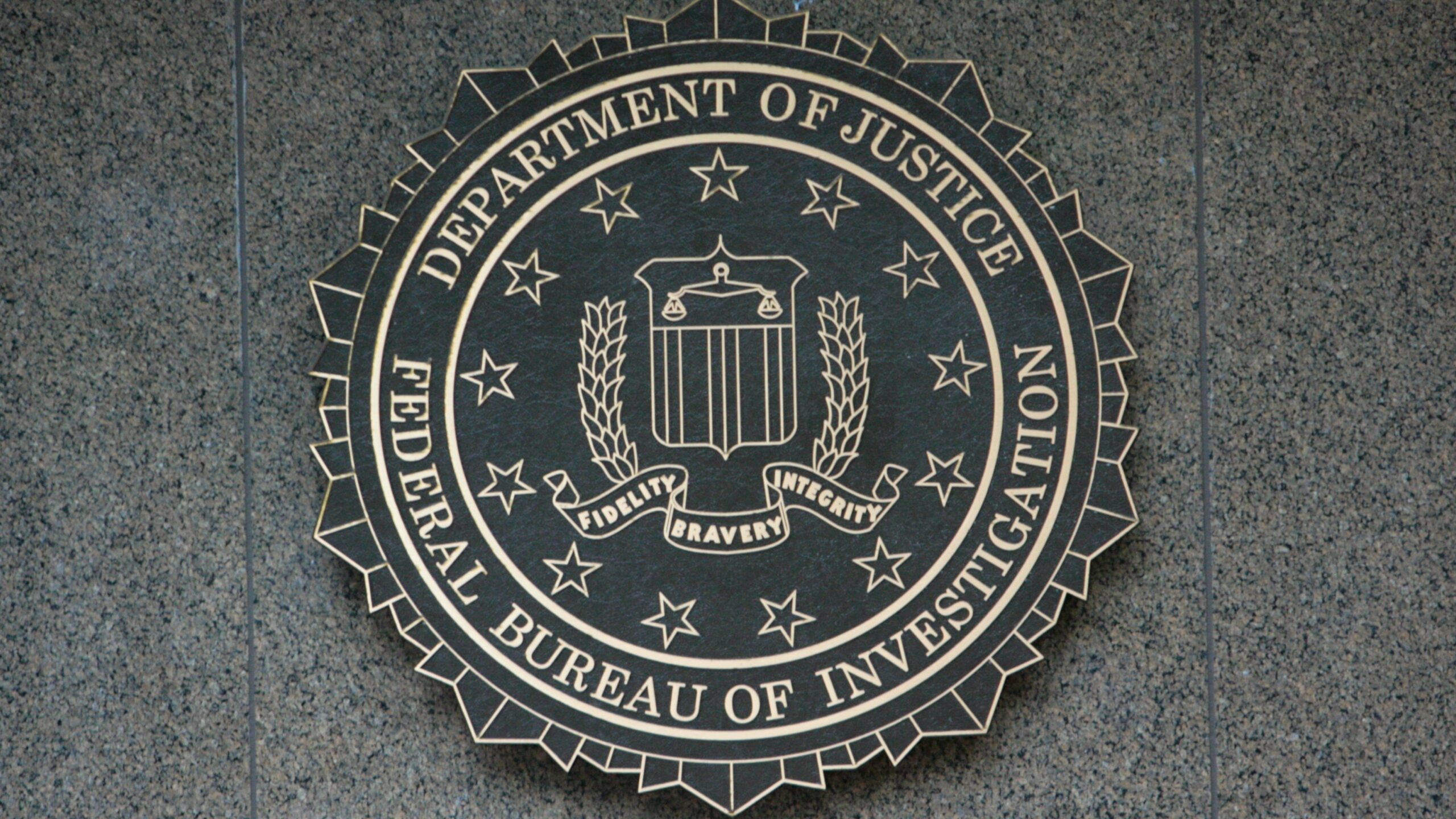
The Justice Department is moving to drop all charges against Matthew Goettsche, the man accused of orchestrating the BitClub Network, a cryptocurrency fraud scheme that took in at least $722 million from investors. Goettsche was arrested alongside two other men in what federal prosecutors once called a “modern, high-tech Ponzi scheme.” The proposed dismissal arrives years after two co-defendants pleaded guilty and admitted to specific roles in the fraud, raising sharp questions about why the government is walking away from the central figure in one of the largest crypto prosecutions ever brought.
Why prosecutors are retreating from the BitClub case
The criminal case, filed as 19-CR-877-CCC in the District of New Jersey, originally charged Goettsche with conspiracy to commit wire fraud and conspiracy to offer and sell unregistered securities. Prosecutors built their public narrative around the idea that BitClub Network marketed itself as a bitcoin mining pool while secretly manipulating the returns displayed to investors. The scheme, according to the original DOJ announcement, extracted at least $722 million worth of bitcoin from victims.
Two co-defendants later entered guilty pleas. Silviu Catalin Balaci, the network’s programmer, admitted he altered displayed earnings at Goettsche’s direction. A Nevada-based associate separately pleaded guilty to money laundering and tax offenses, acknowledging transfers exceeding $50 million and more than $60 million in unreported income tied to the operation. Those admissions appeared to strengthen the government’s hand against Goettsche, not weaken it.
Yet the move to dismiss suggests the opposite conclusion inside the Justice Department. One plausible explanation centers on the narrow scope of the co-defendants’ plea allocutions. When Balaci and the Nevada associate entered their pleas, each admitted to his own conduct. Neither allocution necessarily locked in the full range of testimony prosecutors would need to prove Goettsche’s personal knowledge and direction of the fraud at trial. If the government depended on cooperative testimony that the plea agreements did not fully secure, or if witnesses became unavailable or unreliable, the evidentiary foundation against Goettsche could have eroded without any new evidence affirmatively clearing him.
Guilty pleas, manipulated data, and the $722 million gap
The factual record compiled across multiple DOJ releases paints a detailed picture of the alleged fraud. The original arrest affidavit quoted one defendant describing the operation as “building this whole model on the backs of idiots.” Prosecutors said the three men promoted BitClub Network as a way for investors to pool resources and share profits from bitcoin mining, while in reality the displayed earnings were fabricated.
Balaci’s plea confirmed a specific mechanism of deception: he programmed the system to show inflated mining returns, and he did so at Goettsche’s request. The Nevada associate’s plea added a financial layer, describing how entities were created to conceal Goettsche’s association and income, and detailing allegations of more than $20 million in unpaid taxes on that hidden income.
Those admissions established that fraud occurred and that Goettsche was, at minimum, closely linked to the money flows and the core misrepresentations. What they did not do, at least on the public record, was resolve every element prosecutors would have to prove beyond a reasonable doubt: that Goettsche personally intended to defraud investors, that he knowingly directed the manipulation of returns, and that jurors could reliably connect specific misstatements to him rather than to subordinates acting on their own initiative.
The $722 million figure underscores the stakes. That number reflects the total value of bitcoin allegedly raised from investors, not a precise measure of losses or of Goettsche’s personal enrichment. To secure a conviction on the top wire fraud conspiracy charge, prosecutors would need to tie a meaningful portion of that sum to conduct they could convincingly attribute to him. If internal review revealed gaps in tracing funds, inconsistencies in witness recollections, or technical issues with blockchain analysis, the headline amount might have become more of a liability than an asset in front of a jury.
Strategic retreat or quiet rebuke?
For the Justice Department, dismissing an indictment of this profile is not a routine housekeeping step. It is a public acknowledgment that a case once touted as a landmark crypto prosecution may not withstand the rigors of trial. That retreat arrives at a moment when regulators, markets, and media outlets such as global financial newsrooms are scrutinizing digital-asset enforcement as a proxy for how seriously governments police the sector.
Prosecutors are not required to explain their reasoning in detail, and the motion to dismiss is likely to frame the decision in neutral terms, citing the interests of justice rather than evidentiary weakness. But the timing – after guilty pleas by two insiders and years of pretrial litigation – suggests an internal reassessment of risk. A loss at trial could have created a precedent defense lawyers would wield in future crypto fraud cases, while an early dismissal allows the department to preserve its broader narrative that BitClub was a scam, even if its alleged architect walks away.
For investors who sent bitcoin to BitClub Network, the legal pivot does little to resolve practical questions about restitution. Without a conviction against Goettsche, recovery efforts may rely more heavily on civil actions, asset forfeiture tied to the co-defendants, and whatever traceable funds remain. The case also illustrates a recurring challenge in digital-asset prosecutions: complex technical schemes often hinge on a small set of insiders whose testimony is essential and whose credibility can be fragile.
As crypto markets continue to evolve, enforcement agencies, defense lawyers, and institutional players that rely on tools like professional data platforms will be parsing the BitClub outcome for lessons. The decision to drop charges against Goettsche does not erase the record of manipulated earnings, hidden entities, or unpaid taxes documented in the plea papers. It does, however, expose the limits of even the most aggressive fraud theories when the government cannot guarantee that its key witnesses, and its technical proofs, will hold up before a jury.
Free for readers: The free Retirement Shield newsletter sends plain-English help keeping more of your money in retirement — the scams to dodge, the benefits you’re owed, and what’s changing with Social Security and Medicare, a couple times a week. Get the free newsletter.