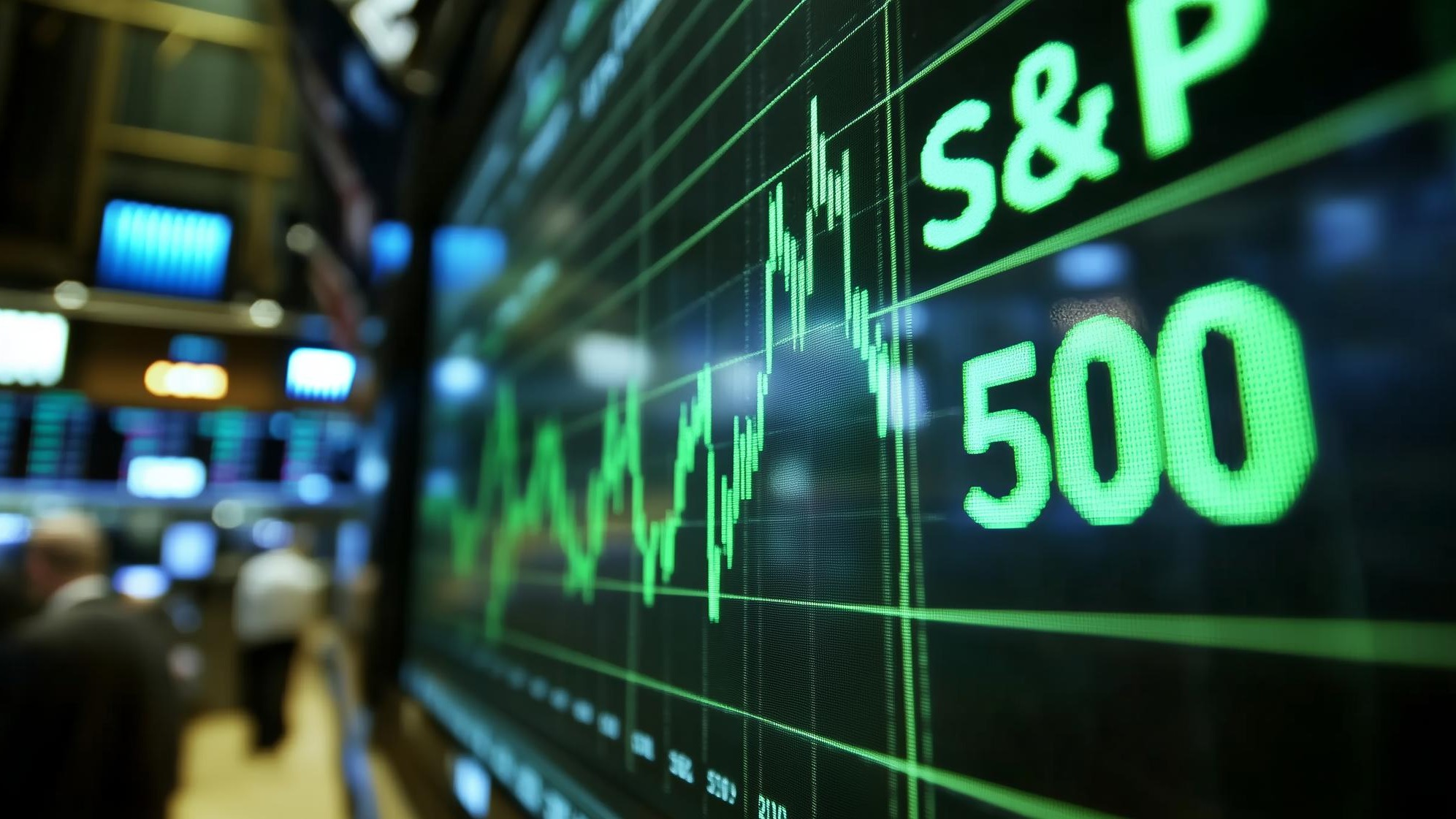
At 4 p.m. Eastern on Thursday, May 14, the S&P 500 settled at 7,501.24, slipping past the 7,500 threshold for the first time in the index’s nearly seven-decade history. The close was confirmed by the Federal Reserve Bank of St. Louis FRED database, which typically publishes daily closing values with a one-day lag sourced from S&P Dow Jones Indices LLC, and independently reported by the Associated Press in its end-of-day market recap. A review of the full FRED series shows no prior session produced a close above 7,500.
The milestone arrives with an asterisk that has Wall Street strategists paying close attention: a tiny cluster of mega-cap stocks has been doing most of the work.
A narrow rally pushes the index to new heights
The index barely cleared the line, finishing just 1.24 points above the round number. That razor-thin margin is a reminder of how much psychological weight traders assign to big, clean figures. Stop-loss orders, options strikes, and algorithmic triggers tend to cluster around these levels, and the media attention they generate can become self-reinforcing, even though nothing about the index’s mechanics actually changes when a new milestone falls.
From a longer view, the S&P 500 has now roughly doubled from its October 2022 bear-market closing low near 3,491, a gain of approximately 115% in about three and a half years. That pace ranks among the strongest recoveries in modern market history.
Five names, more than half the gains
Beneath the headline number sits a more revealing story. According to estimates published by FactSet senior earnings analyst John Butters in a May 2026 Earnings Insight report, roughly five stocks have accounted for more than half of the S&P 500’s year-to-date price gains. The note names the five contributors as Nvidia, Microsoft, Apple, Alphabet, and Amazon, the same cohort of mega-cap technology and artificial intelligence leaders that dominated index returns in 2023, 2024, and 2025. Goldman Sachs chief U.S. equity strategist David Kostin has flagged a similar concentration pattern in his own client research.
A fully transparent, security-level attribution table has not been released in the current reporting cycle, so the “more than half” figure should be understood as a well-sourced estimate rather than an audited statistic. No specific combined index-weight percentage for the five stocks has been published in the same note. But the directional picture is hard to dispute. Those five companies alone represent a combined weight in the index that exceeds most entire GICS sectors. When they rally, the index moves. When they stall, the headline number can mask weakness across hundreds of smaller components.
One quick way to see the gap: compare the cap-weighted S&P 500 with its equal-weight counterpart, the S&P 500 Equal Weight Index. In periods of narrow leadership, the cap-weighted version tends to outpace the equal-weight version by a wide margin, because the largest stocks exert an outsized pull on the former but carry no extra influence in the latter. That divergence has been visible for much of 2026.
Why concentration matters for investors
Market breadth, meaning the degree to which gains are spread across many stocks rather than concentrated in a few, has been a persistent concern since the “Magnificent Seven” trade took hold in 2023. Narrow leadership is not inherently bearish. Concentrated rallies can last for years when the companies at the top are delivering genuine earnings growth, and the mega-caps have largely done that, powered by cloud computing revenue, AI infrastructure spending, and resilient consumer demand for digital services.
The risk surfaces when the music slows. A regulatory shift, an earnings miss, or a change in interest-rate expectations hitting one or two of those top contributors can inflict swift, disproportionate damage at the index level. The remaining 495 stocks may not have enough collective momentum to offset a stumble at the top, precisely because they have contributed so little to the rally so far.
For individual investors, the practical takeaway is straightforward: owning an S&P 500 index fund today means holding a portfolio that is far more concentrated in a few technology giants than it was a decade ago. That is not a reason to sell, but it is a reason to understand what you actually own and whether your broader allocation accounts for the tilt.
Whether 7,500 holds depends on earnings and the Fed
Round-number milestones tend to generate a burst of attention and then fade from the conversation within days. What will determine whether 7,500 holds is the same set of forces that pushed the index there: corporate earnings trajectories, Federal Reserve policy signals, and the pace of capital spending on AI infrastructure.
As Lori Calvasina, head of U.S. equity strategy at RBC Capital Markets, noted in a client briefing published during the week of May 12, 2026, “The index can keep grinding higher, but it needs participation from more than just the top five names to build a durable base.”
Thursday’s close is worth marking. But the foundation of this rally remains unusually narrow, and the durability of the next leg will depend on whether the rest of the index starts pulling its weight or whether a few trillion-dollar companies continue to carry the load alone.