Maria works split shifts at two small restaurants in Phoenix. She has no 401(k), no employer match, and no pension. Neither does the freelance graphic designer in Atlanta billing clients through three gig platforms, nor the home health aide in rural Ohio employed by a five-person agency. Bureau of Labor Statistics data from March 2023 puts the scope of the problem in stark terms: roughly 30 percent of private-sector workers had no access to any employer-sponsored retirement plan. Factor in gig workers, the self-employed, and those who technically have access but whose employers contribute nothing, and federal estimates place the total number of workers without meaningful retirement coverage at approximately 56 million.
Starting January 1, 2027, a new federal website called TrumpIRA.gov is set to offer those workers a path forward. A presidential directive issued in April 2026 orders the Treasury Department to build and launch the site as a comparison platform where eligible workers can shop for low-cost individual retirement accounts, filtered by fees, investment options, and quality ratings. The launch is timed to coincide with the start of the Saver’s Match, a new federal benefit created by Congress that will deposit up to $1,000 a year in government matching funds directly into a qualifying IRA or retirement account.
How the Saver’s Match replaces a broken tax credit
For years, the federal government offered lower-income workers a tax break called the Saver’s Credit for contributing to a retirement account. The problem was structural: the credit only reduced a filer’s tax bill. A worker who owed little or no federal income tax, exactly the person who needed the most help, got little or nothing from it.
Section 103 of the SECURE 2.0 Act, signed into law in December 2022, scrapped that approach. The replacement, the Saver’s Match, sends real dollars straight into a worker’s retirement account rather than trimming a tax return most low-income filers barely notice.
The formula is straightforward: the federal government matches 50 percent of up to $2,000 in eligible retirement contributions per person, for a maximum government deposit of $1,000 per year. IRS guidance published in September 2024 confirms the match applies to taxable years beginning after December 31, 2026, meaning contributions made during the 2027 calendar year are the first to qualify.
Not everyone is eligible. Under the statute, the match phases out based on adjusted gross income. The law sets baseline AGI thresholds that will be adjusted for inflation; as written, single filers above roughly $35,500 and joint filers above roughly $71,000 begin to see reduced matches, with the benefit disappearing entirely at higher income levels. (The IRS has not yet published final inflation-adjusted figures for the 2027 tax year.) Workers under 18, full-time students, and those claimed as dependents on someone else’s return are excluded. The design is intentional: concentrate the benefit on the lower- and moderate-income workers least likely to have any retirement savings at all.
What TrumpIRA.gov is designed to do
The presidential directive describes TrumpIRA.gov as an information and comparison hub, not a brokerage. Workers would visit the site, see a standardized display of IRA products from participating financial institutions, and then open an account directly with the provider they choose. Treasury is responsible for setting the criteria that determine which IRAs appear on the platform. The directive specifies that listed products must meet standards for low fees, diversified investment options, and basic consumer protections.
That curation matters because the IRA market is notoriously difficult to navigate alone. Unlike a 401(k), where an employer selects a menu of funds and negotiates fees on workers’ behalf, an individual shopping for an IRA faces thousands of options with wildly different cost structures. A worker who unknowingly picks a high-fee account could lose tens of thousands of dollars in returns over a career. TrumpIRA.gov aims to function as a filter: a vetted shortlist that steers first-time savers away from products that would quietly erode their balances.
The site also solves a chicken-and-egg problem tied to the Saver’s Match. Workers who do not already have a retirement account cannot receive the match. TrumpIRA.gov is meant to lower the barrier to opening one, particularly for people who have never interacted with a brokerage or financial advisor and would not know where to start.
The coverage gap behind the numbers
The same BLS compensation survey reveals how deep the divide runs. While 70 percent of private-industry workers had access to a retirement plan as of March 2023, only 53 percent actually participated. Among part-time workers, access dropped to 43 percent and participation fell to just 22 percent. Workers in the lowest wage quartile and those at firms with fewer than 50 employees fared worst on both measures.
A Congressional Research Service analysis tracking more than a decade of compensation survey data found that these gaps have barely budged. Access and participation rates for lower-wage, part-time, and small-firm workers have remained stubbornly flat even as overall plan availability inched upward. The takeaway is blunt: voluntary, employer-driven coverage alone has not reached the workers most at risk of retiring with nothing.
Several states have tried to fill the void on their own. Programs like CalSavers in California, OregonSaves, and Illinois Secure Choice automatically enroll workers at companies that do not offer retirement plans into state-facilitated Roth IRAs. These programs have collectively enrolled millions of workers since launching. TrumpIRA.gov differs in one critical respect: it is not an auto-enrollment system. Workers must visit the site and take action themselves. The Saver’s Match provides a financial incentive that state programs do not offer, but the opt-in design means participation will depend heavily on whether people know the program exists.
Five major questions Treasury has not answered
The directive gives Treasury less than nine months to build and launch the site. As of June 2026, several critical details remain unresolved.
Provider vetting. The order says listed IRAs must be “high-quality” and “low-cost,” but Treasury has not published fee thresholds, scoring criteria, or an application process for providers. Without those specifics, no one knows whether the platform will feature a tight list of index-fund-heavy options or a broader marketplace with dozens of providers competing for attention.
Match delivery mechanics. IRS guidance confirms how the match is calculated but does not describe how the money actually reaches a worker’s account. Will it be deposited automatically after a tax return is processed? Will workers need to file a separate claim through TrumpIRA.gov? Will financial institutions handle the transfer? The answers will determine whether the match feels seamless or becomes another bureaucratic hurdle that discourages the very people it targets.
Identity verification and eligibility checks. The directive instructs Treasury to coordinate with other agencies, but no published guidance explains how the site will verify a worker’s income, employment status, or match eligibility in real time. Integration with IRS systems and Social Security databases is the logical path, but building those connections securely and on a nine-month timeline is a significant technical challenge.
Coordination with state auto-IRA programs. Workers already enrolled in CalSavers, OregonSaves, or similar state programs will want to know whether their existing state-facilitated IRA qualifies for the Saver’s Match, or whether they need to open a separate account through TrumpIRA.gov. The directive does not address this, leaving a gap that could confuse the exact population the program is trying to reach.
Outreach and awareness. Building the site is one challenge. Getting tens of millions of workers who have never saved for retirement to find it, understand the match, and follow through on opening an account is a far larger one. The directive does not outline a marketing or outreach strategy, and the administration has not announced partnerships with employers, community organizations, or tax preparers who could spread the word at the ground level.
The political dimension no one is ignoring
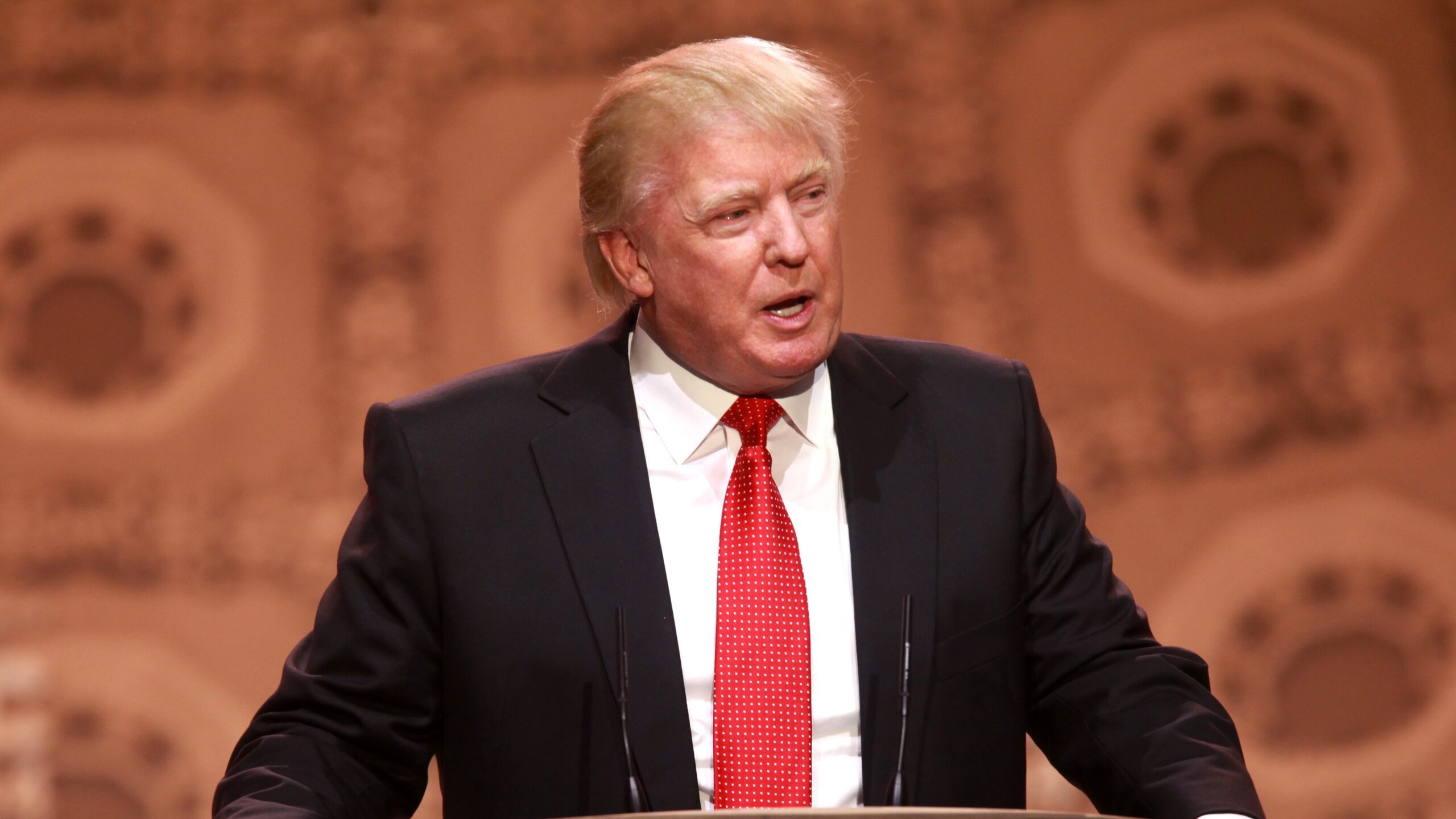
The decision to brand a federal retirement portal with a sitting president’s name is unusual and has drawn attention from both supporters and critics. Supporters argue the branding signals personal accountability and raises the program’s visibility. Critics counter that attaching a president’s name to a government website creates a political asset that could complicate the program’s longevity if a future administration decides to rebrand or defund it. The Saver’s Match itself is statutory, meaning it would take an act of Congress to repeal. But TrumpIRA.gov exists by executive directive, and a future president could shut down or rename the site without congressional approval.
That distinction matters for the roughly 56 million workers the program aims to serve. If the site becomes the primary gateway for claiming the Saver’s Match, its continuity is not just a branding question but a practical one.
What the next seven months will reveal
For workers who currently have no retirement plan through an employer, the combination of TrumpIRA.gov and the Saver’s Match represents a concrete, dollar-for-dollar reason to start. A worker earning $30,000 a year who contributes $2,000 to an IRA in 2027 could see the federal government deposit an additional $1,000 into that account. As an illustration of the long-term potential: if a worker qualified for the full match every year over a 30-year career, the government contributions alone, before counting the worker’s own savings or any investment growth, would total $30,000. (Eligibility can change year to year based on income, so this is a ceiling, not a guarantee.)
The statutory framework is in place. Between now and January 2027, the signals to watch are Treasury rulemaking that defines which IRA products will appear on the site, IRS guidance clarifying how the match will be deposited, and any announcements about coordination with existing state auto-IRA programs. The law created the benefit. Whether it actually reaches the workers who need it most depends on what Treasury builds in the months ahead.